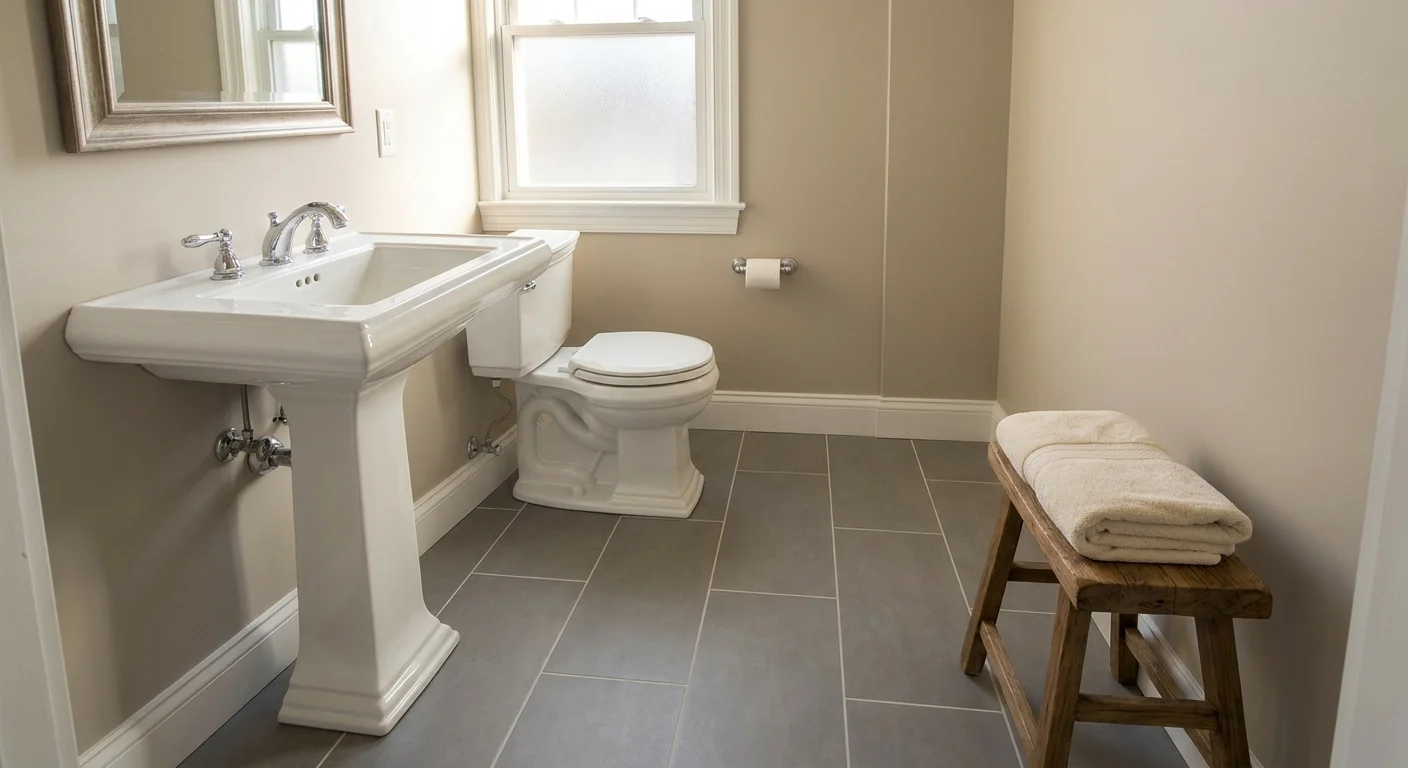
In New Jersey, homeowners can expect the cost to tile a bathroom floor in 2026 to start from about $13 per square foot installed for standard porcelain or ceramic tile, with a project minimum typically set at $1,500. This initial pricing covers the essential materials and labor for a straightforward, straight-lay installation. However, the final price for your bathroom tile project in areas like Long Branch, Red Bank, or Freehold can vary based on factors such as tile selection, room size, and any necessary subfloor preparations.
How Much Does It Cost to Tile a Bathroom Floor in New Jersey in 2026?
The cost to tile a bathroom floor in New Jersey depends primarily on the square footage, the type of tile chosen, and the complexity of the installation. For most homeowners seeking a durable and attractive new tile floor without a full bathroom remodel, understanding the base rate and project minimum is crucial.
Understanding the Base Cost: From $13 Per Square Foot Installed
For standard bathroom floor tile installations, IAC Home Improvement typically prices projects from $13 per square foot installed. This rate includes the cost of standard porcelain or ceramic tiles, along with all the necessary setting materials like thin-set mortar and grout, and the professional labor for a straight-lay pattern. This is a comprehensive price for a common selection of durable, water-resistant tiles ideal for bathrooms.
This base price is a great starting point for budgeting, especially for homeowners in Monmouth County and throughout New Jersey. It reflects the quality materials and expert craftsmanship required to ensure a long-lasting and aesthetically pleasing tile floor.
Why a Project Minimum of $1,500 Applies to Small Bathroom Tiling
Even for very small bathrooms, such as a powder room or a compact hall bath, tile flooring projects typically have a minimum charge of $1,500. This minimum exists because every tile installation, regardless of size, involves a fixed set of operational costs. These include mobilization, setup time, specialized tools, material handling, and the careful preparation required to ensure a professional finish.
For instance, a 40-square-foot powder room, calculated at $13 per square foot, would technically be $520. However, the true cost of bringing a skilled crew, equipment, and materials to your home in Eatontown or Holmdel, preparing the site, and ensuring a meticulous installation far exceeds that per-square-foot calculation for such a small area. The $1,500 minimum ensures that even the smallest projects receive the same high level of quality and attention to detail.
Sample Bathroom Tile Floor Project Costs in NJ
To help you visualize potential costs, here are some examples based on common bathroom sizes in New Jersey homes, assuming standard tile and a straight-lay pattern, factoring in the project minimum:
| Bathroom Size (Approx.) | Estimated Square Footage | Typical Installed Cost (Standard Tile) |
|---|---|---|
| Small Powder Room | 25-40 sq ft | $1,500 (Project Minimum) |
| Standard Hall Bathroom | 50-75 sq ft | $1,500 (Project Minimum) |
| Primary Bathroom | 100-150 sq ft | $1,500 - $1,950+ |
For a primary bathroom measuring 120 square feet, for example, the cost would be 120 sq ft * $13/sq ft = $1,560. This falls above the project minimum, so the cost would be $1,560 for a standard installation. These estimates provide a realistic expectation for homeowners in towns like Marlboro or Manalapan looking to update their bathroom floors.
What Factors Influence the Price of Bathroom Floor Tile Installation?
Beyond the basic per-square-foot rate, several elements can significantly impact the overall cost of your bathroom tile floor project. Understanding these factors will help you make informed decisions during your tile selection and planning phase.
Tile Material, Size, and Pattern Complexity
The type of tile you choose is a primary cost driver. While standard porcelain and ceramic tiles are included in the base rate, selecting premium materials will increase the price:
- Natural Stone Tiles: Materials like marble, travertine, or slate are inherently more expensive per square foot and often require specialized cutting, sealing, and installation techniques.
- Large-Format Tiles: Tiles larger than 12x24 inches typically require more precise subfloor preparation, specialized leveling compounds, and often two installers, increasing labor costs.
- Intricate Patterns: Designs such as herringbone, chevron, or basketweave involve more cuts, careful alignment, and increased labor compared to a standard straight-lay pattern.
- Decorative or Mosaic Tiles: Small mosaic tiles or decorative accents, while often used sparingly, can be labor-intensive to install and may have a higher material cost per square foot.
Each of these choices contributes to the project's complexity and, consequently, its final price. For expert guidance on selecting the right tile for your needs and budget, explore our blog post on Tile Flooring Selection: Best Options for Your Home.
Subfloor Condition and Preparation Requirements
A solid, level, and stable subfloor is critical for a durable tile installation. If your existing subfloor is uneven, damaged, or made of unsuitable material, additional work will be required, which is quoted separately.
- Existing Flooring Removal: The demolition and disposal of old tile, vinyl, or other flooring materials add to the project cost.
- Subfloor Repair or Replacement: Water damage, rot, or significant unevenness in the subfloor necessitates repairs, leveling compounds, or even full subfloor replacement to prevent future tile cracking or shifting.
- Underlayment Installation: Depending on the subfloor type and condition, a cement board or uncoupling membrane may be required to provide a stable, crack-resistant surface for the tile.
Proper subfloor preparation is an investment that ensures the longevity and integrity of your new tile floor, preventing costly issues down the line.
Fixture Removal, Accessibility, and Layout Challenges
The specific conditions of your bathroom can also affect the installation price:
- Toilet and Vanity Removal/Reinstallation: For a complete tile floor installation, it's often necessary to remove and reinstall the toilet and sometimes the vanity. This is typically quoted as a separate line item.
- Tight Spaces and Obstacles: Bathrooms often feature intricate layouts with many corners, tight spaces around tubs or showers, and floor vents. These require more precise cuts and careful tile placement, increasing labor time.
- Accessibility: If the bathroom is difficult to access, or if materials need to be carried up multiple flights of stairs, this can also impact labor efficiency and, thus, cost.
These elements are all considered during a thorough on-site evaluation to provide an accurate and transparent project quote.
What Does Your Bathroom Tile Floor Installation Quote Include?
When you receive a quote from IAC Home Improvement for your bathroom tile floor, it's designed to be clear and comprehensive, detailing exactly what is covered and what might be considered an additional service. We believe in transparency so you know precisely what to expect.
Standard Inclusions: Materials, Labor, and Straight Lay Installation
Our base pricing for tile floor installation, starting from $13 per square foot, typically encompasses:
- Standard Porcelain or Ceramic Tile: A selection of common, durable, and aesthetically pleasing tiles suitable for bathroom environments.
- Setting Materials: High-quality thin-set mortar, grout, and any necessary sealers for the grout lines.
- Professional Installation: The labor for preparing the surface (assuming it's sound), laying the tile in a straight pattern, grouting, and initial cleanup.
This package provides a complete, beautiful, and functional tile floor for your bathroom, ready for years of use in your New Jersey home.
Additional Services Quoted Separately
While the base price covers a straightforward installation, certain services that extend beyond the standard scope are quoted per project after an on-site visit:
- Demolition and Disposal: Removal of existing flooring (e.g., old tile, vinyl, or wood) and proper disposal of debris.
- Subfloor Repairs: Any necessary work to level, reinforce, or replace damaged subfloor sections to create an optimal surface for tiling.
- Specialty Tile Installation: Projects involving natural stone, large-format tiles, intricate patterns, or custom designs.
- Fixture Handling: Removal and reinstallation of toilets, vanities, or other bathroom fixtures.
- Shower Walls, Tub Surrounds, and Backsplashes: These vertical tiling projects have different complexities and material requirements than floor tiling and are quoted separately.
These items are assessed during a free on-site consultation to ensure you receive an accurate and tailored quote for your specific needs.
The IAC Home Improvement Approach to Clear Project Totals
At IAC Home Improvement, we provide one clear project total after a free on-site measurement and consultation. We do not itemize labor, materials, and prep separately. This approach ensures that you have a single, transparent price for the entire scope of work, without hidden fees or surprises. Our goal is to make the process of enhancing your home in Asbury Park, Colts Neck, or Middletown as straightforward and stress-free as possible.
Ready to update your bathroom floor? Contact IAC Home Improvement today for a free estimate on your tile installation project. You can also call us at (848) 234-0283 or text us a photo of your bathroom for an initial discussion.
Comparing Tile Flooring with Other Popular Bathroom Floor Options
When considering new flooring for your bathroom, it's helpful to weigh tile against other common alternatives, particularly luxury vinyl plank (LVP), which is another popular choice for its durability and water resistance.
Tile vs. Luxury Vinyl Plank (LVP) for Durability and Cost
Tile and LVP both offer excellent water resistance, making them ideal for bathrooms. However, they differ in cost, feel, and long-term characteristics:
- Cost: Luxury vinyl plank (LVP) is generally more affordable upfront. For an all-inclusive LVP installation, including materials, installation, and shoe molding, you can expect costs to be about $8 per square foot, with a project minimum of $1,300. This is significantly less than the $13+ per square foot for tile. If you supply the LVP, installation-only services start from $4 per square foot, with a $1,300 project minimum.
- Durability: Both are highly durable. Tile, especially porcelain, is extremely hard, resistant to scratches, dents, and water, and can last for decades. LVP is also very durable, resilient to impacts, and waterproof, making it a great choice for busy bathrooms.
- Aesthetics: Tile offers a vast array of styles, colors, and textures, including realistic stone and wood looks. It often provides a more premium and traditional feel. LVP has made significant advancements in mimicking natural materials, but some homeowners still prefer the authentic look and feel of ceramic or porcelain tile.
- Comfort: LVP tends to be softer and warmer underfoot than tile, which can be cold and hard. However, radiant floor heating can be installed under tile for added comfort.
The choice often comes down to budget, desired aesthetic, and comfort preferences. Both are excellent, long-lasting options for bathroom floors.
Long-Term Value and Maintenance Considerations
While LVP offers a lower initial cost, tile often provides superior long-term value and can contribute positively to your home's resale value. Tile is known for its exceptional longevity; well-installed tile floors can last 50 years or more with proper care. It's highly resistant to wear and tear, and individual tiles can be replaced if damaged, though matching grout can be challenging.
Maintenance for tile typically involves regular sweeping and mopping. Grout lines may require occasional sealing and cleaning to prevent staining and mildew. LVP is also very easy to clean and requires minimal maintenance, usually just sweeping and damp mopping. Neither material requires extensive upkeep, making both practical choices for busy households in Monmouth County and beyond.
How Can You Save Money on Your Bathroom Tile Flooring Project?
Even with a project minimum, there are smart strategies homeowners can employ to manage costs and achieve a beautiful new bathroom floor within their budget. Thoughtful planning can make a significant difference.
Strategic Tile Selection and Layout Choices
The most impactful way to save is by carefully choosing your materials and installation method:
- Opt for Standard Porcelain or Ceramic: These materials are included in our base $13 per square foot installed price and offer excellent durability and aesthetic appeal without the premium cost of natural stone or specialty tiles.
- Stick to a Straight-Lay Pattern: Intricate patterns like herringbone require more cuts and labor, increasing costs. A simple straight-lay is efficient and timeless.
- Choose Standard Tile Sizes: While large-format tiles are popular, standard sizes (e.g., 12x12, 12x24 inches) are typically easier and quicker to install, reducing labor time.
- Buy Local, Not Boutique: While IAC Home Improvement provides standard tiles, if you source your own, look for deals at local suppliers in New Jersey rather than high-end boutiques.
These choices allow you to get a high-quality tile floor without unnecessary expenses. For ideas on maximizing space and style in smaller bathrooms, consider reading our post on Small Bathroom Remodel Ideas.
Preparing Your Bathroom for Efficient Installation
While IAC Home Improvement provides full-service installation, some preparatory steps can help streamline the process and potentially reduce costs for items quoted separately:
- Clear the Space: Ensure the bathroom is completely empty of personal items, rugs, and anything that could obstruct the work area.
- Remove the Toilet (if comfortable): If you are comfortable and capable, carefully removing and protecting your toilet before the crew arrives can sometimes reduce the time needed for this specific task. However, professional removal and reinstallation are always recommended for proper sealing and leak prevention.
- Address Minor Subfloor Issues: If you have minor, non-structural subfloor issues that you can safely and properly address yourself (e.g., securing loose subfloor panels, sweeping up debris), it could potentially reduce the time needed for initial prep. Always consult with your contractor first.
Any work you do yourself must be done correctly to avoid creating issues that could increase costs later. Discuss these options with your IAC Home Improvement project manager during your free consultation.
Considering Project Scope for Cost Efficiency
Sometimes, looking at the bigger picture can yield savings. If you're considering other home improvements in your Long Branch or Asbury Park home, bundling projects can occasionally lead to efficiencies.
For example, if you're also planning a small bathroom remodel that includes new flooring, combining the work under one contractor can be more cost-effective than hiring separate specialists for each task. IAC Home Improvement is a full-service company handling everything from bathroom remodeling to painting, carpentry, basements, decks, masonry, concrete, and pavers. By choosing one trusted contractor for multiple projects, you can simplify coordination and potentially realize overall savings.
Why Choose Professional Tile Installation by IAC Home Improvement?
Entrusting your bathroom tile floor project to experienced professionals ensures a superior outcome that DIY efforts often cannot match. The precision and expertise required for a durable, aesthetically pleasing tile installation are invaluable.
Ensuring Quality, Longevity, and Aesthetic Appeal
Professional tile installers from IAC Home Improvement bring years of experience and specialized skills to every project. This means:
- Proper Subfloor Preparation: We ensure your subfloor is perfectly clean, level, and stable, which is critical for preventing future cracks or loose tiles.
- Precise Layout and Cutting: Our team expertly plans the tile layout to minimize waste and ensure a balanced, visually appealing pattern, even in challenging spaces. We use professional-grade tools for clean, accurate cuts.
- Correct Mortar and Grout Application: We use the right type and amount of thin-set mortar and apply grout uniformly, ensuring strong adhesion and a beautiful, consistent finish. Grout typically cures in 24-72 hours, while mortar can take 48-72 hours to fully set before light foot traffic.
- Waterproofing Expertise: Especially in bathrooms, proper sealing and waterproofing techniques are essential to protect against moisture damage, a common issue with improper installations.
Choosing a professional like IAC Home Improvement for your tile installation service guarantees a high-quality finish that will stand the test of time and enhance your home's value.
Your Trusted Partner for Home Improvement Across NJ, NY, and PA
IAC Home Improvement is a full-service home improvement company based in Long Branch, New Jersey, proudly serving homeowners across NJ, NY, and PA. Since 2015, we have built a reputation for excellence, backed by a 5.0 rating on Google with over 100 reviews. Our team holds NJ License #13VH13143000 and PA License #PA188007, demonstrating our commitment to professionalism and compliance.
Whether you're looking for new flooring, a complete bathroom remodeling, or any other home renovation project, we provide comprehensive solutions. We handle the entire project, ensuring seamless coordination and superior results. From your initial consultation to the final walkthrough, our focus is on delivering exceptional service and craftsmanship, making us your trusted partner for a beautiful and functional home.
Frequently Asked Questions About Bathroom Tile Flooring
How long does it typically take to tile a bathroom floor?
The duration for tiling a bathroom floor generally depends on the size of the bathroom and the complexity of the installation. For an average-sized bathroom (50-75 sq ft) with standard tile and a straight lay, the installation itself can often be completed in 1-2 days. However, allowing for subfloor preparation, mortar drying, and grout curing, the entire process before the floor is ready for full use typically takes 3-5 days.
Can I tile over existing bathroom flooring?
In most cases, it is not recommended to tile over existing bathroom flooring, especially if it's vinyl, laminate, or old, loose tile. A proper tile installation requires a clean, level, and stable subfloor for optimal adhesion and longevity. Tiling over existing flooring can lead to an unstable surface, potential cracking of new tiles, or issues with door clearances. Professional removal of old flooring is usually the best approach for a durable result.
What is the best type of tile for a bathroom floor?
For bathroom floors, porcelain tile is widely considered the best option due to its exceptional durability, water resistance, and low porosity. Ceramic tile is another excellent and more affordable choice, offering good water resistance and a wide range of styles. Both are highly resilient to moisture, easy to clean, and can withstand the daily wear and tear of a busy bathroom, making them ideal for longevity and hygiene.
Do I need to seal my bathroom floor tile?
Whether you need to seal your bathroom floor tile depends on the type of tile and grout used. Glazed ceramic and porcelain tiles typically do not require sealing as their surface is impervious. However, unglazed tiles, natural stone tiles (like marble or travertine), and cement-based grout lines should always be sealed. Sealing helps protect them from moisture penetration, staining, and mildew, preserving their appearance and extending their lifespan.
Authoritative resource: This Old House.