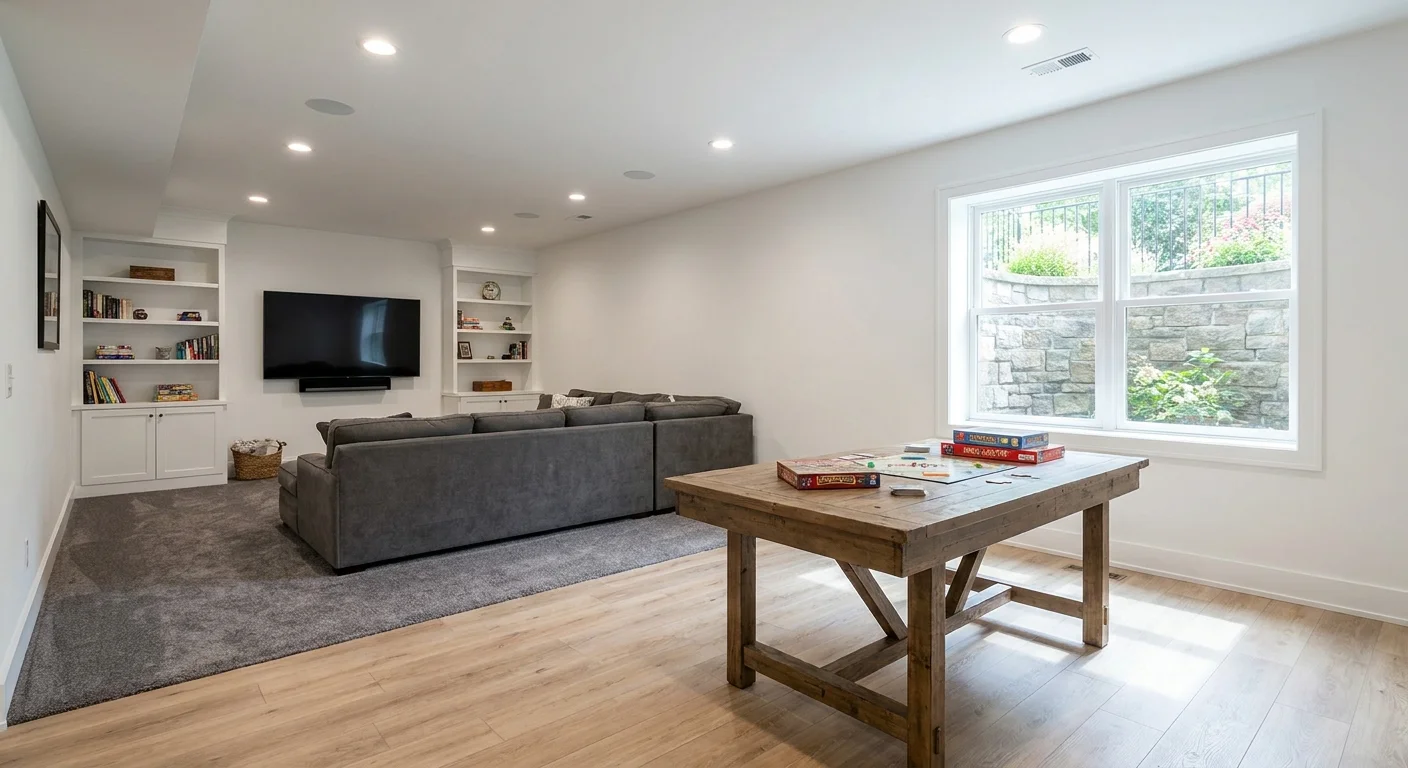
Finishing or updating your basement in New Jersey can significantly enhance your home's value and livability, with basement flooring costs in NJ typically ranging from **about $8 per square foot for Luxury Vinyl Plank (LVP) to over $13 per square foot for installed tile** in 2026. Choosing the right flooring is a critical decision for below-grade spaces, balancing aesthetics, durability, and moisture resistance. This comprehensive guide from IAC Home Improvement will help you navigate the costs and considerations for popular basement flooring options like LVP, carpet, and tile, ensuring you make an informed choice for your Monmouth County home or anywhere across NJ, NY, and PA.
How Much Does Basement Flooring Cost in New Jersey in 2026?
The total cost of basement flooring in New Jersey depends heavily on the material chosen, the complexity of the installation, and any necessary subfloor preparation. For homeowners in Long Branch, Red Bank, or anywhere in the Garden State, understanding these variables is key to budgeting accurately. IAC Home Improvement provides transparent pricing to help you plan your project effectively.
Understanding Basement Flooring Price Factors
Several elements influence the final price of your basement flooring project. Key factors include the size of the area, the condition of the existing subfloor, the need for moisture mitigation, and the specific type of material selected. Stairs, intricate patterns, and the removal of old flooring can also add to the overall cost.
- Slab Moisture and Leveling: Basements are prone to moisture issues. Addressing these, often through vapor barriers or slab sealants, is crucial. Additionally, an uneven concrete slab may require leveling compounds before flooring installation, impacting both labor and material costs.
- Underlayment Choices: Different flooring types require specific underlayments. These can provide moisture protection, thermal insulation, or sound dampening, adding to material expenses.
- Old Flooring Removal: If you're replacing existing flooring, the demolition and disposal of old materials will incur additional labor costs. This is often quoted separately based on the volume and type of material.
- Stairs and Intricate Cuts: Installing flooring on stairs or around complex architectural features requires specialized labor and more material, increasing the per-square-foot cost compared to open areas.
Cost Comparison: LVP, Carpet, and Tile Floors in NJ
When considering basement flooring, LVP, carpet, and tile each offer distinct advantages and price points. Below is a general cost comparison for installed flooring in New Jersey, based on typical project scopes handled by IAC Home Improvement.
| Flooring Type | Typical Installed Cost (per sq ft) | Key Inclusions/Notes |
|---|---|---|
| Luxury Vinyl Plank (LVP) | About $8 | All-inclusive: plank, installation, shoe molding. Installation only from $4/sq ft (client supplies flooring). Projects from $1,300. |
| Tile Floors (Ceramic/Porcelain) | From $13 | Installed (straight lay) with standard tile included. Large-format, natural stone, or patterns quoted per project. Projects from $1,500. |
| Carpet | Labor from $3 | Includes pad installation. Carpet and pad priced by selection separately. Old carpet removal and stairs quoted separately. Projects from $800. |
These figures provide a starting point. For a precise quote tailored to your basement, including any necessary subfloor preparation or moisture mitigation, a free on-site visit is essential. IAC Home Improvement offers comprehensive estimates throughout NJ, NY, and PA.
Worked Example: Flooring a 600 sq ft Basement
To illustrate potential costs, let's consider a 600 square foot basement in Middletown or Freehold, requiring new flooring. This example assumes a relatively level slab with no major moisture issues, and includes standard installation.
- Luxury Vinyl Plank (LVP): At about $8 per square foot all-inclusive, a 600 sq ft LVP project would cost approximately $4,800. This includes the planks, professional installation, and new shoe molding. This option often exceeds the minimum project cost of $1,300.
- Tile Floors: For standard ceramic or porcelain tile installed in a straight lay, at a starting cost of $13 per square foot, a 600 sq ft basement would be approximately $7,800. This includes the tile material and installation. This also comfortably exceeds the minimum project cost of $1,500.
- Carpet: For carpet, the labor alone at $3 per square foot would be $1,800 for a 600 sq ft space, which includes pad installation. The cost of the carpet and pad would be added based on your specific selection, as these are priced separately. This project would meet the minimum project cost of $800.
This example highlights the significant cost variations between materials. Remember, these are estimates; your specific project may vary. For a detailed and accurate quote for your basement flooring project, request a free estimate online, or call us directly at (848) 234-0283 to discuss your needs. You can even text us a photo of your space to get started.
Why Is Basement Flooring Different? Key Considerations for Below-Grade Spaces
Basements present unique challenges for flooring due to their location below ground level. Understanding these specific considerations is vital for selecting a floor that will perform well and last for years in your Colts Neck or Manalapan home.
Moisture Management: A Critical Factor for Basement Floors
The primary concern for any basement flooring is moisture. Concrete slabs can wick moisture from the ground, and humidity levels can fluctuate. Ignoring these issues can lead to mold, mildew, warping, or delamination of flooring materials. Proper moisture mitigation, such as applying a vapor barrier or using materials inherently resistant to water, is non-negotiable for a successful basement flooring installation.
Slab Preparation and Leveling
A concrete slab in a basement is rarely perfectly level or smooth. Before any flooring can be installed, the slab often requires preparation. This can involve grinding down high spots, filling in low spots with self-leveling compounds, or repairing cracks. Adequate slab preparation ensures a stable foundation for your new floor, preventing issues like uneven wear, squeaks, or material failure. Adhering to manufacturer specifications for flatness is crucial for warranty compliance and longevity.
Underlayment Choices for Below-Grade Applications
Selecting the right underlayment is paramount in basements. An effective underlayment can provide crucial moisture protection, acting as a barrier between the concrete slab and your finished floor. Some underlayments also offer thermal insulation, making the basement feel warmer, and acoustic benefits, reducing sound transmission. For options like luxury vinyl plank, specific underlayments are often recommended or even required by manufacturers to ensure optimal performance in a below-grade environment.
Deep Dive into Flooring Options: LVP, Carpet, and Tile for Basements
Each of the most popular basement flooring options, LVP, carpet, and tile, brings distinct advantages and disadvantages to a below-grade environment. Understanding these characteristics helps homeowners in Holmdel or Eatontown make the best choice for their specific needs.
Luxury Vinyl Plank (LVP): Durability and Water Resistance
Luxury Vinyl Plank (LVP) is an increasingly popular choice for basements due to its exceptional durability and water-resistant properties. Modern LVP products are engineered with multiple layers, including a robust wear layer that resists scratches and scuffs, and a core that is often waterproof or highly water-resistant. This makes it an excellent option for areas prone to occasional moisture or spills, offering the look of hardwood or stone without the susceptibility to water damage. Installation for LVP, which typically starts from $4 per square foot for labor when you supply the material, is relatively quick, often completed within a few days for most projects.
Carpet: Comfort and Insulation for Basement Living
For those prioritizing warmth and comfort, carpet remains a favored option for basement living spaces. It provides excellent insulation, making the basement feel cozier and potentially reducing heating costs. Carpet also offers sound absorption, creating a quieter environment, which is ideal for media rooms or play areas. However, traditional carpet and padding can be susceptible to moisture, making proper subfloor preparation and moisture barriers essential. When considering carpet for your basement in Asbury Park, choosing synthetic fibers like nylon or polypropylene can offer better moisture and stain resistance. IAC Home Improvement offers carpet installation services, with labor starting from $3 per square foot including pad installation.
Ceramic and Porcelain Tile: The Ultimate in Water Protection
Ceramic and porcelain tile are among the most water-resistant and durable flooring options available for basements. Their non-porous nature makes them virtually impervious to moisture, mold, and mildew, making them an ideal choice for high-humidity environments or areas where water intrusion is a significant concern. Tile is also incredibly long-lasting and easy to clean, resisting wear and tear from heavy foot traffic. While the initial installed cost for tile floors starts from $13 per square foot, their longevity and low maintenance can offer significant value over time. They are particularly well-suited for utility areas, laundry rooms, or entryways in a finished basement, offering robust protection.
Which Basement Floor is Right for Your Lifestyle and Space?
The best basement flooring choice depends on how you plan to use the space and your personal priorities. A family playroom will have different needs than a sophisticated home office or a dedicated gym. IAC Home Improvement specializes in full-service basement finishing, helping you select the perfect floor as part of a cohesive design.
Flooring for Playrooms, Home Offices, and Guest Suites
For areas like playrooms, home offices, or guest bedrooms, comfort and aesthetics often take precedence. LVP offers a warm, inviting look similar to hardwood, is resilient for children's activities, and easy to clean. Carpet provides unparalleled softness and sound dampening, creating a cozy atmosphere perfect for relaxation or focused work. In a guest suite, LVP or a low-pile carpet can both create a welcoming ambiance while offering practical benefits. Consider the overall design and functionality of your finished basement space.
Best Options for Basement Gyms and Utility Areas
Basement gyms and utility areas demand highly durable, water-resistant, and easy-to-clean flooring. Ceramic or porcelain tile excels in these environments, offering superior resistance to moisture, heavy equipment, and spills. Its robust nature makes it ideal for areas that see heavy use or potential water exposure. LVP is also a strong contender for these spaces, providing excellent water resistance and a softer underfoot feel than tile, which can be beneficial for exercise. Both options are easy to maintain and can withstand the rigors of these functional zones.
Flooring to Avoid in Basements and Why
While many flooring options are suitable for basements, some should generally be avoided due to their susceptibility to moisture damage. Solid hardwood flooring, for example, is highly hygroscopic, meaning it absorbs moisture from the air and subfloor, leading to warping, cupping, or buckling in a humid basement environment. Engineered hardwood can be more stable but still carries risks. Certain types of laminate flooring, especially those without a waterproof core, are also prone to swelling and delamination if exposed to moisture. It's always best to choose materials specifically designed or rated for below-grade installation, or to implement robust moisture mitigation strategies if opting for less resistant materials.
Practical Ways to Save on Your Basement Flooring Project
Managing the cost of your basement flooring project doesn't mean compromising on quality or aesthetics. There are smart strategies to keep your budget in check while achieving a beautiful and functional basement floor. As a full-service home improvement company, IAC Home Improvement can help you find value across your entire renovation, from flooring to painting, carpentry, and more.
Smart Material Selection and Sourcing
The biggest cost driver is often the material itself. Opting for standard ceramic or porcelain tiles over natural stone, or selecting a mid-range LVP rather than a premium line, can significantly reduce expenses. Some homeowners choose to source their own materials, which can provide savings, especially for luxury vinyl plank installation where IAC Home Improvement offers installation-only services from $4 per square foot. However, always ensure the materials meet the necessary quality and warranty standards for basement applications. Discussing material options with your contractor can help you find the best balance of cost and performance.
DIY vs. Professional Installation Considerations
While DIY installation might seem like a way to save on labor costs, it can be a false economy, especially in basements. Proper subfloor preparation, moisture mitigation, and precise installation are crucial for longevity and preventing costly failures down the line. Professional installers have the expertise, specialized tools, and experience to handle the unique challenges of below-grade flooring. For projects like tile or LVP, which require specific techniques and adherence to industry standards, professional installation ensures a durable and aesthetically pleasing result. For comprehensive guidance on your entire basement renovation, including flooring, explore our Basement Finishing Guide.
Maximizing Value with a Full-Service Contractor
Working with a full-service home improvement company like IAC Home Improvement, serving NJ, NY, and PA, can offer substantial value. Instead of coordinating multiple contractors for different aspects of your basement renovation (e.g., flooring, drywall, painting, carpentry), one trusted company handles the entire project. This streamlines communication, ensures seamless project management, and can often lead to cost efficiencies. From initial design to final touches, we provide a single point of contact, ensuring your basement flooring integrates perfectly with your overall basement transformation. Our team is licensed in NJ (#13VH13143000) and PA (#PA188007) and rated 5.0 on Google with over 100 reviews, reflecting our commitment to quality and client satisfaction since 2015.
Frequently Asked Questions About Basement Flooring
What is the best flooring for a basement with moisture issues?
For basements with known moisture issues, ceramic or porcelain tile is generally considered the best option due to its imperviousness to water, mold, and mildew. Luxury Vinyl Plank (LVP) with a waterproof core is also an excellent choice, as it resists water damage and can be installed over a proper vapor barrier. These materials ensure durability and prevent common moisture-related problems.
How long does basement flooring installation typically take?
The duration of basement flooring installation varies by material and project size. LVP installation for a typical 600 sq ft basement might take 2-4 days, including basic subfloor prep. Tile installation can take 4-7 days due to mortar drying and grout curing times. Carpet installation is often the quickest, potentially 1-2 days. These timelines are general estimates and depend on the specific conditions of your basement.
Can I install radiant heating under basement flooring?
Yes, radiant heating can be installed under many types of basement flooring, including tile and some LVP products, to enhance comfort. It's crucial to select a flooring material that is compatible with radiant heat systems and to follow the manufacturer's specific guidelines for both the heating system and the flooring. This ensures efficient heating and prevents damage to your new floor.
Is laminate flooring a good option for basements?
Traditional laminate flooring is generally not recommended for basements due to its particleboard core, which is highly susceptible to swelling and damage from moisture. While some newer, water-resistant or waterproof laminate products exist, Luxury Vinyl Plank (LVP) typically offers superior performance and peace of mind in below-grade environments. Always prioritize materials specifically designed for moisture-prone areas.
Authoritative resource: This Old House.