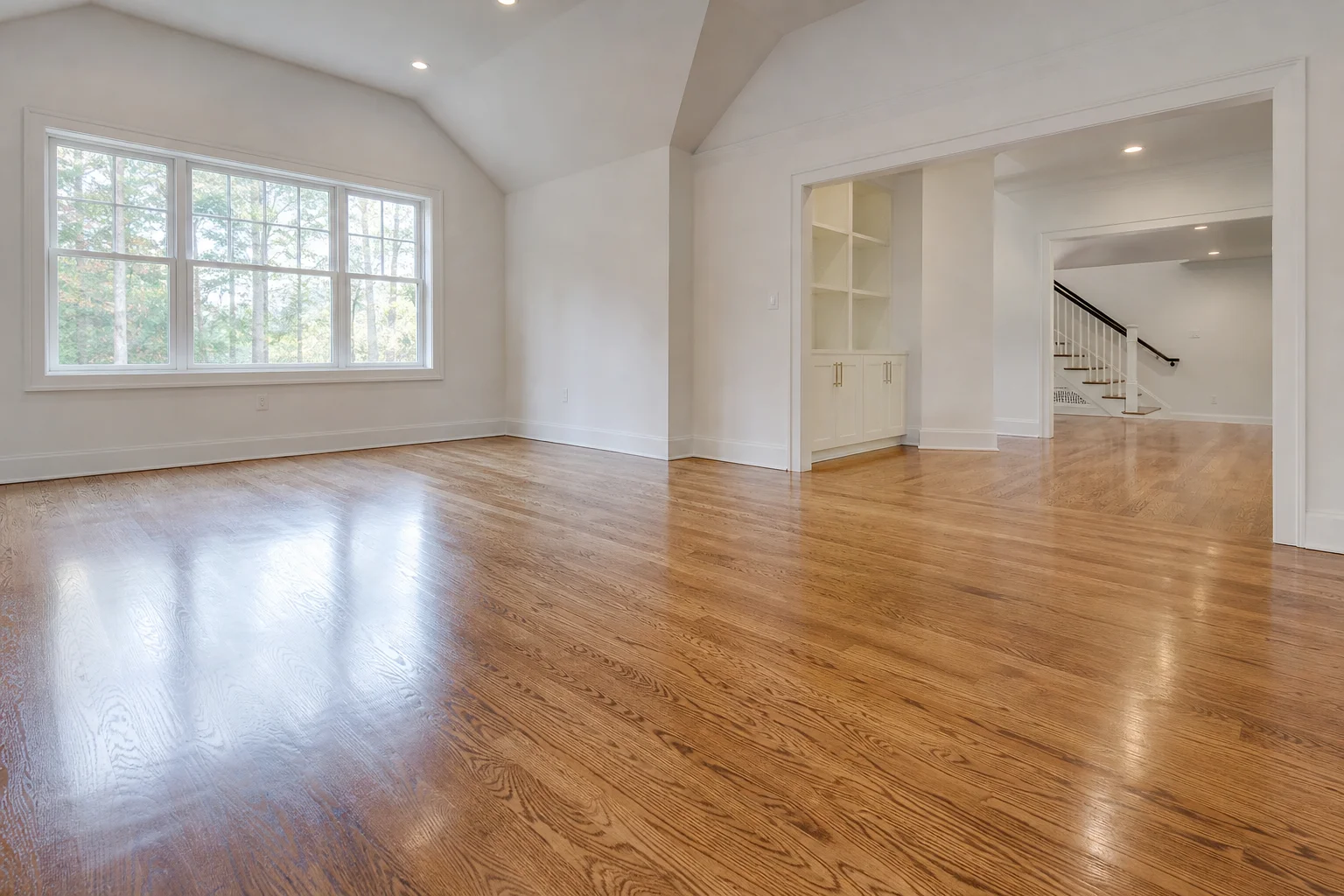
In New Jersey in 2026, full hardwood floor refinishing typically costs $2-$4 per square foot, all-inclusive, with projects from $1,600, and is the better choice for damage that reaches the wood. A screen and recoat usually wins when the existing finish is sound and the floor only looks dull or has light surface scratches.
The difference matters because a recoat refreshes the protective finish without sanding the floor to bare wood. A full refinish removes the old finish and a thin layer of wood, making it possible to address deeper wear and change the color.
What is the difference between a screen and recoat and a full refinish?
A screen and recoat abrades the existing finish so a new coat can bond to it. A full refinish sands through the finish to bare wood before new finish is applied.
What happens during a screen and recoat?
A contractor cleans the floor, lightly abrades the existing finish with a screen or comparable abrasive, removes the dust, and applies a compatible finish coat. The goal is to restore protection and improve the appearance of wear confined to the finish.
Screening is not a substitute for sanding out deep scratches. It also will not reliably erase stains in the wood or change the floor’s stain color.
What happens during a full hardwood refinish?
A full refinish uses progressively finer abrasives to remove the old coating and prepare the wood for a new finish. Depending on the floor and the homeowner’s choice, the process can include stain, sealer, and protective finish coats.
Full sanding offers more correction, but it removes wood and requires a floor with enough usable material above the tongue and groove. Our hardwood floor refinishing service starts with an assessment of the floor and the scope needed.
How do the two options compare?
The best choice depends on the depth of the damage and whether the existing coating can accept a new finish. This comparison assumes the floor is otherwise structurally sound.
| Criterion | Screen and recoat | Full refinish |
|---|---|---|
| Surface removed | Finish lightly abraded | Finish and thin wood layer |
| Best for | Dull finish, light scratches | Deep wear, bare wood |
| Color change | Generally no | Possible with stain |
| Dust and disruption | Generally less | Generally more |
| Wood removed | Little to none | Yes |
| Price for 800 sq ft | Quoted per project | Typically $1,600-$3,200 |
When is a screen and recoat enough for hardwood floors?
A screen and recoat is often enough when scratches and dullness are in the finish, the wood beneath is in good condition, and the existing coating will bond with the new one. An inspection and adhesion test help confirm that choice.
Which signs suggest the finish needs refreshing?
Look for a floor that has lost its sheen but still has consistent color and protection across most of the surface. A living room with fine furniture scuffs or a hallway with light traffic marks may be a good candidate.
- Fine scratches are visible in reflected light but do not noticeably cut into the wood.
- The color is generally even, without large dark stains or gray bare patches.
- The existing finish is intact rather than peeling or flaking.
- You want to keep the current wood color.
A fresh coat may make fine marks less noticeable, but it will not make every scratch disappear. Set expectations before work begins, especially in bright rooms where sunlight emphasizes surface imperfections.
Can a floor with wax or polish buildup be recoated?
Wax, oil soap, acrylic polish, and other residues can interfere with adhesion, so a floor with buildup should not be recoated without testing. A new finish applied over contamination can separate or peel.
Tell the contractor about cleaning products, maintenance coatings, and any past wax treatment, even if you are not certain what was used. The National Wood Flooring Association, or NWFA, provides guidance on wood-floor maintenance and finish compatibility; the finish manufacturer’s instructions also matter.
What should homeowners check before choosing a recoat?
Check the most heavily used areas first, then have the floor professionally evaluated for wear and compatibility. Entryways, dining-chair areas, and paths between rooms often show problems that are less visible under furniture.
- Look for gray, dark, or exposed patches where the protective finish may be gone.
- Inspect scratches from several angles to distinguish surface scuffs from cuts into the wood.
- Share the floor’s finish and cleaning history, if known.
- Ask whether a small adhesion test is appropriate before coating the whole floor.
For help deciding, call (848) 358-7694, text us a photo, or request a free estimate.
When do hardwood floors need a full sand and refinish?
Full sanding is usually the better option when wear has reached the wood, the existing finish cannot be reliably recoated, or you want a different stain color. It gives the contractor access to the wood surface rather than adding another coat over the old one.
Which damage is too deep for a recoat?
Deep scratches, widespread bare spots, and uneven wear generally need more correction than screening can provide. For example, a Red Bank dining room with chair scratches cut into the boards is a stronger candidate for sanding than one with superficial finish scuffs.
Pet stains, dark water marks, and gaps require closer evaluation. Sanding may improve some discoloration, but stains can penetrate too deeply to remove completely, and damaged boards may need repair or replacement.
Can you change the color without sanding?
A screen and clear recoat generally will not change the wood’s stain color. To move from a dark existing stain to a lighter look, or to apply a different stain, the floor typically needs to be sanded to bare wood first.
Species, previous finishes, and the condition of the wood affect the final appearance. Ask for stain samples on the actual floor after sanding, rather than choosing solely from a photo or a sample on a different species.
Can every hardwood floor be sanded again?
No. Solid hardwood can often be refinished more than once, but prior sanding, board thickness, and the condition of the floor determine whether another sanding is safe.
Engineered hardwood has a real-wood veneer over a layered core, and its wear layer may be too thin for full sanding. A contractor should assess the floor rather than assuming that all engineered products, or all solid floors, have enough wood remaining.
How much does screen and recoat vs refinish cost in NJ?
For the same 800-square-foot floor, full hardwood refinishing typically costs $1,600-$3,200, all-inclusive, while a screen and recoat is quoted per project after a free on-site visit. IAC’s approved full-refinishing pricing is typically $2-$4 per square foot, with projects from $1,600.
Why can the quotes differ?
The two processes differ in preparation, equipment, finish requirements, and the amount of correction involved. A recoat is a lighter process, but its quote still depends on the floor’s condition, access, and compatibility with a new coating.
For a full refinish, the existing finish, stain choice, layout, and any separate repairs can affect the project scope. IAC provides one clear project total after a free on-site measurement, so homeowners can understand what is included before deciding.
Is the lower-disruption option always the better value?
No. A recoat has value when it protects a suitable floor, but it is not a good substitute for sanding when exposed wood or deep damage remains underneath.
Conversely, sanding a floor with an intact, compatible finish may remove usable wood unnecessarily. Compare the proposed result as well as the quote: ask which marks will remain, whether color will change, and what preparation the floor needs.
How long does each process take, and how should you decide?
A screen and recoat typically involves less disruption than a full refinish, but both require time for the finish to dry and cure. The right decision balances floor condition, desired appearance, and the household’s ability to keep traffic off the floor.
When can you walk on the floor and replace furniture?
Light foot traffic is typically possible after about 24 hours for many finishes, though the product, temperature, humidity, and number of coats can change that guidance. Follow the finish manufacturer’s instructions and your contractor’s directions rather than treating one timeframe as universal.
Dry is not the same as fully cured. Furniture and rugs may need to stay off longer, and full cure typically takes several days to a few weeks, depending on the finish. Avoid dragging furniture across the new coating.
What does IAC usually recommend?
IAC usually recommends the least aggressive suitable option: a recoat when the finish is sound and compatible, and a full refinish when the damage or desired color change calls for sanding. The reason is simple: preserve usable wood when possible, but do not cover a problem that needs deeper correction.
In Long Branch, Asbury Park, or Middletown, an on-site assessment can reveal issues that a photograph may miss, including uneven wear and residue. Read our hardwood floor refinishing tips for more on preparing for a project.
How can you protect the floor after either treatment?
Use a cleaner recommended for the finish, place protective pads under furniture, and remove grit before it acts like sandpaper. Avoid adding wax or polish unless the finish manufacturer recommends it, because residue can complicate a future recoat.
Our floor care and maintenance guide covers everyday habits that help protect the coating. IAC is also a full-service home improvement company, handling flooring, kitchen and bathroom remodeling, painting, carpentry, basements, decks, masonry, concrete, and pavers for homeowners who want one trusted contractor for the whole home.
Frequently Asked Questions
These answers address common concerns about recoating, sanding, and maintaining hardwood floors. The condition and finish of your particular floor still determine the best approach.
Is it better to screen and recoat or refinish hardwood floors?
Screen and recoat is generally better for a compatible, intact finish with dullness or light surface scratches. Full refinishing is usually better for deep scratches, exposed wood, extensive wear, or a desired stain-color change. An inspection and, when appropriate, an adhesion test can help distinguish a suitable recoat from a floor that needs sanding.
How often should hardwood floors be screened and recoated?
There is no universal schedule because traffic, pets, cleaning products, and finish condition vary. Check high-traffic areas regularly and consider a professional assessment when the sheen becomes uneven or surface scratches accumulate, before the finish wears through to bare wood. A compatible maintenance coat can help extend the interval between full sandings.
Can you screen and recoat engineered hardwood floors?
Engineered hardwood can sometimes be screened and recoated if its existing finish is sound, clean, and compatible with the new coating. Factory finishes and maintenance-product residue can make adhesion more complicated, so testing and manufacturer guidance are important. Unlike full sanding, a recoat is intended to abrade the finish rather than remove the wood veneer.
Will a screen and recoat remove scratches from hardwood floors?
A screen and recoat can reduce the appearance of fine scratches in the finish, but it will not reliably remove cuts that extend into the wood. Deep scratches generally require sanding, and severe damage may need board repair or replacement. Ask the contractor to inspect representative scratches and explain which marks are likely to remain.
Authoritative resource: National Wood Flooring Association.