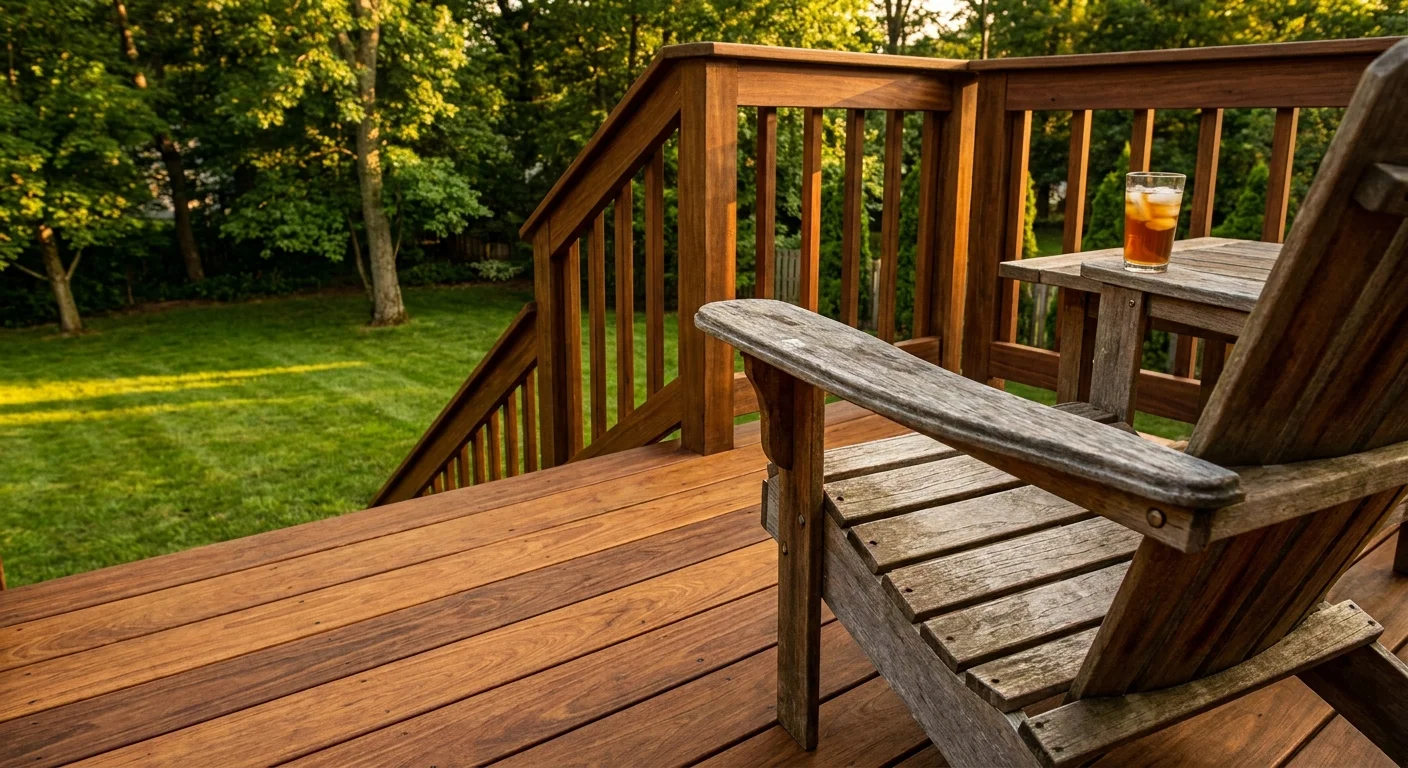
Hardwood decking offers homeowners in New Jersey, New York, and Pennsylvania a beautiful, durable, and naturally resilient option for outdoor living spaces. Unlike synthetic materials, natural hardwood decks provide unparalleled aesthetic appeal, adding significant value and timeless elegance to any home. Choosing the right hardwood species and ensuring professional installation and maintenance are key to enjoying your deck for decades.
The Enduring Appeal of Hardwood Decking for NJ, NY, & PA Homes
Why Choose Hardwood Over Other Decking Materials?
In the diverse climates of the Tri-State area, from the humid summers of Monmouth County to the snowy winters of upstate New York, building materials must withstand significant environmental stress. Hardwood decking stands out for its natural strength, density, and inherent resistance to rot, insects, and decay, particularly with exotic species. While composite decking offers low maintenance, it often lacks the authentic look, feel, and unique grain patterns of natural wood. Hardwood’s rich, organic beauty develops a unique patina over time, offering a classic elegance that synthetic alternatives simply cannot replicate. For homeowners in Manalapan, Colts Neck, or anywhere along the Jersey Shore, a hardwood deck provides a luxurious extension of their living space.
Understanding Different Types of Hardwood Decking
When considering hardwood for your outdoor space, it's essential to distinguish between species. Typically, "hardwood decking" refers to tropical hardwoods known for their exceptional density and natural oils that provide superior weather resistance. Common examples include Ipe, Teak, Cumaru, and Garapa. These woods are significantly denser and more durable than many domestic hardwoods, which, while beautiful indoors, often require extensive treatment and more rigorous maintenance to perform well in outdoor decking applications. The choice of hardwood directly impacts the deck's longevity, appearance, and maintenance requirements, making expert guidance crucial for selection.
The Benefits of Natural Wood for Outdoor Living
Beyond its undeniable beauty, natural hardwood offers several tangible benefits for outdoor living spaces. It remains cooler underfoot than many composite options, especially on hot summer days, making it more comfortable for bare feet. Hardwood is also a renewable resource, and many species are harvested from sustainably managed forests, appealing to environmentally conscious homeowners. Furthermore, the substantial weight and density of hardwood decking contribute to a very stable and solid feel underfoot, enhancing the overall quality and luxury of your outdoor environment. Its ability to be refinished multiple times means a hardwood deck can be restored to its original glory, extending its lifespan far beyond many other materials.
Top Hardwood Species for Outdoor Decks in the Tri-State Area
Exotic Hardwoods: Durability and Beauty
For homeowners seeking the pinnacle of outdoor decking, exotic hardwoods like Ipe, Teak, Cumaru, and Garapa are unparalleled.
- Ipe (Brazilian Walnut): Renowned for its extreme density and durability, Ipe is often called "ironwood." It boasts an impressive Janka hardness rating of 3680 lbf, making it one of the hardest woods available globally. Its natural resistance to rot, insects, and fire makes it an ideal choice for the varied climate of NJ, NY, and PA. Ipe typically lasts 25+ years, even in harsh conditions, and ages to a beautiful silver-gray patina if left untreated.
- Teak: Famous for its use in shipbuilding, Teak offers exceptional water resistance and stability due to its high oil content. While typically more expensive, Teak decks are incredibly durable and develop a beautiful golden-brown hue that ages gracefully.
- Cumaru (Brazilian Teak): A more cost-effective alternative to Ipe, Cumaru has a Janka hardness of 3540 lbf and shares many of Ipe's desirable characteristics, including excellent resistance to decay and insects. It presents a warm, reddish-brown color palette.
- Garapa: With a Janka rating of 1650 lbf, Garapa is a lighter-colored, more affordable exotic hardwood that still offers excellent durability and resistance for outdoor use. It weathers to a soft gray if not regularly oiled.
Domestic Hardwoods: Classic Choices
While exotic hardwoods dominate the high-performance decking market, certain domestic options can be considered with proper treatment and maintenance. Red Oak or White Oak, for instance, are strong and beautiful woods. However, without significant pressure treatment, they are generally not recommended for ground contact or continuous outdoor exposure in decking applications due to their susceptibility to moisture and insect damage compared to their tropical counterparts. For hardwood *decking*, the emphasis truly lies with species naturally equipped for the harsh elements. When considering domestic options, specialized treatments are paramount to achieve acceptable longevity, making them less of a true "hardwood decking" solution in the same vein as Ipe.
Janka Hardness Scale and Weather Resistance
The Janka hardness scale measures the resistance of wood to denting and wear, serving as a critical indicator for outdoor decking. Higher Janka ratings, like Ipe's 3680 lbf, signify superior resistance to impacts, scratches, and general wear and tear, which is essential for a high-traffic area like a deck. Beyond hardness, a wood's natural oils and density contribute to its weather resistance: its ability to repel moisture, resist insect infestation, and prevent fungal growth. These inherent properties reduce the need for chemical treatments and contribute to the deck's longevity, making them a smart investment for homeowners across NJ, NY, and PA.
Designing Your Dream Hardwood Deck: Aesthetics and Functionality
Integrating Deck Design with Your Home's Architecture
A well-designed hardwood deck should feel like a natural extension of your home, seamlessly blending with its architectural style and surrounding landscape. For a Victorian home in Red Bank, a classic, multi-level deck with intricate railings might be appropriate. For a modern home in Holmdel, sleek lines, hidden fasteners, and minimalist design would create a cohesive look. IAC Home Improvement specializes in creating custom deck designs that complement your home's unique character, ensuring the hardwood species, stain color, and layout enhance your property's overall aesthetic and curb appeal. We consider factors like sun exposure, privacy needs, and how the deck will flow from interior spaces.
Decking Layouts and Installation Considerations
The layout of your hardwood deck can dramatically impact its appearance and functionality. Common patterns include straight boards, diagonal installations, or even more intricate herringbone or basketweave designs for a custom touch. For proper water drainage and structural integrity, crucial in areas like the Jersey Shore, professional installation ensures correct board spacing and fastener application. Hidden fastening systems are popular for hardwood decks, providing a clean, screw-free surface that showcases the wood's natural beauty and prevents potential splinters. Our experts at IAC Home Improvement in Manalapan guide you through these choices, ensuring a safe, beautiful, and long-lasting deck.
Enhancing Your Deck with Railings, Lighting, and Features
Beyond the decking boards themselves, various elements can transform your hardwood deck into a truly exceptional outdoor oasis.
- Railings: Options range from classic wooden balusters that match your decking, to elegant glass panels offering unobstructed views, or modern cable railings providing a contemporary edge. Safety and local building codes (which vary between NJ, NY, and PA) are paramount here.
- Lighting: Integrated LED lighting within steps, posts, or under railings creates ambiance and enhances safety for evening enjoyment. Strategic uplighting can highlight architectural features or landscaping.
- Built-in Features: Consider built-in benches, planters, pergolas, or even outdoor kitchens. As a full-service home improvement and construction company, IAC can seamlessly integrate these elements, from custom carpentry to masonry and concrete work, ensuring your entire outdoor project is handled by one trusted contractor.
Hardwood Decking Installation: What Homeowners Need to Know
Site Preparation and Substructure Requirements
The longevity of your hardwood deck begins with a robust and properly prepared substructure. This involves careful site grading for drainage, sturdy footings that extend below the frost line (critical in colder regions of NJ, NY, and PA), and a framework of pressure-treated lumber or steel joists. Proper joist spacing is essential to support the heavy, dense hardwood decking and prevent sagging. Ventilation beneath the deck is also vital to prevent moisture buildup, which can compromise even the most durable hardwoods. Our team at IAC Home Improvement handles all aspects of site preparation, ensuring a solid foundation for your investment.
Professional Installation Process and Timelines
Installing hardwood decking, especially exotic species, requires specialized tools and expertise. Hardwoods are dense and can be challenging to cut and fasten correctly. The professional installation process typically involves:
- Permitting and Planning: Obtaining necessary permits and finalizing design plans.
- Substructure Construction: Building the foundational frame.
- Decking Installation: Carefully laying and fastening the hardwood boards, often using hidden clips or specialized screws.
- Finishing Touches: Installing railings, steps, and applying initial protective finishes.
DIY vs. Professional Deck Installation in Manalapan
While some homeowners consider DIY projects, installing hardwood decking is a complex task best left to professionals. The precision required for cutting, fastening, and ensuring proper drainage, especially with dense exotic woods, can be overwhelming for the inexperienced. Mistakes can lead to costly repairs, compromised structural integrity, or a significantly shortened lifespan for your deck. For homeowners in Manalapan and surrounding areas, entrusting your hardwood deck installation to a reputable company like IAC Home Improvement ensures expert craftsmanship, adherence to local building codes, and a comprehensive warranty. Our NJ License #13VH13143000 and PA License #PA188007 signify our commitment to quality and compliance.
Maintaining Your Hardwood Deck for Lasting Beauty
Cleaning and Sealing Best Practices
To preserve the beauty and longevity of your hardwood deck, regular cleaning and sealing are essential. Annually, or as needed, sweep away debris and clean the deck with a specialized hardwood deck cleaner, followed by a light pressure wash (using a low-pressure setting and wide fan tip to avoid damaging the wood). After cleaning, allow the deck to dry thoroughly (typically 24-48 hours). Then, apply a high-quality UV-resistant oil finish or penetrating sealer. Products like those from DuraSeal or other reputable outdoor wood finish manufacturers help protect the wood from moisture, UV rays, and prevent it from turning gray. This process typically needs to be repeated every 1-3 years, depending on sun exposure and climate conditions in your specific NJ, NY, or PA location.
Refinishing and Repairing Hardwood Decks
One of the significant advantages of hardwood decking is its ability to be refinished, restoring its original luster and extending its life. If your deck shows signs of significant wear, fading, or minor surface damage, a professional refinishing service can sand away the weathered layer, repair any minor imperfections, and apply a fresh stain and sealer. Interior hardwood floor refinishing runs $2 to $4 per square foot, all-inclusive (projects start at $1,600), but outdoor deck refinishing is quoted per project after a free on-site look, because it calls for more aggressive cleaning and specialized outdoor-grade finishes. For more severe damage, individual boards can often be replaced, seamlessly blending with the existing deck. IAC Home Improvement offers expert deck refinishing and repair services, ensuring your investment remains beautiful for decades.
Seasonal Care for NJ, NY, and PA Climates
The distinct four seasons in the Tri-State area demand specific care for your hardwood deck.
- Spring: Inspect for winter damage, clean thoroughly, and reapply sealer/oil if due.
- Summer: Regular sweeping, spot cleaning, and ensuring good ventilation underneath the deck.
- Fall: Clear leaves and debris promptly to prevent moisture trapping and mildew. Consider a final cleaning before winter.
- Winter: Avoid using metal shovels for snow removal, which can scratch the surface. Use de-icing products sparingly and ensure they are safe for wood. Good drainage is crucial to prevent ice buildup.
Cost of Hardwood Decking and Maximizing Your Investment
Understanding Decking Material and Installation Costs
Investing in a hardwood deck is a significant decision, and understanding the costs involved is crucial. Exotic hardwood decks in Ipe or Cumaru are priced on request (so are cedar decks), because the species, board availability and substructure all shape the number. As a point of reference, a complete composite deck from IAC (Trex Enhance decking, Fiberon Regency railings, framing and professional installation) starts at about $16,000 for a 200 sq ft deck and about $24,000 for a 300 sq ft deck. Gates, lattice, lighting and custom details are quoted separately, and every final price comes after a free on-site measurement. Factors influencing the final price include the chosen wood species, deck size and complexity (e.g., multi-level designs, custom railings), site preparation requirements, and local labor rates in regions like Freehold or Asbury Park. While a hardwood deck may be a higher upfront investment compared to some basic treated pine options, the superior durability and longevity of hardwood often translate to lower long-term costs.
Long-Term Value and Return on Investment
A well-built and maintained hardwood deck significantly enhances the value and appeal of your home. Real estate professionals often note that quality outdoor living spaces are a major selling point, especially in competitive markets across NJ, NY, and PA. Hardwood decks, with their inherent beauty and longevity (often 25+ years with proper care), offer an excellent return on investment. Unlike synthetic materials that can fade or become dated, hardwood develops a classic patina and can be refinished multiple times, ensuring its timeless appeal. This makes a hardwood deck a wise investment that not only provides immediate enjoyment but also contributes to your home's equity.
Financing Your Deck Project with IAC Home Improvement
At IAC Home Improvement, we understand that a new deck is a significant home upgrade. We are committed to making your dream deck a reality by offering flexible financing options to suit various budgets. Our team works with you to design a project that meets your needs without compromising on quality or aesthetics. Beyond decking, remember that IAC is a full-service home improvement and construction company. Whether you're considering a new kitchen remodel (typically $17,000-$45,000), a bathroom renovation ($9,000-$25,000), new flooring (straight-lay hardwood and laminate installation labor from $4/sqft with the material chosen separately, luxury vinyl plank about $8/sqft installed with the plank and shoe molding included, tile from about $13/sqft installed with standard porcelain or ceramic tile included, carpet labor from $3/sqft including pad installation, with project minimums of $800 for carpet, $1,300 for hardwood, laminate and vinyl, and $1,500 for tile), or interior painting (ranging from $6-$11 per square foot depending on scope), we manage your entire project. Contact us today at (848) 358-7694 or email contact@iachomeimprovement.com to discuss your vision and explore financing solutions. Our 5.0 rating with 100+ Google reviews reflects our dedication to client satisfaction.
Frequently Asked Questions About Hardwood Decking
How long does a hardwood deck last?
With proper installation and consistent maintenance, a high-quality exotic hardwood deck, such as one made from Ipe or Cumaru, can last 25 to 50 years or even longer. Its natural density and resistance to rot and insects contribute significantly to its exceptional longevity.
What's the difference between Ipe and composite decking?
Ipe is a natural, dense tropical hardwood known for its superior strength, authentic beauty, and long lifespan. Composite decking is a man-made product typically composed of recycled plastics and wood fibers, offering low maintenance but lacking the natural grain and feel of real wood. While composite doesn't require sealing, Ipe can be refinished multiple times to restore its appearance.
Can I install hardwood decking myself?
While some homeowners attempt DIY deck projects, installing hardwood decking, especially dense exotic species, is highly complex and best handled by professionals. It requires specialized tools, precise measurements, and expertise in structural integrity, local building codes, and proper fastening techniques to ensure safety and longevity.
How often should I clean and seal my hardwood deck?
It's recommended to clean your hardwood deck annually to remove dirt and debris. Sealing or oiling should typically be done every 1 to 3 years, depending on the specific wood species, the type of finish used, and the deck's exposure to sun and weather in your NJ, NY, or PA location. Regular maintenance prevents graying and extends the deck's lifespan.
Authoritative resource: National Wood Flooring Association.