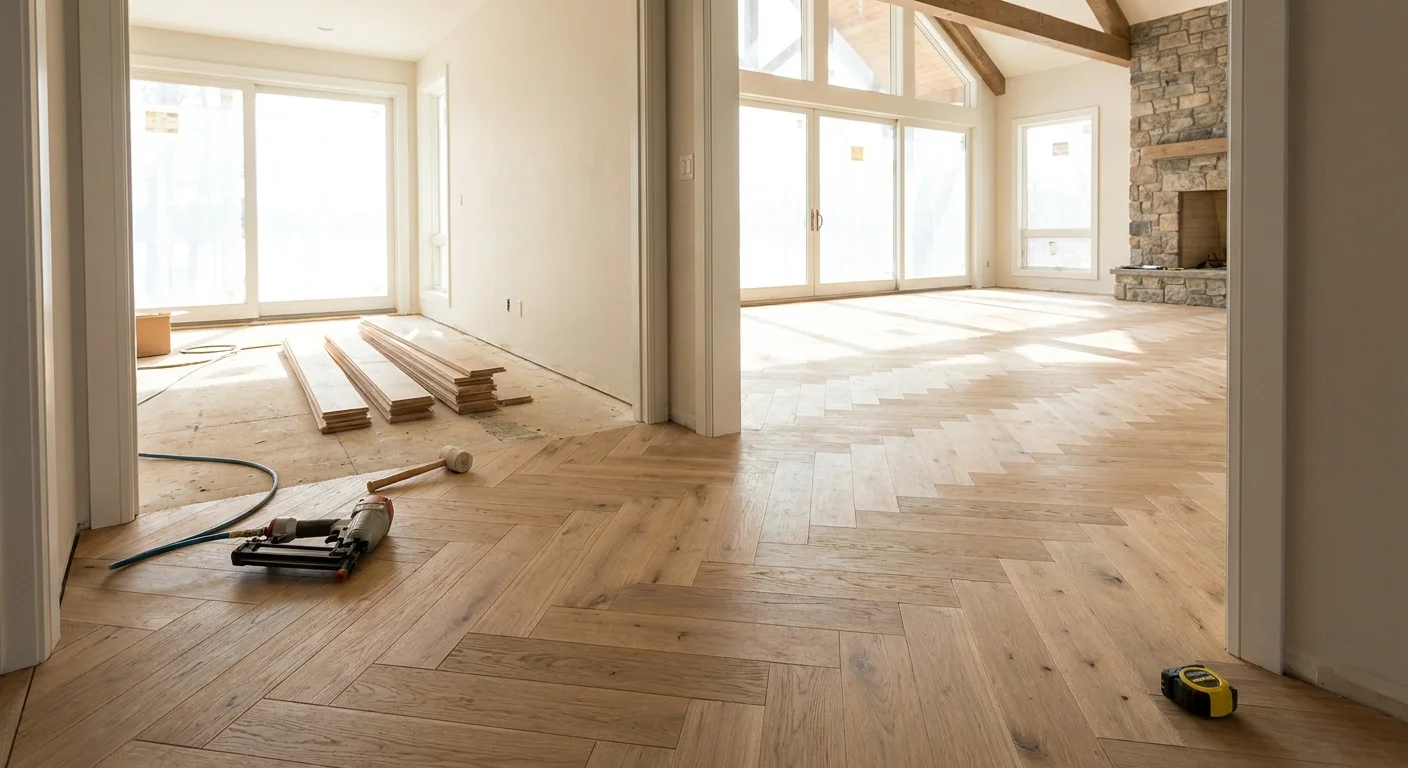
Installing new hardwood flooring is a significant investment that enhances a home's beauty, value, and comfort. This comprehensive guide outlines the essential steps and considerations for a successful hardwood installation, from selecting the right wood to understanding the process and ensuring proper maintenance. A professional installation typically involves careful subfloor preparation, proper wood acclimation, and precise fitting, ensuring longevity and a stunning finish.
Understanding Hardwood Flooring: Solid vs. Engineered
Before embarking on an installation project, it's crucial to understand the fundamental differences between solid and engineered hardwood. Each type offers distinct advantages and is suited for various applications and environmental conditions, especially in regions like Central NJ where humidity can fluctuate.
Solid Hardwood: Classic Beauty and Longevity
Solid hardwood flooring is crafted from a single piece of timber, typically 3/4 inch thick, offering unparalleled durability and the ability to be sanded and refinished multiple times over decades. Its timeless appeal and natural variations in grain and color make it a popular choice for living rooms, dining areas, and bedrooms. However, solid hardwood is more susceptible to moisture changes, making proper acclimation and stable humidity levels (ideally 30-50% relative humidity, as recommended by the NWFA) critical for preventing warping or gapping.
Engineered Hardwood: Stability and Versatility
Engineered hardwood consists of multiple layers of wood, with a top veneer of real hardwood bonded to a core of plywood or high-density fiberboard. This multi-ply construction makes engineered wood significantly more stable and resistant to moisture and temperature fluctuations than solid hardwood. It's an excellent option for basements, concrete slabs, or areas where solid hardwood might not be suitable. Engineered floors can often be installed below grade, and some high-quality engineered products can be refinished once or twice, depending on the thickness of the wear layer.
Key Differences and When to Choose Each
The choice between solid and engineered hardwood often comes down to subfloor type, moisture concerns, and long-term refinishing plans. Solid hardwood is ideal for upstairs rooms with a wood subfloor and stable environmental conditions, offering the greatest potential for refinishing. Engineered hardwood provides greater versatility, suitable for concrete subfloors, radiant heating systems, and areas with higher humidity, like a first-floor living room in a coastal town such as Long Branch or Asbury Park. While solid hardwood typically lasts 75-100 years or more with proper care, high-quality engineered options can also last 20-50 years.
Choosing the Right Hardwood Species for Your NJ Home
Selecting the right wood species is about more than just aesthetics; it involves considering durability, grain pattern, color, and how well it will perform in your specific environment, whether you're in a historic home in Red Bank or a modern residence in Holmdel.
Popular Hardwood Species and Their Characteristics
The durability of hardwood is often measured by the Janka hardness scale, which quantifies the wood's resistance to denting and wear. Here are some popular choices:
- Red Oak: (1290 Janka) A classic choice, known for its distinctive grain and reddish hues. Very durable and widely available.
- White Oak: (1360 Janka) Slightly harder than red oak, with a straighter grain and grayish-brown tones. Offers excellent stability.
- Maple: (1450 Janka) A very hard, dense wood with a fine, subtle grain. Great for high-traffic areas but can be more challenging to stain evenly.
- Hickory: (1820 Janka) One of the hardest domestic woods, featuring dramatic grain patterns and significant color variation. Excellent for active households.
- Brazilian Cherry (Jatoba): (2350 Janka) An exotic hardwood known for its exceptional hardness and rich, reddish-brown color that deepens over time.
Finish Options: From Natural to UV-Cured
The finish protects the wood and dictates its aesthetic. Common options include:
- Polyurethane: The most common, offering good durability and a variety of sheens (matte to high-gloss).
- Oil-Based Finishes: Penetrate the wood, enhancing its natural beauty and offering a more natural, matte look. Easier to repair localized damage but require more frequent reapplication.
- Water-Based Finishes: Low VOCs, fast-drying, and clear-looking. Good for those sensitive to odors.
- UV-Cured Finishes: Extremely durable, often used on prefinished hardwood, cured instantly with ultraviolet light.
Considering Climate and Lifestyle in Central NJ
For homes in Monmouth County or Freehold, where humidity can shift from humid summers to dry winters, selecting a stable species and finish is vital. Engineered hardwood is often preferred for areas prone to greater moisture fluctuations. Consider your family's lifestyle: do you have pets or young children? A harder wood species or a distressed finish might better conceal scratches and dents. IAC Home Improvement's experts can guide you through species selection, ensuring your choice performs optimally in the unique climate of NJ, NY, and PA.
Preparing Your Subfloor and Home for Installation
Proper preparation is paramount for a successful, long-lasting hardwood floor installation. Cutting corners here can lead to costly issues down the line.
Subfloor Requirements: Flatness, Dryness, and Structural Integrity
The subfloor must be clean, dry, flat, and structurally sound. For wood subfloors, this means ensuring all boards are securely fastened, free of squeaks, and level. The industry standard requires the subfloor to be flat to within 1/8 inch over 6-8 feet. Any significant unevenness must be addressed with sanding or leveling compounds. Moisture content is critical: wood subfloors should have a moisture content within 2-4% of the hardwood flooring itself. For concrete subfloors, a proper moisture barrier is essential, and the concrete must be fully cured and dry, often requiring moisture testing.
Acclimation: Essential for Preventing Future Issues
Hardwood flooring is a natural product and will expand and contract with changes in humidity. Acclimation is the process of allowing the wood to adjust to the temperature and humidity levels of its new environment before installation. This typically involves laying the unopened or opened bundles of flooring in the rooms where they will be installed for 3-5 days (or even longer) prior to work beginning. This crucial step minimizes future issues like cupping, crowning, or gapping, especially important in the varied climate of the Jersey Shore.
Site Preparation: Clearing and Protecting Your Space
Before installation day, your home needs to be ready. This includes:
- Clearing the Room: Remove all furniture, rugs, and existing flooring.
- Baseboard Removal: Carefully remove existing baseboards and trim, as they will be reinstalled or replaced after the new floor is in.
- Door Trimming: Plan for door casings and doors to be undercut or trimmed to allow the new flooring to fit underneath.
- Dust Control: While professionals use dust mitigation techniques, covering doorways and sensitive items can help contain dust.
- Temperature Control: Ensure the home's HVAC system is operational and maintaining a stable temperature between 60-80°F (15-27°C) and the recommended humidity levels throughout the acclimation and installation process.
Hardwood Installation Methods: A Step-by-Step Overview
The installation method chosen depends on the type of hardwood, the subfloor, and specific site conditions. Professional installers like IAC Home Improvement are proficient in all techniques.
Nail-Down and Staple-Down Installation
This is the most traditional method for solid hardwood flooring over a wood subfloor. Boards are blind-nailed or stapled through the tongue at an angle into the subfloor, securing them tightly without visible fasteners. An underlayment, often asphalt felt paper or rosin paper, is laid first to act as a moisture retarder and reduce squeaks. This method provides a very stable and long-lasting floor.
Glue-Down Installation Techniques
Glue-down is primarily used for engineered hardwood over concrete subfloors or plywood. A strong adhesive is spread directly onto the subfloor, and the flooring planks are pressed into place. This method creates a very solid feel underfoot and helps reduce sound transmission. It's crucial to use the correct type of adhesive, considering factors like moisture mitigation and elasticity, especially in areas like Colts Neck where concrete slabs are common.
Floating Floor Installation (for engineered)
A floating floor is an installation where the planks are not mechanically fastened to the subfloor. Instead, the planks are glued or clicked together along their edges to form a single, continuous unit that "floats" over an underlayment. This method is common for engineered hardwood and laminate and is suitable for concrete or existing flooring surfaces, offering flexibility and ease of installation. A high-quality underlayment is essential for sound dampening and moisture protection.
The Professional Installation Process
A typical professional hardwood installation by IAC Home Improvement follows these general steps:
- Subfloor Preparation: Inspecting, cleaning, leveling, and repairing the subfloor.
- Moisture Barrier/Underlayment: Installing appropriate barriers or underlayments.
- Layout and Starting Point: Determining the best direction for the planks and establishing a straight starting line, often parallel to the longest wall or main light source.
- First Rows: Precisely installing the first few rows, often face-nailed or glued to ensure stability.
- Field Installation: Systematically installing the remaining planks using the chosen method (nail, staple, glue, or float), ensuring tight seams and proper staggering of end joints.
- Cutting and Fitting: Carefully cutting planks to fit around obstacles, doorways, and at the perimeter.
- Finishing Touches: Reinstalling baseboards, shoe molding, and transition pieces.
- Cleanup: Thorough cleaning of the work area.
Our team ensures meticulous attention to detail at every stage, delivering beautiful, durable hardwood floors. Learn more about our hardwood installation services.
Costs, Timelines, and Maintenance Considerations
Understanding the financial and time commitments, as well as the long-term care, helps homeowners plan effectively for their hardwood flooring project.
Hardwood Installation and Refinishing Costs in NJ
Hardwood flooring costs vary widely based on wood species, finish, complexity of installation, and whether you choose solid or engineered. Typically, material costs range from $3 to $15+ per square foot. At IAC Home Improvement, hardwood installation labor starts at $4 per square foot for straight-lay solid or engineered hardwood, while herringbone and chevron patterns start at $12 per square foot; the wood itself is chosen separately, and installation projects start at $1,300. If you're looking to refresh existing floors, hardwood refinishing typically runs $2 to $4 per square foot, all-inclusive (sanding, stain, finish and labor), with projects starting at $1,600. While considering flooring, remember IAC Home Improvement is a full-service company also handling kitchen remodeling (starting around $17,000) and bathroom remodeling (starting around $9,000), allowing you to consolidate your home improvement projects with one trusted team.
Project Timelines and What to Expect
The timeline for hardwood installation depends on the project's size and complexity. For an average room (e.g., 500 sq ft), acclimation takes 3-5 days. Installation itself might take 2-4 days. If existing flooring needs removal, or subfloor repairs are extensive, this will add to the timeline. For site-finished floors, additional time is needed for sanding, staining, and multiple coats of finish to dry and cure. Most finishes allow light foot traffic within 24-48 hours, but full cure can take 7-14 days, during which heavy furniture and rugs should be avoided.
Long-Term Care and Maintenance for Your Hardwood Floors
Proper maintenance is key to preserving the beauty and longevity of your hardwood floors. Here are essential tips:
- Regular Cleaning: Sweep or vacuum (with a bare-floor setting) regularly to remove grit and dirt that can scratch the finish.
- Damp Mopping: Use a pH-neutral hardwood floor cleaner with a damp (not wet) mop. Avoid excessive water.
- Protect from Scratches: Use felt pads under furniture legs, place rugs in high-traffic areas, and avoid walking in high heels or cleats.
- Control Humidity: Maintain consistent indoor humidity levels (30-50%) to prevent expansion and contraction issues.
- Immediate Spill Cleanup: Wipe up spills immediately to prevent water damage or staining.
- Sunlight Protection: Use blinds or curtains to prevent prolonged exposure to direct sunlight, which can cause fading.
Why Choose Professional Hardwood Installation in NJ, NY, PA
While DIY might seem appealing, the complexities of hardwood installation often warrant professional expertise, especially for such a significant home investment. IAC Home Improvement brings unparalleled skill and reliability to projects across New Jersey, New York, and Pennsylvania.
Expertise in Local Conditions and Building Codes
Our team understands the specific challenges and nuances of installing hardwood in the diverse climates and varied housing stock of towns like Freehold, Colts Neck, and throughout Monmouth County. We are familiar with local building codes and ensure all installations meet or exceed industry standards, including those set by organizations like the National Wood Flooring Association (NWFA).
Quality Workmanship and Warranty Protection
Professional installation guarantees precision, proper subfloor preparation, correct acclimation, and the use of appropriate installation methods and materials. This attention to detail prevents common issues like squeaks, gaps, and warping, ensuring your floor lasts for decades. IAC Home Improvement stands behind its work with comprehensive warranties, providing peace of mind knowing your investment is protected. With over 100 5-star Google reviews and licenses in both NJ (#13VH13143000) and PA (#188007), our reputation speaks for itself.
IAC Home Improvement: Your Full-Service Partner
Beyond exceptional hardwood flooring installation, IAC Home Improvement is a comprehensive home improvement and construction company. We are your single trusted contractor for virtually any home renovation need. Whether you're considering new flooring, a kitchen remodel, a bathroom renovation, interior painting (starting at $6-$11 per square foot depending on scope), a new composite deck (complete packages with Trex Enhance decking, Fiberon Regency railings, framing and installation start at about $16,000 for 200 sq ft and about $24,000 for 300 sq ft, priced after a free on-site measurement), or even exterior work like masonry and landscaping, we manage your entire project. This full-service approach simplifies the renovation process, ensuring seamless coordination and consistent quality across all aspects of your home's transformation. Contact us today at (848) 358-7694 or email contact@iachomeimprovement.com to discuss your next project.
Frequently Asked Questions
How long does hardwood floor installation take?
The total time for hardwood floor installation varies. For an average-sized room (e.g., 300-500 sq ft), expect 3-5 days for acclimation of the wood, followed by 2-4 days for the actual installation. If the floors are to be site-finished (sanded, stained, and sealed in your home), allow an additional 3-7 days for these processes and proper drying/curing of the finish.
Can I install hardwood flooring over concrete?
Yes, engineered hardwood flooring can be successfully installed over concrete subfloors. Solid hardwood is generally not recommended directly over concrete due to moisture concerns. For engineered hardwood, a proper moisture barrier and often a glue-down or floating installation method are used to ensure stability and prevent moisture-related issues. Concrete subfloors must be clean, dry, flat, and fully cured before installation.
What is the best way to clean hardwood floors?
The best way to clean hardwood floors involves regular sweeping or vacuuming (using a bare-floor setting) to remove abrasive dirt and debris. For deeper cleaning, use a pH-neutral hardwood floor cleaner specifically designed for wood floors, applied with a damp (not wet) microfiber mop. Avoid steam cleaners, excessive water, and harsh chemical cleaners, as these can damage the finish and the wood itself.
How often do hardwood floors need to be refinished?
The frequency of hardwood floor refinishing depends on the wood species, the original finish's durability, and the level of traffic. Generally, solid hardwood floors can be sanded and refinished every 7-15 years in high-traffic areas, or 15-25 years in less-used spaces. Solid hardwood can typically be refinished multiple times (e.g., 5-7 times) over its lifespan. Engineered hardwood with a thick wear layer might be refinished once or twice, while those with thinner veneers are typically not candidates for sanding and refinishing.
Authoritative resource: National Wood Flooring Association.