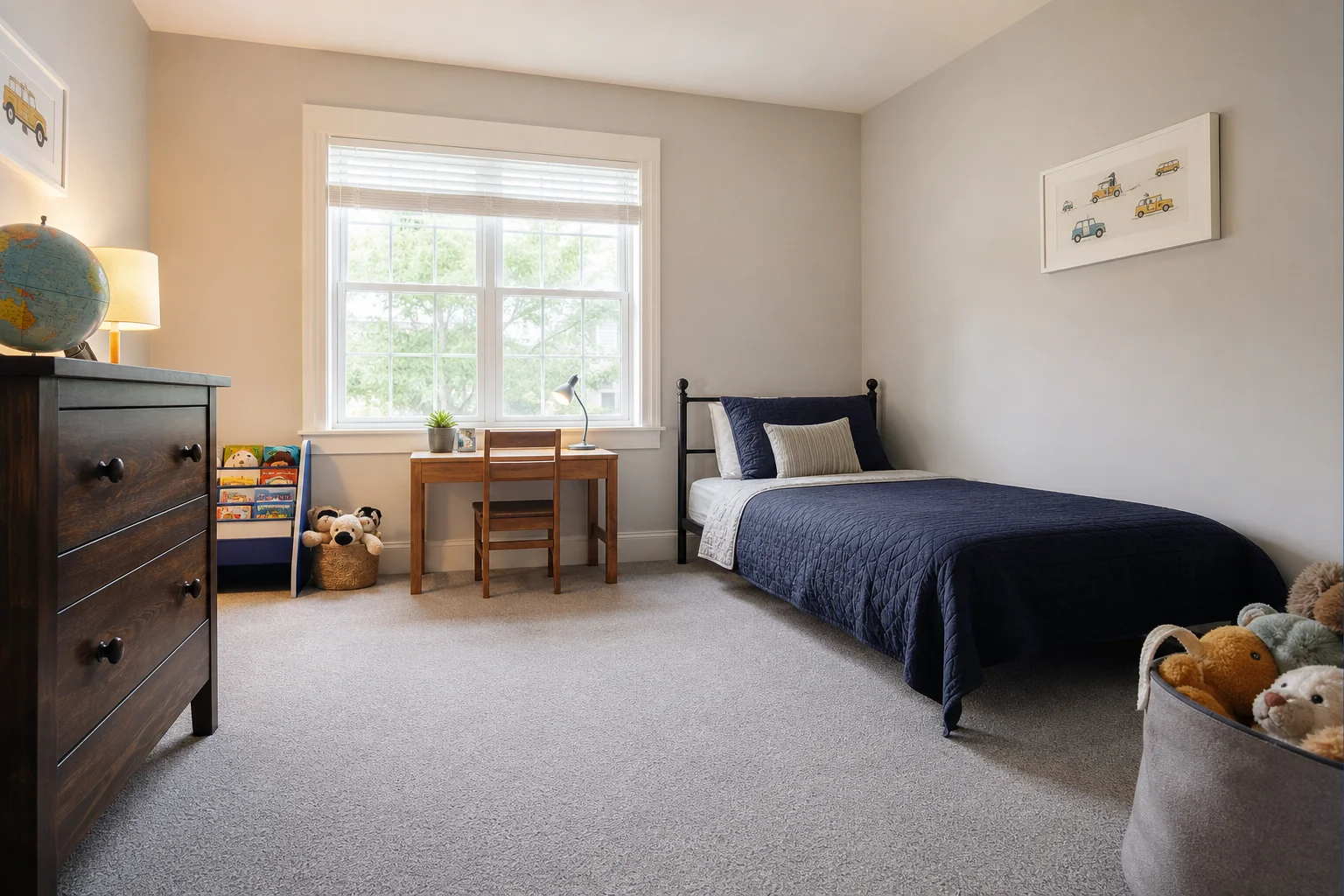
In New Jersey in 2026, carpet wins for bedroom softness and warmth, while luxury vinyl plank (LVP), at about $8 per square foot all-inclusive, wins for easier cleanup. For most homeowners, the choice comes down to how much they value quiet comfort versus a hard surface that handles everyday spills and pet messes.
Compare carpet vs LVP in bedrooms by looking beyond appearance: padding, subfloor condition, maintenance habits and the people using the room can all change which floor feels right.
Is carpet or LVP better for bedrooms?
Carpet is generally better for a soft, cozy bedroom, while LVP is a practical choice when easy cleaning is the priority. Neither is automatically quieter, healthier or cheaper in every installation.
How do the two flooring types compare?
Carpet is a textile floor covering installed over a separate pad. LVP is a resilient, wood-look floor made in planks, commonly installed as a floating floor over a prepared subfloor.
| Criterion | Carpet | LVP |
|---|---|---|
| Feel | Soft and warm | Firm and smooth |
| Noise | Absorbs sound | Depends on assembly |
| Cleaning | Vacuum and spot-clean | Sweep and damp-mop |
| Pet messes | Can soak into fibers | Easier surface cleanup |
| Cost scope | Labor plus selected materials | About $8 per sq ft all-inclusive |
The cost entries cover different scopes. The LVP figure includes plank, installation and shoe molding, while carpet and pad are chosen and priced separately from installation labor.
What should you consider before selecting a floor?
Start with how the bedroom is used, then check the condition of the existing floor. A nursery above a living room may call for different priorities than a ground-floor guest room used by pets.
Consider whether you prefer a cushioned surface, need to clean frequent spills or want a consistent hard-floor look throughout the home. IAC’s carpet installation service can help you evaluate carpet and pad choices for the room.
How do carpet and LVP compare for comfort, warmth and noise?
Carpet usually feels softer and warmer underfoot and helps absorb sound within a bedroom. LVP has a firmer feel, and its sound performance depends on the plank, underlayment and floor assembly.
Which floor feels warmer and softer?
Carpet fibers and cushion make standing and walking more forgiving, especially on cold mornings. Pad density and thickness affect the feel, so choose a pad that meets the carpet manufacturer’s recommendations rather than assuming the thickest option is best.
LVP does not have the same built-in softness, but an area rug can add warmth beside the bed. Check the flooring manufacturer’s rug and backing guidance to avoid discoloration or damage.
Which floor is quieter in an upstairs bedroom?
Carpet and pad generally reduce footfall noise and sound reflection better than a bare hard surface. That can matter in a Middletown bedroom above a family room or a Long Branch home with light sleepers downstairs.
For LVP, underlayment and the construction beneath the floor influence impact sound. Some planks have an attached pad and limit additional underlayment, so follow the product instructions. When comparing tested assemblies, Impact Insulation Class (IIC) is an industry rating for impact sound, but the rating applies to the tested assembly, not the plank alone.
Which is easier to clean with allergies or pets?
LVP is generally easier to sweep and wipe after spills or pet accidents. Carpet can be comfortable for households with pets or allergies, but it requires consistent cleaning and prompt attention to moisture.
Does LVP help with bedroom allergens?
LVP gives dust and pet hair fewer fibers to cling to, making them easier to remove from the surface. It is not an allergy cure: bedding, upholstered furniture, air filtration and cleaning habits also affect indoor exposure.
Carpet can hold particles until they are removed by vacuuming. The Asthma and Allergy Foundation of America recommends reducing allergen exposure and using a vacuum with a certified asthma and allergy friendly filter or a HEPA filter. Follow your clinician’s advice for specific allergies.
How do pets affect maintenance and wear?
LVP makes a sensible choice when a dog tracks dirt into a bedroom or a cat occasionally misses the litter box. Wipe accidents promptly and clean plank seams according to the manufacturer’s instructions. Water-resistant planks do not make the subfloor or every installation waterproof.
Carpet can be comfortable for pets, but liquids may reach the pad and odors can linger if a spill is not cleaned thoroughly. Some loops can catch claws, while a cut-pile carpet may suit certain households better. Ask about stain resistance and cleaning requirements before selecting a product.
What does routine care look like?
Both floors last and look better when grit and spills are addressed early. Use the cleaning methods approved for the product you select.
- Carpet: Vacuum regularly, blot spills rather than rubbing them, and follow the manufacturer’s guidance for deeper cleaning.
- LVP: Sweep or vacuum with a hard-floor attachment, then damp-mop with an approved cleaner. Avoid soaking the floor or using a steam mop unless the manufacturer permits it.
- Both: Use furniture protection and address tracked-in grit before it wears the surface.
For help choosing a bedroom floor, call (848) 358-7694, text us a photo or request a free estimate.
How much do carpet and LVP cost for a 12 x 14 bedroom?
A 12 x 14 bedroom measures 168 square feet before allowances for the actual layout. LVP is about $1,350 all-inclusive for that size, while carpet labor starts from $3 per square foot, subject to the project minimum and separate material selections.
What is included in the LVP estimate?
IAC’s LVP pricing is about $8 per square foot all-inclusive, covering plank, installation and shoe molding, with projects from $1,300. The approximately $1,350 figure for a 12 x 14 bedroom is a planning estimate, not a guaranteed quote.
Subfloor condition, room layout and other project details still need to be assessed. Learn more about vinyl flooring installation and the product choices available for bedrooms.
What is included in carpet labor?
Carpet labor starts from $3 per square foot and includes pad installation, with carpet projects from $800. Carpet and pad are chosen and priced separately, and old carpet removal is quoted separately.
For the same 168-square-foot bedroom, multiplying the labor rate alone does not establish the project price because the minimum applies and materials are separate. Do not compare that labor-only rate directly with the all-inclusive LVP figure.
How do you get a useful comparison?
Compare the proposed project totals after the rooms and selections have been reviewed, rather than comparing unlike per-square-foot figures. IAC provides one clear project total after a free on-site measurement.
- Measure the room and note closets, transitions and existing flooring.
- Choose the carpet and pad or LVP product you want evaluated.
- Discuss old flooring removal, subfloor condition and any other work needed before installation.
- Compare the quoted scope and total for each option.
When should you choose carpet or LVP for a bedroom?
Choose carpet when softness and quieter footfalls matter most. Choose LVP when you prefer a hard surface that is straightforward to clean and coordinates with adjoining floors.
When is carpet the right choice?
Carpet is a strong fit for an upstairs primary bedroom where bare feet, warmth and reduced sound are high priorities. It can also work well in a child’s room where a cushioned play surface is desirable and the household is prepared to vacuum regularly.
In a Red Bank home with bedrooms over a busy living area, carpet and a suitable pad may make the room feel more settled. Review fiber, pile and pad options in the carpet installation guide before making a selection.
When is LVP the right choice?
LVP is a practical choice for a guest bedroom that doubles as a pet space, or for a homeowner who wants to sweep up hair and dust without cleaning carpet fibers. It also makes sense when the bedroom opens onto an existing hard-floor hallway and a coordinated appearance matters.
For an Asbury Park home where sandy shoes regularly reach the bedroom, a durable wear layer and easy surface cleaning may be especially appealing. Product specifications and installation methods vary, so review the LVP flooring guide and the manufacturer’s instructions.
What does IAC usually recommend?
IAC usually recommends starting with the room’s comfort and cleaning priorities, then checking the subfloor and selected product before deciding. Carpet often suits homeowners who want a quiet, cushioned bedroom, while LVP often suits those managing frequent pet messes or preferring a hard floor.
Both options need proper preparation. A subfloor that is not sufficiently flat can cause problems for floating LVP, while carpet performance depends in part on a suitable pad and proper installation. IAC is also a full-service home improvement company for homeowners planning flooring alongside kitchen and bathroom remodeling, painting, carpentry, basements, decks, masonry, concrete or pavers.
Frequently Asked Questions
These answers cover common bedroom flooring questions that can help you make a final choice.
Is carpet or LVP better for a bedroom?
Carpet is usually better if you want a soft, warm surface and quieter footfalls. LVP is usually better if you prefer a firm surface that is easier to sweep and wipe. Consider who uses the room, whether pets are present and how much regular cleaning you are willing to do before choosing.
Is LVP quieter than carpet upstairs?
Carpet with a suitable pad generally absorbs more footfall sound than a bare LVP floor. LVP sound performance depends on the underlayment and the complete floor assembly, not just the plank. Check the manufacturer’s instructions before adding underlayment, especially when the product already has an attached pad.
Is carpet or LVP better for allergies?
LVP makes dust and pet hair easier to see and remove from a smooth surface, but neither floor eliminates allergens. Carpet fibers can hold particles until vacuumed, so regular cleaning matters. Bedding, pets and air filtration also affect exposure, and a clinician can advise on your household’s specific allergy needs.
Can you put LVP over carpet in a bedroom?
Generally, remove carpet and pad before installing LVP so the planks have the firm, flat support specified by their manufacturer. Carpet can compress and interfere with a floating floor’s locking system. After removal, inspect the subfloor for damage, moisture and flatness, then prepare it according to the selected product’s instructions.
Authoritative resource: The Carpet and Rug Institute.