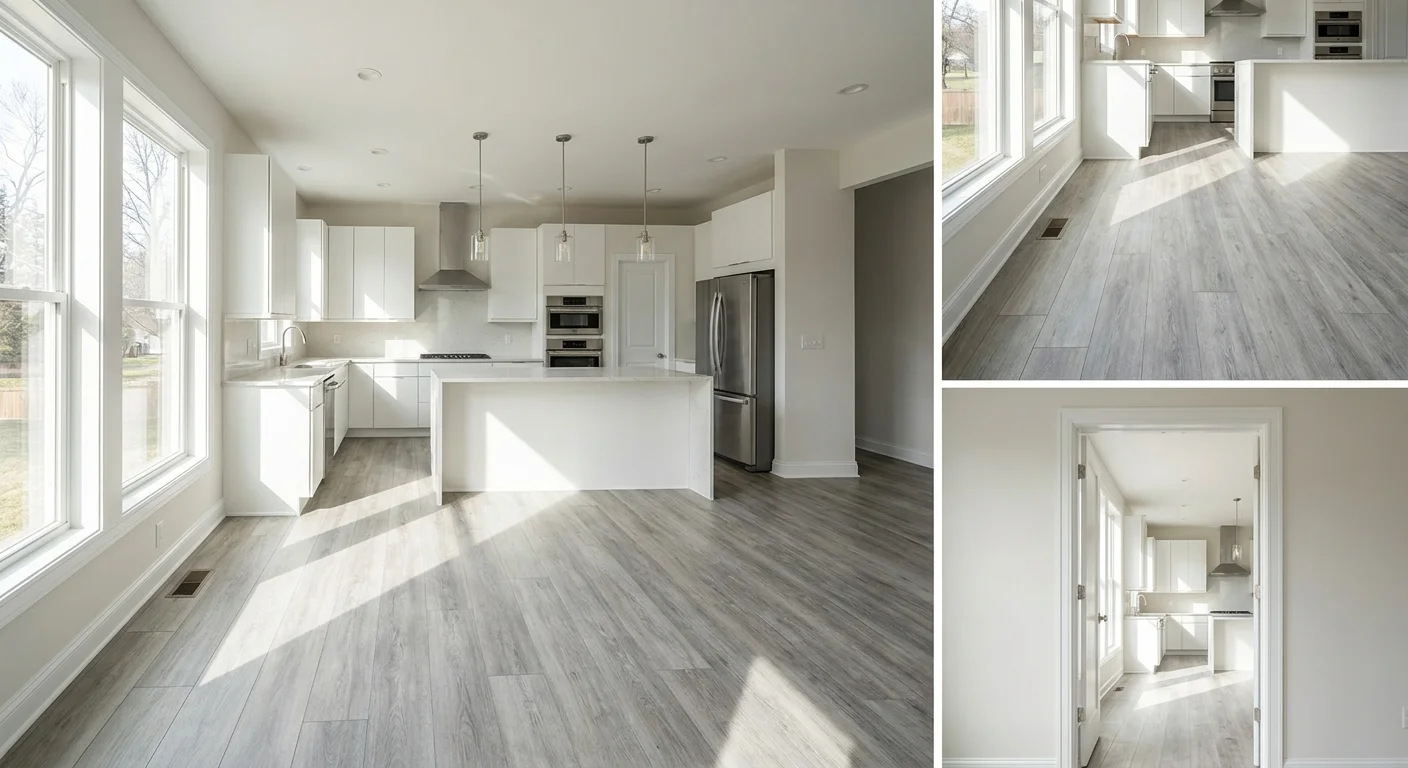
Luxury Vinyl Plank (LVP) flooring has revolutionized the home improvement landscape across New Jersey, New York, and Pennsylvania, offering a highly durable, waterproof, and aesthetically versatile alternative to traditional flooring materials. It's an engineered product designed to mimic the look and feel of natural wood or stone, providing homeowners with a practical yet elegant solution for virtually any room in their house. For those seeking the perfect blend of style, resilience, and value for their Philadelphia row home or Jersey Shore bungalow, LVP presents an outstanding choice.
Understanding Luxury Vinyl Plank (LVP) Flooring
Luxury Vinyl Plank, often simply called LVP, is a multi-layered synthetic flooring product that has gained immense popularity for its ability to combine high-performance characteristics with sophisticated design. Unlike older generations of sheet vinyl, LVP comes in individual planks or tiles, allowing for more realistic installations and easier replacement if a single piece is damaged. It’s a top choice for homeowners in areas like Monmouth County and Long Branch seeking both beauty and practicality.
What Makes LVP "Luxury"?
The "luxury" in LVP refers to its superior aesthetic appeal and enhanced performance features compared to standard vinyl. Modern manufacturing techniques allow LVP to replicate the intricate grain patterns, textures, and color variations of natural wood species (from rich oak to contemporary maple) and even natural stone with remarkable accuracy. This realism is often achieved through high-definition photographic layers and embossed-in-register (EIR) textures that align with the visual pattern, providing a tactile experience that closely mimics the real material. This attention to detail elevates LVP from a utilitarian floor to a genuine design element.
The Anatomy of an LVP Board
Understanding the construction of an LVP plank reveals why it's so durable and versatile. Typically, LVP is composed of four main layers:
- Backing Layer: The base layer that provides structural stability and resistance to moisture.
- Core Layer: The main body of the plank, often made from PVC or a wood plastic composite (WPC) or stone plastic composite (SPC) for added rigidity and waterproof properties. This layer gives LVP its dimensional stability and impact resistance.
- Print Layer: A high-definition photographic film that gives the LVP its realistic appearance, replicating wood, stone, or other patterns.
- Wear Layer: The transparent top coating made from a clear vinyl, sometimes infused with ceramic beads or other enhancements, that protects the print layer from scratches, scuffs, and stains. This is the most crucial layer for durability.
Key Benefits Setting LVP Apart
LVP offers a compelling suite of advantages that make it a leading choice for many homeowners:
- Exceptional Durability: Its robust wear layer resists scratches, dents, and scuffs, making it ideal for busy households with children and pets.
- 100% Waterproof: Unlike laminate or hardwood, LVP is inherently waterproof, making it perfect for moisture-prone areas like bathrooms, kitchens, and basements.
- Low Maintenance: Easy to clean with simple sweeping, vacuuming, and occasional damp mopping.
- Versatile Aesthetics: Wide array of styles, colors, and textures to match any interior design scheme.
- Comfort Underfoot: Generally softer and warmer than tile, providing a more comfortable walking surface.
- Cost-Effective: Offers the high-end look of natural materials at a fraction of the cost.
LVP's Unmatched Durability and Waterproof Properties
One of the primary reasons homeowners choose LVP is its remarkable resilience, particularly its resistance to moisture. This characteristic opens up design possibilities that other flooring types simply cannot offer, especially in high-traffic or spill-prone areas.
Waterproof vs. Water-Resistant: A Critical Distinction
While many flooring options claim to be "water-resistant," LVP stands out for being genuinely waterproof. This means that if properly installed, LVP planks themselves will not swell, buckle, or warp due to water exposure, even in standing water. This is largely due to its PVC or composite core, which is impervious to moisture. Water-resistant floors, like many laminates, can repel surface spills for a period, but prolonged exposure can still lead to damage. This distinction is vital for areas prone to leaks, spills, or high humidity, such as basements in Freehold or kitchens in Red Bank.
Wear Layer: Your Floor's First Line of Defense
The wear layer is the unsung hero of LVP flooring. This transparent top coating dictates how well your floor will stand up to daily abuse. Wear layer thickness is measured in mils (thousandths of an inch) or microns. For residential use, a wear layer of 6 to 12 mil is generally sufficient, while high-traffic commercial applications or very active homes might benefit from 20 mil or higher. For example, a 28-mil wear layer on an LVP product will offer significantly greater resistance to scratches and abrasions than a 6-mil layer, ensuring your floors look newer for longer. When selecting LVP, always inquire about the wear layer thickness, as it directly impacts the floor's longevity and warranty.
Ideal Applications: Kitchens, Bathrooms, and Basements
Given its waterproof nature and durability, LVP is perfectly suited for rooms where traditional flooring materials often falter:
- Kitchens: Spills, splashes, and heavy foot traffic are no match for LVP, making it a hygienic and easy-to-maintain choice for the heart of your home.
- Bathrooms: From master ensuites to powder rooms, LVP provides the look of wood or stone without the worry of water damage or the coldness of ceramic tile.
- Basements: Often susceptible to moisture, LVP is an excellent solution for creating warm, inviting living spaces below ground level, providing a comfortable and durable surface even in areas with higher humidity.
- Mudrooms & Entryways: Resists dirt, mud, and water tracked in from outside, making cleanup a breeze.
- Commercial Spaces: Its robust nature makes it suitable for light commercial use, such as offices or boutiques in downtown Asbury Park.
Aesthetics and Design Versatility with LVP
Beyond its practical benefits, LVP shines in its ability to offer unparalleled design flexibility. Homeowners are no longer forced to choose between beauty and function; with LVP, they can have both.
Replicating Natural Materials: Wood and Stone
The advancements in digital printing technology have transformed LVP into a master of disguise. It can authentically replicate a vast array of natural materials, from the rich, warm tones of wide-plank oak to the cool, sophisticated appearance of slate or marble. High-definition images are printed onto the film layer, capturing every knot, grain, and variation with stunning clarity. Many LVP products also feature beveled edges and embossed textures that mimic the feel of wire-brushed hardwood or chiseled stone, enhancing the illusion and adding depth to your flooring design.
Styles and Textures: From Modern to Rustic
Whether your home's aesthetic leans towards sleek modernism, cozy farmhouse, or classic traditional, there's an LVP style to complement it. You can find LVP in a myriad of plank widths and lengths, from narrow, traditional strips to trendy, extra-wide planks that make rooms feel more expansive. Textural options include smooth, hand-scraped, distressed, and even registered embossing, where the texture perfectly aligns with the printed wood grain. This allows for personalized design choices, whether you're revamping a historic home in Philadelphia or building a contemporary dwelling in Holmdel.
Design Considerations for Your New Jersey Home
When selecting LVP for your home in NJ, NY, or PA, consider these design elements:
- Plank Size: Wider planks can make smaller rooms feel larger, while narrower planks offer a more traditional look.
- Color Palette: Lighter colors can brighten a space and make it feel more open; darker tones add warmth and sophistication.
- Underfoot Feel: While LVP is generally softer than tile, adding an underlayment can enhance comfort and sound absorption, especially important in multi-story homes.
- Light Exposure: Consider how natural light interacts with the flooring throughout the day to ensure the chosen shade and texture enhance the room's ambiance.
LVP Installation: What Homeowners Need to Know
Proper installation is paramount to unlocking the full benefits and longevity of your LVP flooring. While some homeowners might consider DIY, professional installation ensures the manufacturer's warranty remains valid and the floor performs as expected for decades.
Floating vs. Glue-Down Installation Methods
LVP offers flexibility in installation methods, primarily falling into two categories:
- Floating Installation (Click-Lock): This is the most common and often preferred method. Planks are designed with an interlocking tongue-and-groove system that clicks together, forming a continuous surface that "floats" over the subfloor without being directly attached. This method is faster, allows for expansion and contraction, and is generally easier to remove if needed. Many homeowners appreciate the minimal adhesive use.
- Glue-Down Installation: In this method, LVP planks are permanently adhered to the subfloor using a specialized adhesive. This creates a very stable and solid feel underfoot, making it ideal for high-traffic areas or commercial settings. It can also be preferred for specific subfloor conditions or when maximum stability is desired.
Subfloor Preparation: The Foundation of a Flawless Floor
Regardless of the installation method, thorough subfloor preparation is critical. The subfloor must be clean, dry, flat, and structurally sound. Any imperfections, such as unevenness or debris, will telegraph through the LVP over time, leading to an unsightly and potentially damaged floor. For concrete subfloors, a moisture test is often required to ensure humidity levels are within acceptable ranges, typically below 5.5% MC (Moisture Content) or 75% RH (Relative Humidity). For wood subfloors, ensuring they are free of rot, squeaks, and excessive deflection is crucial. Skipping this vital step is the most common cause of flooring issues down the line.
Why Professional Installation Matters for Lasting Results
While LVP is often marketed as DIY-friendly, professional installation by experienced technicians like those at IAC Home Improvement offers significant advantages. Our experts understand the nuances of subfloor preparation, proper acclimation of materials, and precise cutting and fitting techniques that ensure a seamless, watertight finish. We work with leading brands such as MSI and COREtec, ensuring quality materials and expert handling. Incorrect installation can lead to gapping, buckling, or premature wear, voiding warranties and costing more in the long run. Entrusting your LVP installation to professionals guarantees a beautiful, durable floor that will perform excellently for its entire lifespan, backed by our expertise and commitment to quality across NJ, NY, and PA.
Comparing LVP to Other Popular Flooring Options
Deciding on the right flooring for your home involves weighing the pros and cons of various materials. LVP often emerges as a strong contender when compared to other popular choices due to its unique combination of attributes.
LVP vs. Hardwood Flooring: A Head-to-Head Comparison
Hardwood flooring offers timeless beauty and increases home value, but LVP provides practical advantages, especially in certain environments.
| Feature | Luxury Vinyl Plank (LVP) | Hardwood Flooring |
|---|---|---|
| Appearance | Highly realistic wood look, wide variety of styles. | Authentic natural wood, unique grain patterns. |
| Water Resistance | 100% waterproof (ideal for kitchens, bathrooms). | Susceptible to water damage, not suitable for wet areas. |
| Durability | Excellent scratch/dent resistance, durable wear layer. | Can scratch/dent; can be refinished multiple times. |
| Maintenance | Easy to clean, low maintenance. | Requires specific cleaning, can need refinishing. |
| Typical Cost | About $8 per square foot all-inclusive (plank, installation and shoe molding), or from $4 per square foot for installation only. Projects from $1,300. | Labor from $4 per square foot for straight-lay solid or engineered hardwood (herringbone and chevron from $12 per square foot), wood chosen separately; projects from $1,300. Refinishing $2–$4 per square foot, all-inclusive (from $1,600). |
| Comfort | Softer, warmer underfoot than tile. | Solid feel, can be cold. |
LVP vs. Laminate: Understanding the Key Differences
LVP and laminate are both popular engineered flooring options that mimic natural materials, but they have fundamental differences:
- Core Material: Laminate typically has a high-density fiberboard (HDF) core, which is wood-based and susceptible to water damage if exposed for too long. LVP, with its PVC or composite core, is inherently waterproof.
- Water Resistance: This is the biggest differentiator. LVP is waterproof; laminate is water-resistant at best, making LVP superior for kitchens, bathrooms, and basements.
- Durability: Both are durable, but LVP's wear layer often provides superior resistance to dents and deep scratches due to its flexible nature, whereas laminate can chip if a heavy object is dropped.
- Sound: LVP tends to be quieter underfoot than laminate, which can sometimes have a hollow sound.
LVP vs. Tile: Practicality Meets Style
While ceramic or porcelain tile offers extreme durability and water resistance, LVP presents several advantages for homeowners:
- Comfort and Warmth: LVP is significantly warmer and softer underfoot than tile, which can be cold and hard, especially important in living areas or bedrooms.
- Installation Complexity: LVP installation is generally quicker and less labor-intensive than tile, which requires grout, specialized cutting tools, and longer drying times. An installed tile floor starts at about $13 per square foot with standard porcelain or ceramic tile included (tile projects from $1,500), compared with about $8 per square foot for LVP with the plank included.
- Grout Maintenance: LVP requires no grout, eliminating the need for periodic cleaning and sealing that grout lines demand.
- Repairability: If a single LVP plank is damaged, it can often be replaced more easily than a cracked tile.
Cost, Maintenance, and Longevity of LVP
Investing in new flooring is a significant decision for any homeowner. Understanding the long-term costs, maintenance requirements, and expected lifespan of LVP helps in making an informed choice.
LVP Flooring Costs in NJ, NY, and PA
The cost of LVP flooring varies based on the quality of the material (wear layer thickness, core type, brand), design complexity, and installation method. On the material side alone, homeowners in New Jersey, New York, and Pennsylvania will see LVP priced from about $2.00 to $7.00 per square foot. With IAC Home Improvement, a complete LVP floor runs about $8 per square foot all-inclusive, covering the vinyl plank, installation and shoe molding. If you have already purchased your flooring, installation alone starts at $4 per square foot, and LVP projects start at $1,300. Here is how that compares with other flooring types:
- LVP: about $8/sqft all-inclusive, or from $4/sqft installation only
- Hardwood: from $4/sqft installation labor (straight lay; herringbone and chevron from $12/sqft), wood chosen separately; $2–$4/sqft all-inclusive refinishing
- Tile: from about $13/sqft installed, standard porcelain or ceramic tile included
- Laminate: from $4/sqft installation labor, laminate chosen separately
Maintaining Your LVP Floor for Years to Come
One of LVP's most attractive features is its ease of maintenance. To keep your LVP floors looking pristine:
- Regular Cleaning: Sweep or vacuum (using a hard floor setting) regularly to remove dirt and grit that can scratch the wear layer.
- Damp Mopping: Mop with a damp cloth or mop using a pH-neutral cleaner specifically designed for vinyl flooring. Avoid excessive water, harsh chemicals, abrasive cleaners, or steam mops, as these can damage the wear layer.
- Protect from Scratches: Use felt pads under furniture legs, and consider walk-off mats at entryways to trap dirt and debris.
- Avoid Direct Sunlight: While LVP is UV resistant, prolonged exposure to intense, unfiltered sunlight can cause fading over many years. Use curtains or blinds in sunny rooms.
Warranty and Long-Term Value
Most reputable LVP manufacturers offer substantial warranties, reflecting the product's durability. Residential warranties commonly range from 15 to 30 years, with some premium products offering lifetime residential warranties. Commercial warranties are typically shorter, around 5 to 10 years, due to higher traffic demands. The long lifespan and low maintenance requirements of LVP contribute to excellent long-term value. It's a durable, attractive, and cost-effective flooring solution that enhances your home's appeal and functionality for many years, making it a smart investment for any homeowner. Beyond just flooring, remember that IAC Home Improvement is a full-service home improvement and construction company. We can handle your entire project, from kitchen and bathroom remodeling (kitchens $17K-$45K, bathrooms $9K-$25K) to interior painting ($6-$11/sqft), composite decks (complete packages with Trex Enhance decking, Fiberon Regency railings, framing and installation from about $16,000 for 200 sq ft and about $24,000 for 300 sq ft), and more, providing one trusted contractor for all your home's needs.
Frequently Asked Questions About LVP
How long does LVP flooring last?
With proper installation and maintenance, high-quality LVP flooring can last anywhere from 15 to 30 years, and often longer. The lifespan primarily depends on the thickness of the wear layer and the quality of the core material, with thicker wear layers (e.g., 20+ mil) offering superior longevity.
Can LVP be installed over existing tile or concrete?
Yes, LVP can often be installed over existing tile or concrete, provided the existing surface is clean, dry, flat, and structurally sound. For tile, ensuring the grout lines are not too deep and the surface is level is crucial. For concrete, a moisture test is essential to prevent future issues. Professional subfloor preparation is key to a successful overlay installation.
Is LVP better than laminate for homes with pets?
Yes, LVP is generally better than laminate for homes with pets, primarily due to its 100% waterproof nature. Pet accidents, spills, and water tracked in from outside will not damage LVP's core, unlike laminate which can swell and warp. Additionally, LVP's durable wear layer is highly resistant to scratches from pet claws.
What is the best way to clean LVP?
The best way to clean LVP is with regular sweeping or vacuuming (using a hard floor setting) to remove loose dirt and grit. For deeper cleaning, use a damp mop with a pH-neutral cleaner specifically formulated for vinyl floors. Avoid abrasive cleaners, wax-based products, or steam mops, as these can damage the wear layer and leave a residue. Promptly wipe up spills to prevent staining.
Ready to transform your home with beautiful, durable Luxury Vinyl Plank flooring? Contact IAC Home Improvement today for a consultation. Our licensed and insured team serves homeowners throughout New Jersey, New York, and Pennsylvania with expertise and dedication. Call us at (848) 358-7694 or email contact@iachomeimprovement.com. We're proud of our 5.0 rating with 100+ Google reviews and hold NJ License #13VH13143000 and PA License #188007. Visit our vinyl flooring service page or our main flooring page for more information!
Authoritative resource: This Old House.