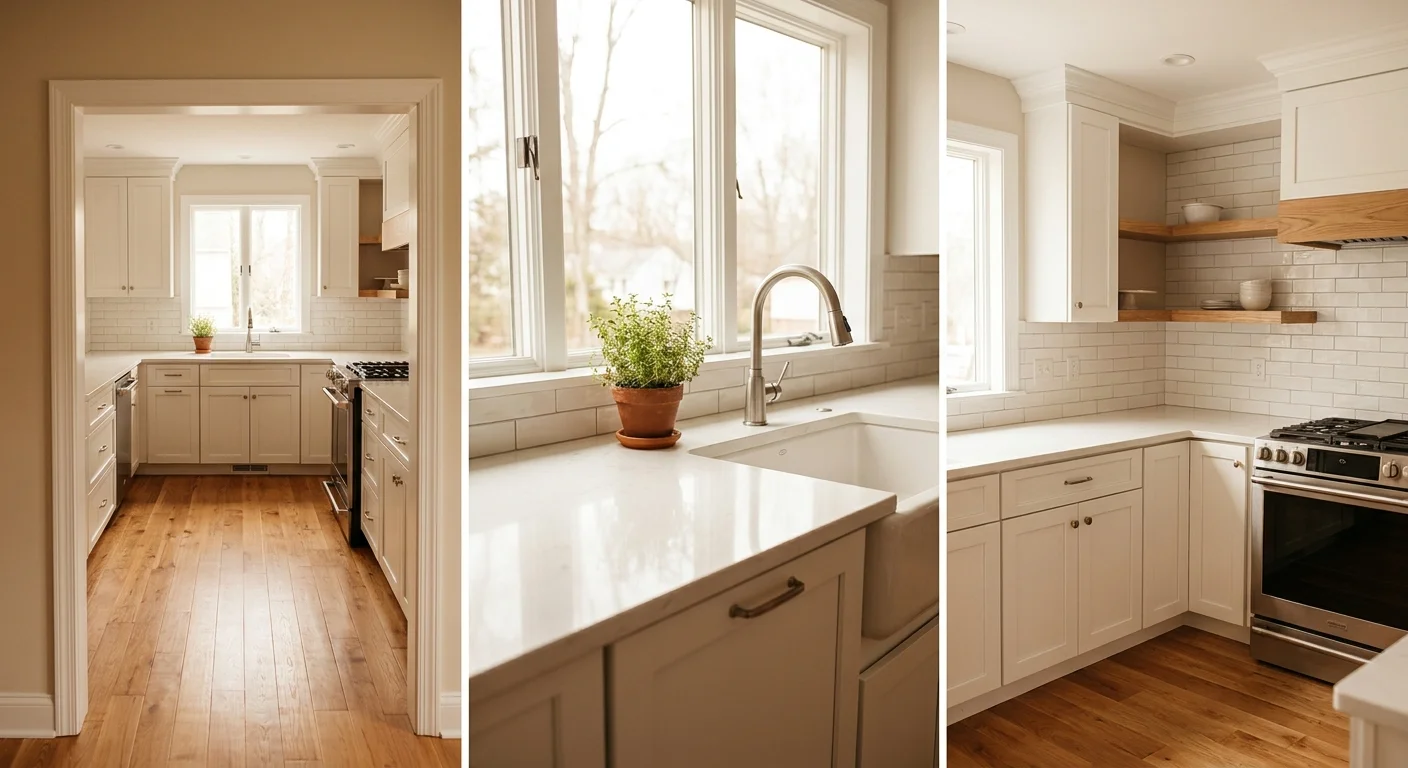
Hiring a kitchen remodeler in New Jersey in 2026 requires careful vetting to ensure a smooth project and a stunning result. With NJ License #13VH13143000, IAC Home Improvement helps homeowners throughout Monmouth County and beyond navigate this crucial decision, ensuring their investment leads to a dream kitchen. This checklist provides essential questions to ask, helping you compare contractors fairly and confidently.
What are the essential credentials a kitchen remodeler in NJ needs?
Before entrusting your home to any contractor, verifying their foundational credentials is paramount. These legal and professional requirements protect you, your investment, and ensure the quality of work.
Is the contractor licensed and registered in New Jersey?
In New Jersey, all home improvement contractors must be registered with the Division of Consumer Affairs. This registration, governed by the New Jersey Consumer Fraud Act, requires contractors to meet specific criteria, including maintaining a physical business location. Always ask for their New Jersey Home Improvement Contractor registration number (e.g., IAC Home Improvement's is NJ License #13VH13143000) and verify it on the state's website. For projects in Pennsylvania, ensure they hold the relevant PA license, such as IAC's PA License #PA188007.
Does the remodeler carry adequate insurance coverage?
A reputable kitchen remodeler should carry comprehensive general liability insurance, which protects your property from damage during the renovation, and workers' compensation insurance, which covers their employees in case of injury on your property. Request current certificates of insurance directly from their insurance provider, not just a copy from the contractor, to confirm coverage validity and limits. This step safeguards you from potential financial liability should an accident occur.
Can you provide references and a portfolio of past kitchen projects?
Reviewing a contractor's past work and speaking with previous clients offers invaluable insight into their quality, reliability, and communication. Ask for at least three recent references who had similar kitchen remodeling projects. Additionally, examine their portfolio for examples of kitchen designs and finishes that align with your vision. IAC Home Improvement, for instance, is rated 5.0 on Google with 100+ reviews, reflecting our commitment to client satisfaction.
How will my kitchen remodeling project be managed day-to-day?
Understanding the project management structure is key to a stress-free renovation. A clear chain of command and communication plan ensures your project stays on track and any issues are resolved promptly.
Who will be my main point of contact and oversee the project on-site?
A dedicated project manager or lead supervisor should be assigned to your kitchen remodel. This individual will be responsible for daily operations, coordinating trades, and ensuring the project adheres to the design and schedule. Clarify who this person is, their experience, and how often they will be on-site, particularly in locations like Red Bank or Asbury Park where consistent oversight is vital.
How will you communicate project progress and schedule changes?
Effective communication is crucial. Ask about the contractor's preferred method of communication (e.g., daily check-ins, weekly meetings, email updates) and how they will inform you of any delays or unexpected challenges. A transparent communication policy helps manage expectations and keeps you informed throughout the entire kitchen renovation process. For a comprehensive overview of our services, visit our kitchen remodeling service page.
What is the estimated project timeline, and who handles permits and inspections?
A detailed project timeline, from demolition to final walkthrough, should be provided. For a major kitchen remodel, expect a typical duration of 6 to 12 weeks, though complex projects involving structural changes or custom cabinetry can take longer. Discuss who is responsible for obtaining all necessary permits (electrical, plumbing, structural, etc.) from local municipalities in New Jersey. A reputable contractor, like IAC Home Improvement, will handle all permit applications and schedule required inspections to ensure compliance with building codes.
Ready to transform your kitchen? Call us today at (848) 234-0283, text us a photo of your current space, or request a free estimate for your Long Branch, Red Bank, or anywhere in NJ, NY, or PA kitchen remodel.
What should be included in a detailed kitchen remodeling quote?
A clear, comprehensive quote is the foundation of a successful kitchen remodel. It should detail all costs, materials, and services to prevent misunderstandings and unexpected expenses.
What is the total cost, and what specific items are included in the quote?
Your quote should present one clear project total, encompassing all labor, materials, and subcontractor costs. For a kitchen remodel in New Jersey, homeowners typically see costs ranging from $17,000 to $45,000, broken down into tiers: a Minor Refresh usually costs $17,000-$25,000, a Major Remodel typically falls between $25,000-$37,000, and a Full Gut + Expansion can range from $37,000-$45,000. Ensure the quote specifies brand names, models, and quantities for items like cabinetry, countertops, flooring, fixtures, and appliances. IAC Home Improvement provides a transparent project total after a free on-site measurement, ensuring you understand exactly what your investment covers.
How do changes to the scope of work affect the budget and timeline?
It's important to understand the process for change orders. Even with careful planning, adjustments may be necessary during a renovation. Ask how the contractor handles these modifications, including documenting new costs and timeline impacts, before any additional work proceeds. A clear change order process prevents budget overruns and project delays, especially for complex transformations in homes in Holmdel or Colts Neck.
What payment schedule do you require?
A standard payment schedule typically involves an initial deposit (often 10-30% in New Jersey), followed by progress payments tied to specific milestones (e.g., demolition complete, cabinets installed, plumbing rough-in passed inspection), and a final payment upon project completion and your satisfaction. Be wary of contractors demanding a large upfront payment or full payment before work begins, as this can be a significant red flag. Never pay in cash without a detailed receipt.
What is the typical timeline for a kitchen remodel, and how will it impact my home?
A kitchen renovation inevitably disrupts daily life. Understanding the timeline and how the contractor plans to mitigate inconvenience is essential for preparing your household.
How long will my kitchen be completely out of service?
For most kitchen remodels, your kitchen will be unavailable for cooking and washing for approximately 3 to 8 weeks, depending on the scope. This timeframe allows for demolition, rough-ins (electrical, plumbing), cabinet installation, countertop fabrication, and appliance hook-up. Plan for a temporary kitchen setup elsewhere in your home, perhaps in a utility room or basement, during this period.
What preparations do I need to make before construction begins?
Before the crew arrives, you'll typically need to empty all cabinets and drawers, remove personal items, and clear the work area. Discuss with your contractor what specific preparations are expected of you, such as disconnecting appliances or protecting adjacent rooms. This collaborative approach ensures a smooth start to the project in your Monmouth County home.
What steps do you take to minimize disruption and maintain cleanliness?
A professional contractor will take measures to contain dust and minimize disruption. Ask about their protocols for dust control (e.g., plastic sheeting, zippered barriers, HEPA air scrubbers), protecting floors and furniture, and daily cleanup. They should also discuss logistics like material delivery, waste removal, and noise management, especially important in residential areas like Manalapan or Eatontown.
Here's a checklist of common tasks and their importance during a kitchen remodel:
| Task | When | Why it matters |
|---|---|---|
| Temporary Kitchen Setup | Before Demolition | Maintains household functionality during renovation. |
| Cabinet & Appliance Selection | Early Planning | Crucial for accurate measurements, design, and ordering lead times. |
| Permit Acquisition | Before Demolition | Ensures compliance with local building codes; avoids fines and delays. |
| Dust Containment | During Demolition & Construction | Protects rest of home from construction debris and airborne particles. |
| Daily Site Cleanup | End of Each Workday | Maintains safety, reduces dust, and respects homeowner's living space. |
| Final Walkthrough | Project Completion | Opportunity to inspect work, ensure satisfaction, and address punch list items. |
What kind of warranty and dispute resolution process do you offer?
A strong warranty and a clear process for addressing concerns provide peace of mind and protect your investment long after the project is complete.
What does your project warranty cover, and for how long?
A reputable remodeler will provide a written warranty covering their workmanship, typically for 1 to 5 years. This warranty should specify what is covered (e.g., structural integrity, installation of components) and what is excluded (e.g., normal wear and tear, manufacturer defects on materials). Clarify if the warranty is transferable and how to initiate a claim. For information on our commitment to quality, please see our FAQ page.
How are unexpected issues or disagreements handled during the project?
Even with the best planning, unforeseen issues can arise. Ask about the contractor's process for resolving disputes or addressing dissatisfaction. This might include direct communication with the project manager, escalation to company leadership, or, in rare cases, mediation. A transparent process demonstrates a commitment to client satisfaction and professionalism.
What post-completion support can I expect?
Inquire about what happens after the final payment. Will the contractor follow up after a few weeks or months to ensure everything is functioning correctly? Do they provide guidance on appliance warranties or material care? A good contractor stands by their work and offers support beyond the completion date, ensuring your new kitchen continues to meet your needs.
What are the red flags to watch out for when hiring a kitchen remodeler?
Being aware of potential warning signs can save you from significant headaches and financial losses during your kitchen renovation.
What warning signs indicate a contractor might be unreliable?
Several red flags should make you cautious. These include a contractor who:
- Cannot provide proof of licensing and insurance.
- Demands a large upfront cash payment or insists on cash-only deals.
- Uses high-pressure sales tactics or offers unrealistically low bids.
- Lacks a professional online presence or has numerous negative reviews.
- Refuses to provide a detailed written contract.
- Has no established physical business address or local reputation in areas like Freehold or Middletown.
Why is a comprehensive contract crucial, and what should it contain?
A detailed, written contract is your legal protection. It should clearly outline the project scope, materials to be used (including specifications, colors, and finishes), total cost, payment schedule, project timeline, warranty details, and a clear process for change orders. It should also include clauses for dispute resolution and cancellation. Never sign a contract you don't fully understand, and always get a copy for your records.
What are common homeowner mistakes to avoid during kitchen remodeling?
Homeowners often make mistakes that can complicate a remodel. These include:
- **Rushing the planning phase:** Thorough planning prevents costly changes later.
- **Not vetting contractors thoroughly:** Skipping background checks can lead to hiring unreliable professionals.
- **Micromanaging the project:** Trusting your contractor to manage daily tasks allows them to work efficiently.
- **Underestimating the disruption:** Failing to plan for a temporary kitchen or living without a functional kitchen for weeks.
- **Focusing only on price:** The cheapest bid often means compromises on quality or service.
Frequently Asked Questions
Here are some common questions homeowners ask when planning a kitchen remodel in New Jersey.
How much does a kitchen remodel typically cost in New Jersey?
The cost of a kitchen remodel in New Jersey varies widely based on scope and materials. A Minor Refresh typically costs $17,000-$25,000, a Major Remodel ranges from $25,000-$37,000, and a Full Gut + Expansion can be $37,000-$45,000. These figures include labor, materials, and design, but exact pricing is quoted after a free on-site visit.
Do I need a permit for a kitchen remodel in NJ?
Yes, most kitchen remodels in New Jersey require permits, especially if the project involves altering the layout, moving plumbing or electrical lines, or making structural changes. A reputable contractor will handle all necessary permit applications and inspections to ensure your project complies with local building codes, preventing future issues.
How long does a kitchen remodel usually take?
The duration of a kitchen remodel depends on its complexity. A minor refresh might take 4-6 weeks, while a major remodel or full gut and expansion typically takes 8-12 weeks. This includes design, material ordering, demolition, construction, and finishing. Custom elements or unforeseen issues can sometimes extend these timelines.
What's the best way to compare kitchen remodeling quotes?
When comparing quotes, look beyond just the bottom line. Ensure each quote details the exact scope of work, specific materials (brands, models), payment schedules, and warranty information. Verify contractor credentials, check references, and assess their communication style. A comprehensive quote from a trusted company like IAC Home Improvement offers the best value and transparency.
Authoritative resource: This Old House.