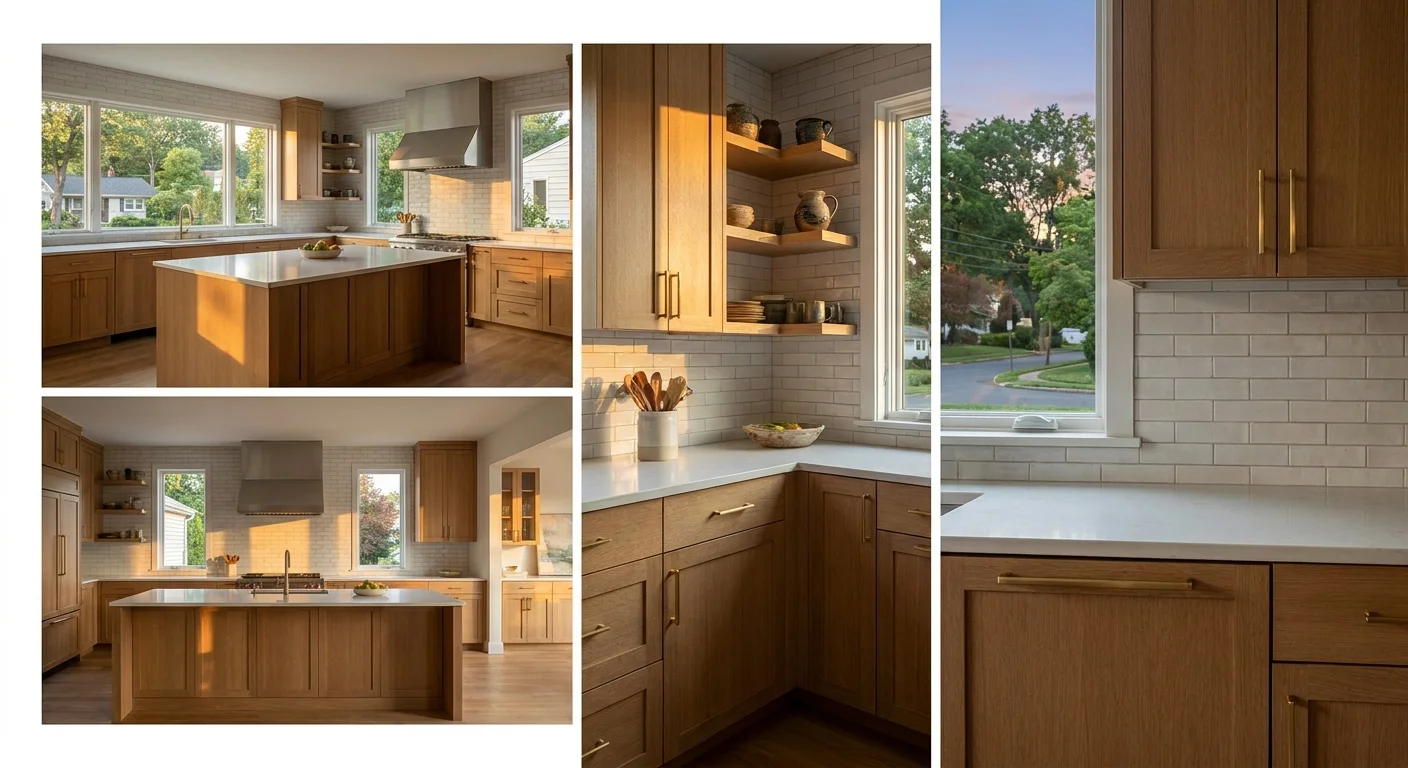
A kitchen backsplash is more than just a decorative element; it's a crucial protective barrier that safeguards your walls from spills, splashes, and heat, while simultaneously defining your kitchen's aesthetic. Homeowners in New Jersey, New York, and Pennsylvania typically find that kitchen backsplash projects range in cost from $600 to $2,000+ for materials and installation, depending on the chosen materials and the complexity of the design. Selecting the right backsplash involves balancing material durability, design appeal, and budget considerations to create a functional and beautiful space.
The Essential Role of a Kitchen Backsplash
Often considered the jewelry of the kitchen, a backsplash plays a dual role in both practicality and design. It's an opportunity to infuse personality and style into your culinary space, transforming a utilitarian area into a focal point. Beyond its visual impact, its primary function is to protect the wall behind your countertops and stove from the daily wear and tear of cooking.
Beyond Aesthetics: Protection and Hygiene
Imagine sautéing, simmering, or washing dishes without a protective barrier. Grease splatters, food particles, and water splashes would inevitably stain and damage your drywall or painted surfaces. A backsplash, typically made from durable, non-porous materials like tile or stone, creates an easy-to-clean surface that prevents moisture penetration and inhibits mold and mildew growth. This makes cleanup effortless and significantly contributes to the overall hygiene and longevity of your kitchen walls, especially in high-traffic areas around sinks and cooktops.
Defining Your Kitchen's Style
From rustic farmhouse charm to sleek modern minimalism, the backsplash is a powerful tool for setting the tone of your kitchen. It can act as a subtle complement to your existing cabinetry and countertops, or it can be a dramatic statement piece that draws the eye. The choice of material, color, pattern, and texture all contribute to the overall ambiance, reflecting your personal taste and enhancing the architectural style of your home. For kitchens in Manalapan and across Monmouth County, a well-chosen backsplash can elevate the entire room, making it feel more cohesive and intentionally designed.
Exploring Popular Backsplash Materials
The market offers an incredible array of materials for kitchen backsplashes, each with its unique characteristics, aesthetic appeal, and price point. Understanding the pros and cons of each will help you make an informed decision that aligns with your lifestyle and design vision.
Classic Ceramic and Porcelain Tile
Ceramic and porcelain tiles remain perennial favorites due to their versatility, durability, and vast selection of colors, shapes, and finishes. Porcelain, in particular, is highly dense and less porous than ceramic, making it exceptionally resistant to moisture, stains, and wear. It often boasts a PEI (Porcelain Enamel Institute) rating, which indicates its resistance to abrasion, with higher numbers (e.g., PEI IV or V) signifying greater durability, ideal for kitchen environments. Both types are relatively easy to clean and maintain, and their widespread availability makes them a cost-effective option for many homeowners in NJ, NY, and PA. Because a backsplash packs more cuts, outlets and edge details into each square foot than a floor does, its installation is typically quoted per project (see the labor cost breakdown below).
Elegant Natural Stone (Marble, Granite, Travertine)
For those seeking timeless elegance and a touch of luxury, natural stone options like marble, granite, and travertine are unparalleled. Each slab is unique, offering distinct veining, patterns, and color variations that add character and sophistication. Marble, with its classic white and gray veining, exudes opulence, while granite offers rugged durability and a wide range of earthy tones. Travertine provides a warm, old-world aesthetic. However, natural stone is porous and requires periodic sealing to prevent staining and etching, especially from acidic foods. While stunning, these materials generally come with a higher price tag and require more diligent maintenance than ceramic or porcelain.
Modern Glass and Metal Options
Glass tiles bring a contemporary, luminous quality to any kitchen, reflecting light and making spaces feel brighter and more expansive. Available in a spectrum of colors, finishes (frosted, clear, iridescent), and sizes, glass can create a sleek, minimalist look or a vibrant, artistic statement. Metal backsplashes, such as stainless steel, copper, or tin, offer an industrial chic aesthetic. Stainless steel is highly durable and easy to clean, often seen in modern or commercial-style kitchens. Copper can develop a beautiful patina over time, adding warmth and character. Both glass and metal can be striking choices, though glass can be more fragile during installation, and metal may show fingerprints more readily.
Durable and Budget-Friendly Alternatives
Beyond traditional tiles, several other materials offer unique aesthetics and practical benefits. Brick veneers provide a rustic, industrial feel, perfect for kitchens aiming for a loft or farmhouse look. Their textured surface adds depth and warmth. Beadboard panels, often made from wood or MDF, offer a classic, cottage-style charm and can be painted to match any kitchen decor. While not as resistant to moisture as tile, they are a budget-friendly and relatively easy-to-install option for areas not directly behind the sink or stove. Laminate or vinyl sheets can also be used for a seamless, cost-effective backsplash, mirroring the appearance of more expensive materials at a fraction of the cost, though their heat and scratch resistance may be lower.
Trending Designs and Patterns for Your Kitchen
Once you've chosen your material, the next exciting step is selecting a design and pattern. The layout of your backsplash can dramatically alter the perception of space and imbue your kitchen with a distinct personality. From classic arrangements to intricate mosaics, the possibilities are vast.
Timeless Subway Tile and Its Variations
Subway tile remains a reigning champion in kitchen backsplash design, celebrated for its clean lines, versatility, and enduring appeal. Typically rectangular (3x6 inches being the most common), it’s traditionally installed in a horizontal running bond pattern. However, modern interpretations offer numerous variations: stacking them vertically or horizontally for a contemporary look, or opting for larger formats (e.g., 2x8 or 4x12 inches) for a more expansive feel. Whether in classic white, subtle grays, or bold colors, subway tile provides a sophisticated backdrop that works seamlessly with diverse kitchen styles, from historic homes in Red Bank to modern residences in Holmdel.
Dynamic Herringbone and Chevron Patterns
For those seeking a more dynamic and visually engaging backsplash, herringbone and chevron patterns are excellent choices. Both involve arranging rectangular tiles in a V-shape, creating a sense of movement and sophistication. The key difference lies in the cut: herringbone uses tiles cut at a 90-degree angle, resulting in a staggered, zig-zag appearance, while chevron tiles are cut at an angle to create a continuous, unbroken zig-zag. These patterns add a luxurious, custom feel and are particularly effective in drawing the eye and making a statement, often seen in high-end kitchens in Colts Neck or other upscale areas.
Artistic Mosaics and Unique Layouts
Mosaics offer the ultimate opportunity for artistic expression. These small tiles, often pre-mounted on mesh sheets for easier installation, come in an endless array of materials (glass, stone, metal, shell), colors, and intricate designs. They can be used to create a focal point behind the stove, a decorative border, or an entire backsplash that resembles a work of art. Beyond mosaics, unique layouts like basketweave, geometric patterns, or even custom waterjet-cut designs can transform a kitchen. For homeowners near the Jersey Shore looking to capture a distinct coastal vibe, unique shell or pebble mosaics can bring the outdoors in. IAC Home Improvement specializes in professional tile installation, ensuring precise and beautiful execution of even the most complex patterns.
Understanding Backsplash Installation: What to Expect
The installation process for a kitchen backsplash, while seemingly straightforward, requires precision, proper tools, and attention to detail to ensure a durable and aesthetically pleasing result. Knowing what to expect can help you plan your project effectively.
The Installation Process: From Prep to Grout
A professional backsplash installation typically follows several key steps. First, the wall surface must be clean, dry, and free of grease or debris. Any existing backsplashes or wallpaper are removed, and the wall may be patched or leveled if necessary. Next, the layout is planned, often using a laser level to ensure perfectly straight lines. Tiles are then cut to size using a wet saw or tile nippers and applied to the wall using thin-set mortar, ensuring even coverage and proper adhesion. Spacers are used to maintain consistent grout lines. After the thin-set cures (typically 24-48 hours), the spacers are removed, and grout is applied to fill the joints. Excess grout is wiped away, and after the grout cures (another 24-72 hours), a sealant may be applied, especially for porous materials like natural stone, to protect against stains and moisture. The entire process for a standard kitchen backsplash can take anywhere from 1 to 3 days, depending on the size and complexity.
DIY vs. Professional Installation
While some handy homeowners might consider a DIY backsplash installation, especially for simple subway tile patterns, there are significant advantages to hiring professionals. Professional installers possess the specialized tools (wet saws, tile cutters, grout floats, levels) and expertise to achieve flawless results. They understand proper substrate preparation, mortar mixing ratios, precise cutting techniques, and how to handle tricky corners, outlets, and uneven walls. Mistakes in DIY can lead to uneven tiles, poor adhesion, crooked grout lines, or even damaged materials, ultimately costing more in repairs or reinstallation. For a seamless, long-lasting finish that truly enhances your kitchen's value, particularly for intricate patterns or expensive materials, entrusting your project to seasoned experts like IAC Home Improvement is highly recommended.
Maintenance and Longevity Tips
Maintaining your backsplash is key to its longevity and appearance. Regular cleaning with a mild, non-abrasive cleaner is usually sufficient. For tiled backsplashes, pay attention to grout lines; periodic cleaning with a grout brush and a grout cleaner can prevent discoloration and mildew buildup. If you have natural stone, ensure it is sealed every 1-2 years to protect it from stains. Avoid harsh chemicals or abrasive scrubbers, which can damage surfaces or strip sealants. With proper care, a professionally installed backsplash can last for decades, continuing to protect your walls and beautify your kitchen.
Kitchen Backsplash Costs: What to Budget in NJ, NY, PA
Understanding the cost components of a kitchen backsplash project is essential for effective budgeting. Prices can vary significantly based on material choices, installation complexity, and regional labor rates.
Material Costs per Square Foot
The cost of backsplash materials varies widely. Here's a general breakdown of typical material prices per square foot in the NJ, NY, PA region:
- Ceramic/Porcelain Tile: Ranges from $2 to $15 per square foot. Basic subway tiles are at the lower end, while designer or large-format porcelain can be higher.
- Natural Stone (Marble, Granite, Travertine): Typically costs $10 to $50+ per square foot. Marble and exotic granites tend to be at the higher end.
- Glass Tile: Generally falls between $7 and $30 per square foot, with custom or iridescent options being more expensive.
- Metal Tile (Stainless Steel, Copper): Can range from $15 to $40+ per square foot.
- Brick Veneer: Expect to pay $5 to $15 per square foot.
- Budget-Friendly Options (e.g., Peel-and-Stick Vinyl): As low as $1 to $7 per square foot.
These prices are for materials only and do not include thin-set mortar, grout, sealant, or tools.
Installation Labor Costs
Labor costs are a significant portion of the total backsplash project. For professional installation, homeowners in New Jersey, New York, and Pennsylvania can expect to pay anywhere from $8 to $25 per square foot for labor alone. This range accounts for factors such as:
- Material Type: Intricate materials like small mosaics, natural stone, or glass often require more specialized cutting and delicate handling, increasing labor time.
- Pattern Complexity: Simple straight lays (like a running bond subway tile) are less labor-intensive than herringbone, chevron, or custom designs.
- Wall Preparation: If extensive wall repairs or leveling are needed, this will add to the labor cost.
- Demolition: Removing an existing backsplash also adds to the labor and disposal fees.
A typical kitchen backsplash, covering about 30-50 square feet, could see labor costs ranging from $240 to $1,250+.
Factors Influencing Overall Project Price
Beyond material and basic labor, several other factors can impact the final price of your backsplash project:
- Size of the Area: Larger backsplashes naturally require more materials and labor.
- Custom Cuts and Details: Arches, intricate borders, or cuts around windows and outlets add to labor complexity.
- Edge Treatments: Finishing edges with bullnose tiles, pencil liners, or metal schluter strips adds material and labor costs.
- Grout Type: Standard sanded or unsanded grout is common, but epoxy grout (more stain-resistant, more expensive) will increase costs.
- Demolition and Disposal: Removing an old backsplash and disposing of debris incurs additional charges.
- Geographic Location: Labor rates can vary slightly between different towns in NJ or between states like NY and PA.
For a typical kitchen backsplash in the tri-state area, the total cost, including materials and professional installation, often ranges from $600 for basic ceramic to $2,000+ for high-end natural stone or intricate glass mosaics. When considering your overall kitchen renovation, remember that IAC Home Improvement is a full-service kitchen remodeling company, capable of handling everything from flooring (tile floors from about $13 per sq ft installed with standard porcelain or ceramic tile included, projects from $1,500; luxury vinyl plank at about $8 per sq ft with the plank, installation and shoe molding included, projects from $1,300) to cabinetry and countertops, ensuring a cohesive and beautifully executed project.
Making the Right Backsplash Choice for Your Home
Choosing the perfect kitchen backsplash involves a thoughtful consideration of aesthetics, practicality, and your overall budget. It's about finding that sweet spot where beauty meets functionality.
Harmonizing with Countertops and Cabinetry
The backsplash doesn't exist in isolation; it's an integral part of your kitchen's design triangle alongside your countertops and cabinetry. The goal is harmony, not necessarily matching. If your countertops are busy (e.g., granite with strong veining), a simpler, more subdued backsplash might be best to avoid visual clutter. Conversely, if your countertops and cabinets are neutral, the backsplash can be an opportunity to introduce color, pattern, or texture. Consider the undertones of your existing elements: warm tones (creams, browns) with warm-toned backsplashes, and cool tones (grays, whites) with cool-toned options. Bringing samples home and observing them in your kitchen's natural and artificial light is crucial for making the right choice.
Considering Durability and Maintenance
Your lifestyle plays a significant role in material selection. If you're a passionate home chef who frequently cooks and spills, a highly durable, easy-to-clean material like porcelain tile or stainless steel might be ideal. These materials are resistant to stains, heat, and moisture, making cleanup a breeze. If you prefer the look of natural stone, be prepared for the maintenance requirements, such as regular sealing, to protect its porous surface. Consider the grout as well: darker grout colors tend to hide stains better than white, and epoxy grout offers superior stain resistance compared to traditional cementitious options. For busy families in Asbury Park or Freehold, practicality often outweighs pure aesthetics in high-use areas.
Budgeting for Your Dream Kitchen
Finally, your budget will guide many of your decisions. While it's tempting to splurge on a high-end material, remember to factor in installation costs, which can sometimes exceed material costs, especially for complex designs or premium materials. A beautiful and effective backsplash doesn't have to break the bank. There are fantastic, affordable options like ceramic subway tile or even peel-and-stick alternatives that can deliver stunning results. IAC Home Improvement offers transparent pricing and works with homeowners across NJ, NY, and PA to find solutions that fit their vision and their budget. Whether your project is a simple backsplash update or a full kitchen remodeling, which can range from $17,000 to $45,000, we ensure quality results. As a full-service home improvement company, we handle every aspect of your project, from tile installation to interior painting (starting at $6 per square foot) and even exterior work like composite decks (complete packages with Trex Enhance decking and Fiberon Regency railings from about $16,000 for a 200 sq ft deck), making us your single trusted partner for all home needs.
Frequently Asked Questions About Kitchen Backsplashes
How high should a kitchen backsplash be?
The standard height for a kitchen backsplash is 18 inches, extending from the countertop to the bottom of the upper cabinets. However, many homeowners opt for a full-height backsplash, extending all the way to the ceiling, especially behind the stove or across an entire wall, for a dramatic and cohesive look. Some minimalist designs feature a shorter, 4-inch splash that matches the countertop material, but this offers less wall protection.
Can I install a backsplash over existing tile?
While technically possible in some cases, it's generally not recommended to install a new backsplash directly over existing tile. Doing so can create an uneven surface, add unnecessary bulk, and lead to adhesion issues. It's almost always better to properly remove the old backsplash, prepare the wall, and then install the new material for a cleaner, more durable, and professional finish.
What is the most durable backsplash material?
For sheer durability and low maintenance, porcelain tile and stainless steel are among the top contenders. Porcelain is extremely dense, stain-resistant, scratch-resistant, and impervious to water, making it ideal for high-splatter areas. Stainless steel is also highly durable, heat-resistant, and easy to wipe clean, offering a robust and modern solution.
How long does backsplash installation take?
For a typical kitchen backsplash (e.g., 30-50 square feet), professional installation usually takes 1 to 3 days. This timeframe includes wall preparation, tile setting, and grouting. Complex patterns, intricate cuts, or larger areas can extend the project duration. The curing time for thin-set mortar and grout also adds to the overall project timeline, even if the installer isn't actively working on site.
Ready to transform your kitchen with a stunning new backsplash? Contact IAC Home Improvement today for a consultation. Our licensed and insured team serves homeowners throughout NJ, NY, and PA. Call us at (848) 234-0283 or email contact@iachomeimprovement.com. We hold NJ License #13VH13143000 and PA License #188007, backed by a 5.0-star rating from over 100 Google reviews. Let us be your trusted partner for all your home improvement needs.
Authoritative resource: This Old House.