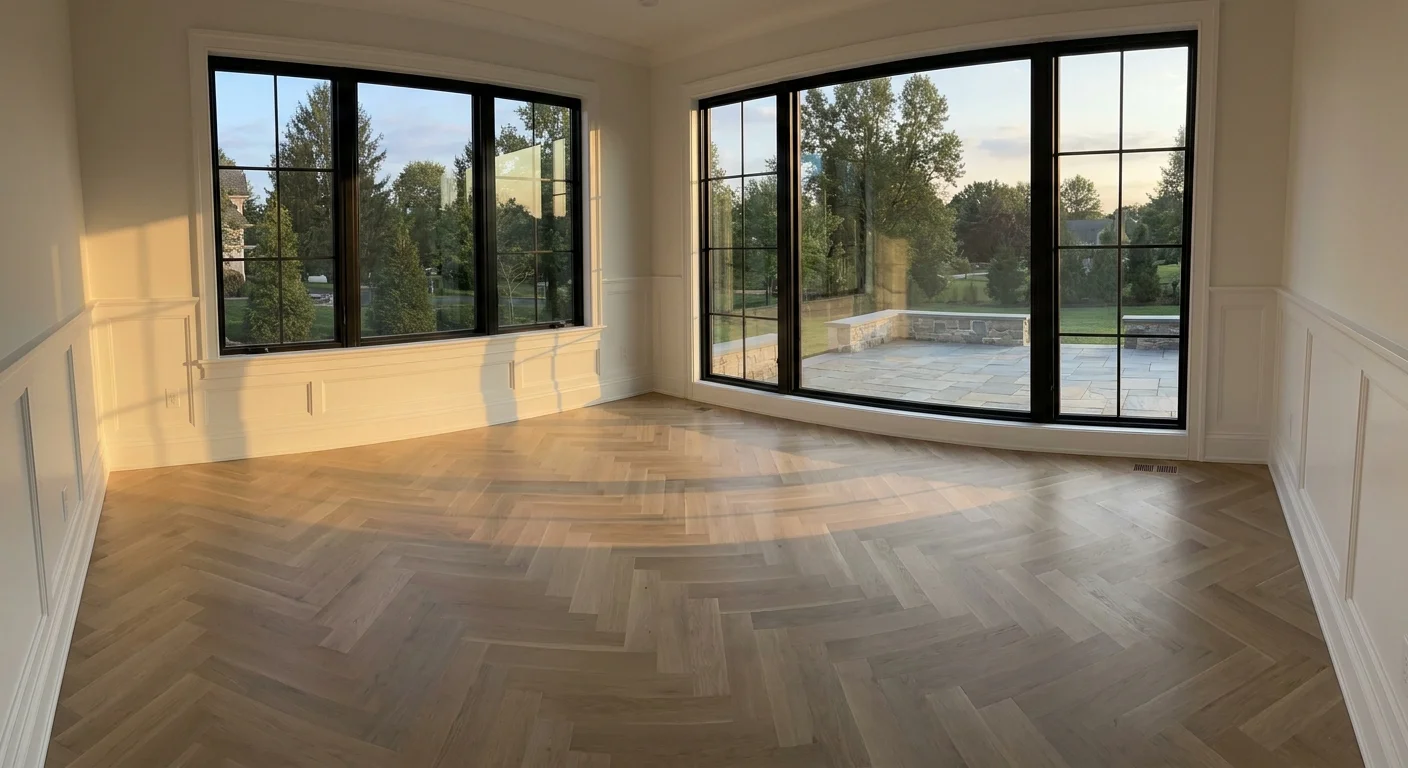
For homeowners in New Jersey considering a distinctive and elegant flooring option, the labor cost for installing herringbone pattern hardwood floors typically starts from about $12 per square foot in 2026. This figure applies across Monmouth County and other areas we serve, with the specific hardwood material chosen and priced separately. Most herringbone flooring projects, including both labor and materials, begin with a minimum project cost of $1,300, ensuring a comprehensive and professional installation.
How Much Does Herringbone Flooring Installation Cost in New Jersey?
Understanding the cost of herringbone flooring involves breaking down the components: labor and materials. While the visual appeal of a herringbone pattern is undeniable, its intricate installation process directly impacts the labor cost compared to traditional straight-lay hardwood.
Understanding the Labor Cost for Herringbone Patterns
In New Jersey, the labor for installing a herringbone or chevron hardwood floor typically starts from $12 per square foot. This price reflects the significant skill, precision, and time required to lay individual wood pieces in this complex geometric pattern. Installers meticulously measure, cut, and fit each plank to ensure the pattern is perfectly aligned and visually striking. This is a specialized service, and as such, it carries a higher labor rate than a standard straight-lay hardwood installation, which typically starts from $4 per square foot.
The Material Component: Choosing Your Hardwood
The cost of the actual hardwood planks for your herringbone floor is separate from the installation labor. Homeowners have a wide range of choices, from solid hardwood species like oak, maple, or walnut, to engineered hardwood options. Factors influencing material cost include the wood species, grade, plank size, finish, and manufacturer. For example, a premium exotic wood will naturally cost more per square foot than a domestic oak. It's crucial to select a wood type that is suitable for the herringbone pattern, often requiring specific plank dimensions for optimal execution.
Project Minimums and Overall Scope
Most professional hardwood installation projects, including those with intricate herringbone patterns, typically have a project minimum. For herringbone hardwood installation with IAC Home Improvement, projects generally start from $1,300. This minimum helps ensure that even smaller areas, like an entryway or a powder room in a home in Red Bank or Holmdel, receive the same level of professional attention and quality craftsmanship as larger installations. The total cost will be determined by combining the labor cost per square foot with the chosen material cost and any additional services like subfloor preparation or trim work.
Here's an example of how the cost might break down for a typical project:
| Service Component | Description | Typical Cost |
|---|---|---|
| Herringbone Labor | Professional installation of herringbone pattern hardwood | From $12 per sq ft |
| Hardwood Material | Customer-selected solid or engineered wood planks | Varies by selection |
| Project Minimum | Baseline cost for any herringbone installation | From $1,300 |
Worked Example: For a 150 sq ft dining room in Middletown, the labor cost would be 150 sq ft * $12/sq ft = $1,800. If your chosen hardwood costs, for instance, $6 per square foot, the material cost would be 150 sq ft * $6/sq ft = $900. The total estimated project cost would be $1,800 (labor) + $900 (materials) = $2,700. This exceeds the $1,300 project minimum. For a smaller project, say a 75 sq ft entryway, the labor cost would be 75 sq ft * $12/sq ft = $900. Since this is below the $1,300 project minimum, the project total would be at least $1,300 plus the material cost (e.g., 75 sq ft * $6/sq ft = $450), bringing the total to $1,300 + $450 = $1,750.
Ready to explore options for your home in Long Branch or Asbury Park? For a precise estimate tailored to your specific project, we recommend a free on-site consultation. (848) 234-0283 to call, text us a photo for initial assessment, or visit our free estimate page to get started. You can also learn more about our comprehensive hardwood installation services.
Why is Herringbone Hardwood Installation More Expensive?
The distinct elegance of herringbone flooring comes with a higher price tag primarily due to the specialized nature of its installation. Unlike standard straight-lay patterns, herringbone requires a different approach that demands more time, skill, and material.
The Intricacies of Pattern Layout
Creating the signature V-shaped pattern of herringbone flooring is a meticulous process. Each plank must be cut at a precise angle, typically 45 degrees, and then laid perfectly perpendicular to the adjacent plank. This ensures the continuous, interlocking zigzag effect that defines the pattern. Any slight misalignment can throw off the entire visual flow, making precision paramount. This level of detail is far more demanding than simply laying planks in a parallel fashion.
Increased Material Waste
Due to the numerous cuts required to create the herringbone pattern, there is inherently more material waste compared to a straight-lay installation. When cutting planks to fit the angles of the pattern, small off-cuts are often unusable. This means that to cover a certain square footage, you'll typically need to purchase 10-15% more material than the actual area, sometimes even more for very complex layouts or unusually shaped rooms. This additional material requirement contributes to the overall higher cost.
Specialized Skill and Time Investment
Installing herringbone flooring is not a task for an inexperienced handyman. It requires highly skilled and experienced flooring professionals who understand the nuances of pattern layout, cutting angles, and subfloor preparation specific to this design. The process is also significantly more time-consuming. A straight-lay hardwood floor might be installed at a rate of 100-150 square feet per day, whereas a herringbone pattern might only achieve 50-75 square feet per day, depending on complexity. This extended labor time directly translates to a higher overall installation cost.
What Does a Herringbone Flooring Quote Include?
When you receive a quote for herringbone flooring from a reputable contractor in New Jersey, it typically encompasses more than just the act of laying the wood. A comprehensive quote ensures that your project is handled professionally from start to finish.
Professional Installation Labor
The primary component of the quote will be the labor cost for installing the herringbone pattern. As discussed, this starts from about $12 per square foot. This includes the expertise of the installers, their specialized tools, and the time dedicated to the precise layout, cutting, and fitting of each hardwood plank to achieve the desired pattern. It also covers the meticulous attention to detail required for pattern continuity and edge finishing.
Subfloor Preparation and Leveling
A crucial, often overlooked, aspect of any successful hardwood installation is proper subfloor preparation. A quote for herringbone flooring will typically include services to ensure the subfloor is clean, dry, and perfectly level. This may involve sanding high spots, filling low spots with leveling compounds, or securing loose subfloor sections. A perfectly flat subfloor is absolutely essential for a flawless herringbone pattern, as even minor imperfections can become highly visible and compromise the integrity of the installation over time. This foundational work ensures the longevity and beauty of your new floor.
Additional Materials and Finishes
Beyond the hardwood planks themselves, a complete installation requires various ancillary materials. These often include:
- Adhesives or Fasteners: High-quality, appropriate adhesives or flooring nails designed for hardwood and the specific subfloor type.
- Moisture Barrier: A vapor barrier or underlayment to protect against moisture intrusion, especially critical in basements or ground-level installations in areas like Manalapan or Freehold.
- Transition Strips and Molding: Materials for seamless transitions to other flooring types and shoe molding or baseboards to cover expansion gaps along the walls.
- Finishing Supplies: If installing unfinished hardwood, the cost will include sanding, staining, and multiple coats of protective finish.
What is NOT Included in the Labor Price
It is important to reiterate that the "labor from $12 per sq ft" for herringbone installation does not include the cost of the hardwood material itself. You will select and purchase your preferred solid or engineered wood separately. Additionally, extensive demolition of existing flooring, significant subfloor repairs beyond standard preparation, or custom carpentry work (like building stairs or intricate custom borders) may be quoted as separate line items or factored into the overall project total after a detailed on-site assessment. IAC Home Improvement provides one clear project total after a free on-site measurement, ensuring transparency.
What Factors Influence the Total Cost of Herringbone Flooring?
While labor is a significant driver, several other elements can cause the total cost of your herringbone flooring project to fluctuate. Understanding these factors helps homeowners in Monmouth County and beyond make informed decisions.
Type and Grade of Hardwood
The selection of your hardwood material is perhaps the most significant variable after labor. Different wood species have varying price points; for example, domestic oak or maple might be more affordable than exotic woods like Brazilian cherry or wenge. The grade of the wood (select, #1 common, #2 common) also impacts cost, with higher grades offering a more uniform appearance. Furthermore, solid hardwood generally costs more than engineered hardwood, though engineered options offer greater stability in fluctuating humidity environments.
Room Size and Layout Complexity
Larger rooms naturally require more material and labor, increasing the overall cost. However, the complexity of the room's layout also plays a crucial role. Rooms with many angles, alcoves, built-ins, or irregular shapes (common in older homes in Asbury Park) demand more intricate cuts and precise fitting, leading to increased labor time and material waste. Simple, rectangular rooms are typically more straightforward and less costly to install.
Subfloor Condition and Preparation
The existing condition of your subfloor can significantly impact the final price. If the subfloor requires extensive repairs, such as replacing damaged sections, addressing severe unleveling, or mitigating moisture issues, these additional preparation steps will add to the overall cost. A sound, clean, and level subfloor is non-negotiable for a successful herringbone installation, and any necessary corrective measures will be factored into your project total.
Borders, Inlays, and Custom Touches
Adding custom elements like a contrasting wood border around the perimeter of the room, intricate inlays, or a combination of herringbone with a straight-lay pattern in an adjacent area will increase both material and labor costs. These bespoke details require even greater precision, specialized cutting, and additional time from the installers. While they enhance the uniqueness and luxury of your floor, they are premium features.
Here’s a summary of key factors that move the price:
- Wood Species & Grade: Exotic or high-grade woods cost more.
- Plank Size: Smaller planks often mean more cuts and labor.
- Room Shape: Complex layouts with angles increase labor and waste.
- Subfloor Condition: Extensive repairs or leveling add to prep costs.
- Custom Details: Borders, inlays, or patterns beyond basic herringbone raise complexity.
- Staircases: Stairs are quoted separately due to their unique installation challenges.
- Demolition: Removal of old flooring can be an additional charge.
How Much Does Herringbone Flooring Cost for Different Room Sizes?
While the per-square-foot labor cost remains consistent, the total project cost for herringbone flooring scales with the size of the area being covered. Understanding this helps homeowners budget for various spaces within their homes, whether in Marlboro or Eatontown.
Calculating for a Small Room (e.g., Entryway or Powder Room)
For a small area, such as a 50-75 square foot entryway or powder room, the labor cost would be 50-75 sq ft multiplied by the base labor rate (e.g., $12/sq ft). However, it's crucial to remember the project minimum, which is typically from $1,300 for herringbone installation. Even if the calculated labor for a very small space falls below this minimum, the project cost will be adjusted to meet the minimum, plus the cost of materials. This accounts for the fixed costs associated with mobilizing a crew, setting up tools, and the initial layout complexity inherent in herringbone, regardless of size.
Estimating for a Medium-Sized Space (e.g., Dining Room or Master Bedroom)
A medium-sized room, such as a 200-300 square foot dining room or master bedroom, provides a more direct application of the per-square-foot cost. For a 250 sq ft room, the labor would be 250 sq ft * $12/sq ft = $3,000. To this, you would add the cost of your chosen hardwood material. This size range typically allows for efficient installation, balancing the intricate pattern work with a larger, more continuous area, often resulting in a more cost-effective per-square-foot total when considering the project minimum.
Large Area Considerations (e.g., Open Concept Living Space)
For expansive open-concept living areas or multiple interconnected rooms totaling 500 square feet or more, the overall cost will be substantial due to the sheer volume of material and labor involved. For example, a 750 sq ft open living space could have a labor cost of 750 sq ft * $12/sq ft = $9,000, plus the material cost. While the total investment is higher, larger projects often benefit from economies of scale in terms of material procurement and installer efficiency, potentially optimizing the overall cost per square foot for the homeowner. Planning for such a large project requires careful consideration of the total hardwood floor cost for larger homes.
Here are typical steps to estimate your project:
- Measure Your Space: Accurately determine the square footage of the area where you want herringbone flooring.
- Factor in Waste: Add 10-15% to your square footage for material waste due to cutting the pattern.
- Calculate Labor Cost: Multiply your actual square footage by the labor rate (from $12/sq ft).
- Estimate Material Cost: Multiply the adjusted (with waste) square footage by the cost of your chosen hardwood planks.
- Check Project Minimum: Ensure your combined labor and material cost meets or exceeds the $1,300 project minimum.
- Consider Additional Services: Account for any necessary subfloor repairs, demolition, or custom features.
Are There Ways to Reduce the Cost of Herringbone Flooring?
While herringbone flooring is a premium choice, there are strategic decisions you can make to manage the overall cost without compromising too much on its distinctive appeal. Smart planning can help homeowners in Colts Neck or Freehold achieve their desired look within budget.
Strategic Material Selection
One of the most impactful ways to save is by choosing a more budget-friendly hardwood. Opting for a common domestic wood species like red oak or white oak, perhaps in a #1 common grade, can significantly reduce material costs compared to rarer or exotic woods. Engineered hardwood, which uses a veneer of real wood over a stable core, can also be a more cost-effective option than solid hardwood, while still providing the authentic wood look. Discussing various material options with your contractor can help you find a balance between aesthetics and budget.
Optimizing Room Layouts
If possible, consider installing herringbone in rooms with simpler, more rectangular layouts. Avoiding rooms with numerous angles, curves, or small alcoves can reduce the complexity of the installation, thereby cutting down on labor time and material waste. Sometimes, using a straight-lay pattern in adjacent hallways or less visible areas and reserving herringbone for main living spaces can offer a beautiful contrast and save on overall project costs. This thoughtful design approach can optimize both visual impact and financial outlay.
DIY Demolition (with caution)
If you're comfortable and capable, safely removing your old flooring yourself can potentially save on demolition labor costs. However, this should only be undertaken if you have the proper tools, knowledge, and time. Incorrect demolition can damage the subfloor, leading to additional repair costs. It's often best to consult with your flooring professional before attempting any DIY demolition to ensure it won't negatively impact the subsequent installation. For detailed guidance on hardwood projects, refer to our hardwood installation guide.
In comparison to straight-lay hardwood installation, where labor starts from $4 per square foot, herringbone's starting labor cost of $12 per square foot is a direct reflection of its increased complexity. While the upfront investment for herringbone is higher, its unique aesthetic appeal and the value it adds to a home often justify the cost for many homeowners seeking a distinctive look.
Is Herringbone Flooring a Good Investment for Your NJ Home?
For many homeowners across New Jersey, from Long Branch to Manalapan, herringbone flooring represents more than just a floor; it's a design statement and a significant investment in their property. Considering its unique attributes, it often proves to be a valuable addition.
Aesthetic Appeal and Property Value
Herringbone flooring offers a timeless, sophisticated aesthetic that instantly elevates the perceived value and luxury of a home. Its intricate pattern creates visual interest and a sense of bespoke craftsmanship that is highly sought after. This distinctive look can significantly enhance a home's marketability and appeal, potentially leading to a higher resale value. In a competitive real estate market, unique and high-quality finishes like herringbone hardwood can be a key differentiator.
Durability and Longevity
When properly installed and maintained, hardwood floors are renowned for their durability and longevity, often lasting for decades. Herringbone patterns, when made with quality solid or engineered hardwood, share this characteristic. The interlocking nature of the pattern, combined with the inherent strength of wood, creates a very stable and resilient surface. With routine care and occasional refinishing (which typically costs $2-$4 per square foot, for projects from $1,600), your herringbone floor can maintain its beauty for generations.
Maintenance and Care Considerations
Maintaining a herringbone hardwood floor is similar to maintaining any other hardwood floor. Regular sweeping or vacuuming with a soft brush attachment, along with occasional damp mopping using a wood-specific cleaner, is usually sufficient. It's important to protect the floor from excessive moisture, heavy impacts, and abrasive materials. While the initial investment is higher, the long-term benefits of durability, timeless style, and enhanced property value often make herringbone flooring a worthwhile choice for homeowners seeking a premium and enduring solution. Remember, as a full-service home improvement company, IAC Home Improvement can assist with all aspects of your home's transformation, from flooring to kitchen and bathroom remodeling, ensuring a cohesive and high-quality result.
Frequently Asked Questions About Herringbone Flooring Cost
What is the difference between herringbone and chevron patterns?
While often confused, herringbone and chevron patterns have distinct differences. Herringbone planks are cut at a 90-degree angle and laid in a staggered zigzag, creating a broken zigzag line. Chevron planks, conversely, are cut at a precise angle (typically 45 or 60 degrees) and laid to form a continuous, perfect V-shape. Both are intricate, but chevron often requires even more precise cuts and can be slightly more expensive to install due to its continuous pointed pattern.
Can I install herringbone flooring myself to save money?
While DIY might seem like a cost-saving option, installing herringbone flooring is highly complex and not recommended for amateurs. The precision required for cutting angles, maintaining pattern alignment, and ensuring a perfectly flat subfloor demands professional skill and specialized tools. Mistakes can lead to significant material waste, an uneven or misaligned floor, and ultimately higher repair costs. Investing in professional installation from the outset ensures a beautiful, durable, and correctly executed floor.
How long does a herringbone flooring installation typically take?
The duration of a herringbone flooring installation varies depending on the room size, complexity, and subfloor condition. Generally, it takes significantly longer than a straight-lay installation. For an average-sized room (e.g., 200-300 sq ft), professional installation might take 3-5 days, including subfloor preparation. Larger or more complex projects could extend to a week or more. This timeframe includes acclimation of the wood, careful layout, cutting, installation, and any finishing work (if applicable).
Does herringbone flooring work well with radiant heating?
Yes, herringbone flooring can work well with radiant heating systems, but specific considerations are crucial. Engineered hardwood is generally preferred over solid hardwood for radiant heat applications due to its greater stability and resistance to temperature and humidity fluctuations. The wood species, plank thickness, and adhesive type must be carefully selected to be compatible with radiant heat. Always consult with your flooring professional and radiant heating system installer to ensure proper material selection and installation techniques to prevent issues like warping or gapping.
Authoritative resource: This Old House.