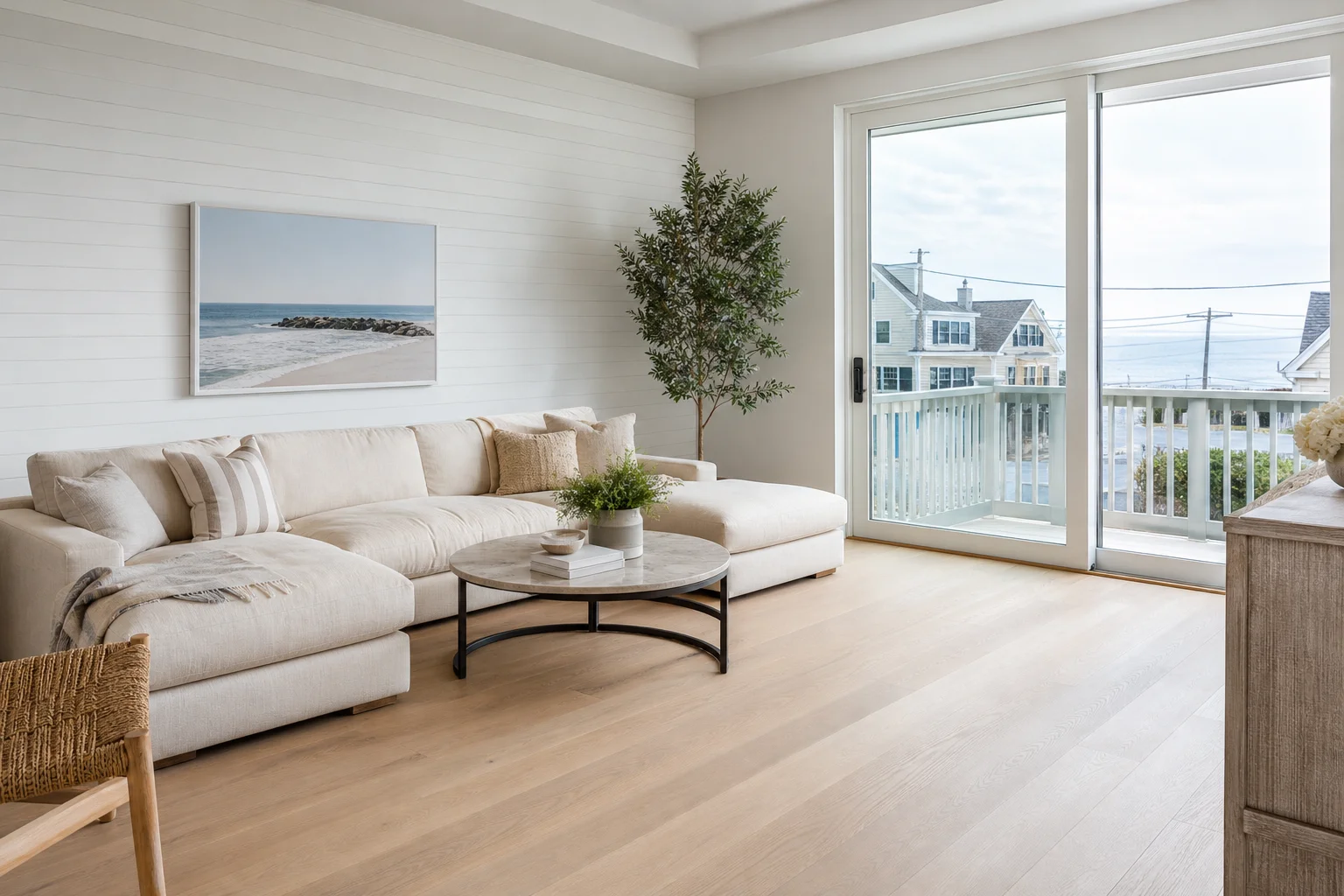
In 2026, hardwood installation in Long Branch, NJ, typically starts at $4 per square foot for straight-lay labor, with wood chosen and priced separately and projects from $1,300. Herringbone and chevron installation labor starts at $12 per square foot, with wood also priced separately.
The right floor depends on more than the board you like. Subfloor condition, seasonal humidity, installation pattern and whether your home sits over a slab all affect the plan. Here is how to compare your options and prepare for a local installation crew.
How much does hardwood installation cost in Long Branch, NJ?
Hardwood installation labor typically starts at $4 per square foot for a straight-lay floor in Long Branch. The wood is selected and priced separately, and hardwood installation projects start from $1,300.
What do straight-lay and patterned floors cost?
Straight-lay solid or engineered hardwood installation labor starts at $4 per square foot. Herringbone and chevron labor starts at $12 per square foot because those patterns require more layout and cutting. In both cases, the wood is chosen and priced separately.
| Installation pattern | Labor price | Wood |
|---|---|---|
| Straight-lay | From $4 per sq ft | Priced separately |
| Herringbone or chevron | From $12 per sq ft | Priced separately |
These are starting labor figures, not a complete installed-floor quote. The project total depends on the selected flooring and the conditions found during measurement.
What changes the project total?
Board selection, room layout and the condition of the existing subfloor can change the scope of an installation. Removing existing flooring, correcting an uneven substrate or coordinating transitions and trim may also require additional work.
Stairs and intricate patterns deserve particular attention because they involve detailed cuts and fitting. Ask how those areas will be handled before choosing a floor or comparing estimates.
How do you get a reliable estimate?
A free on-site measurement lets the contractor assess the rooms, access and visible floor conditions before providing a project total. IAC quotes show one clear project total after that visit.
Explore IAC's hardwood floor installation service to see how a new floor can fit your home. Confirm the selected material and installation scope before approving the work.
Which hardwood is best for a Long Branch shore home?
Engineered hardwood is often worth considering for a Long Branch home because its layered construction is generally more dimensionally stable than solid wood when humidity changes. The best choice still depends on the room, substrate and manufacturer's installation requirements.
Should you choose solid or engineered hardwood?
Solid hardwood is milled from a single piece of wood and can be a good fit over a suitable wood subfloor. It responds to changes in moisture, so room conditions and proper expansion space matter.
Engineered hardwood has a real wood wear layer bonded to a layered core. Depending on the product, it may be approved for nail-down, glue-down or floating installation, including certain concrete slabs. Check the specific product rather than assuming every engineered floor can be installed every way.
Which species and finish should you consider?
Oak is a practical option for many living areas because its grain helps disguise some everyday wear. Hard maple offers a different appearance, while softer species can show dents more readily in busy rooms.
The Janka hardness rating can help compare a species' resistance to denting, but it does not measure resistance to water or scratches in the finish. Prefinished boards reduce on-site finishing work, while site-finished flooring offers a different appearance and requires drying time before normal use.
How do humidity and salt air affect the choice?
Long Branch is on the coast, so homeowners should consider both New Jersey's seasonal humidity swings and exposure to salt air. Neither solid nor engineered hardwood should be treated as waterproof.
Use the flooring manufacturer's recommended indoor temperature and relative humidity range, and keep wet shoes and tracked-in sand off the floor. A mat at exterior doors and prompt cleanup of spills help protect the finish.
For help planning your floor, call (848) 358-7694, text us a photo or request a free estimate.
What is the hardwood installation process?
Hardwood installation typically moves from measurement and moisture checks to subfloor preparation, board installation and finishing details. Timing varies with the floor area, product, site conditions and whether finishing is done on site.
What happens before the boards go down?
The crew first checks whether the home and substrate are ready for the selected product. Hardwood should be delivered and conditioned according to its manufacturer's instructions, not installed on a schedule that ignores moisture readings.
- Measure and plan, typically 1 to 2 hours: Review room dimensions, board direction, transitions, stairs and visible substrate conditions. Select the flooring and confirm the project scope.
- Condition the flooring, typically several days: Keep the home at normal living conditions and follow the manufacturer's acclimation instructions. The required time depends on the product and measured moisture conditions, not just the number of days on site.
- Prepare and test the subfloor, typically 1 to 2 days: Remove flooring where included, check for loose areas and assess flatness and moisture. Repairs or drying can extend this stage.
- Install the hardwood, typically 1 to 3 days: Lay boards using the approved nail-down, glue-down or floating method. Larger areas and detailed patterns can take longer.
- Complete transitions and cleanup, typically several hours to 1 day: Fit agreed trim and transition pieces, inspect the floor and review care instructions. Site finishing, if selected, adds separate drying and curing time.
Why are moisture and subfloor checks important?
Wood flooring needs a dry, flat and structurally sound substrate. Installers use appropriate moisture testing for the wood and subfloor, then compare the readings with the flooring manufacturer's limits.
The National Wood Flooring Association, or NWFA, publishes guidance on wood flooring installation and moisture management. Following product-specific instructions matters too, especially for concrete testing, adhesives and moisture-control systems.
When can you use the new floor?
Prefinished floors can often return to use sooner than floors finished on site, but adhesive and product instructions still control access. Ask when furniture, rugs and normal cleaning can resume.
For a site-applied finish, drying and full curing are different stages. Time varies by finish and conditions, so follow the finish manufacturer's guidance rather than assuming the floor is fully cured when it feels dry.
Can hardwood be installed over a slab in a Long Branch home?
Some engineered hardwood products can be installed over a concrete slab when the manufacturer permits it and the slab meets moisture and flatness requirements. Solid hardwood generally needs a suitable wood subfloor system and should not be installed directly onto concrete.
What should be checked in older homes?
Long Branch has homes of different ages, so an existing floor may conceal uneven framing, previous flooring layers or subfloor damage. The actual condition becomes clearer during inspection and, sometimes, after the old covering is removed.
Check for squeaks, soft spots and height differences at doorways before finalizing the plan. Hidden damage or additional preparation can change the scope, so discuss how it would be addressed if discovered.
What about ground-level rooms and moisture?
Ground-level rooms over concrete need careful slab moisture evaluation before hardwood is selected or installed. A product-approved vapor retarder or moisture-control system may be necessary, but it is not a substitute for correcting an active water problem.
If a room has recurring leaks or standing water, resolve the source first. The installer should confirm that the flooring, adhesive and moisture-control products are compatible with the conditions and with one another.
Are permits needed for hardwood flooring?
Permit requirements depend on the full scope of work, not simply the name of the project. A straightforward flooring replacement and a project involving structural changes may be treated differently.
Before work starts, check with Long Branch's construction office about the planned scope. Do not assume a permit is either required or unnecessary without confirming the details.
How do you choose a hardwood installation crew in Long Branch?
Choose a crew that evaluates the substrate, follows the flooring manufacturer's instructions and explains the proposed scope before work starts. A useful estimate should reflect the actual rooms and conditions, not just a square-foot starting price.
What should you discuss before hiring?
Walk through the rooms with the contractor and identify the details that affect the finished result. Bring your preferred flooring specifications if you have already selected a product.
- Ask which installation method the product and subfloor support.
- Discuss moisture testing, flatness and possible subfloor repairs.
- Confirm how stairs, thresholds, baseboards and shoe molding will be handled.
- Ask what happens if concealed damage is found after removal.
- Review access, furniture moving and the expected sequence of work.
For a broader look at material and preparation choices, read the hardwood installation guide.
Why do homeowners choose IAC?
IAC Home Improvement has been in business since 2015 and is rated 5.0 on Google with more than 100 reviews. Its New Jersey license is #13VH13143000, and its Pennsylvania license is #PA188007.
IAC is a full-service home improvement company serving Long Branch and nearby communities, including Red Bank, Asbury Park and Eatontown. Along with flooring, it handles kitchen and bathroom remodeling, painting, carpentry, basements, decks, masonry, concrete and pavers, giving homeowners one contractor for the whole home.
Should you install new hardwood or refinish the existing floor?
Refinishing may be a better fit when the existing hardwood is suitable for sanding and you want to retain it. Installation makes sense when you need a new floor, want a different construction or the existing surface cannot reasonably be restored.
Hardwood floor refinishing typically costs $2 to $4 per square foot, all-inclusive, with projects from $1,600. That scope differs from installation labor, which excludes the separately priced wood. Learn more about hardwood floor refinishing in Long Branch before deciding.
Frequently Asked Questions
These answers cover common practical questions about installing hardwood in Long Branch. Product requirements and conditions in your home should guide the final plan.
How long does hardwood floor installation take?
Installation itself typically takes 1 to 3 days, but larger areas, patterned layouts and stairs can take longer. Allow additional time for acclimation, subfloor preparation and any site-applied finish. The schedule depends on moisture readings, the selected product and conditions discovered after existing flooring is removed.
Can engineered hardwood be installed over concrete?
Yes, some engineered hardwood can be installed over concrete when the flooring manufacturer approves the method. The slab must meet the product's flatness and moisture requirements, and an approved moisture-control system may be needed. Address leaks or ongoing water problems before installing any wood floor over a slab.
Is hardwood flooring a good choice near the beach?
Hardwood can work in a shore home when the product suits the room and indoor conditions are managed. Engineered hardwood may offer better dimensional stability through humidity changes, but it is not waterproof. Use entry mats to limit tracked-in sand, clean spills promptly and follow the manufacturer's humidity and care instructions.
Does new hardwood need to acclimate before installation?
Hardwood typically needs conditioning before installation, but the time and procedure depend on the product and the home's conditions. Keep the space at normal living temperature and humidity, then follow the manufacturer's instructions for acclimation and moisture testing. A set number of days alone does not establish that flooring is ready.
Authoritative resource: National Wood Flooring Association.