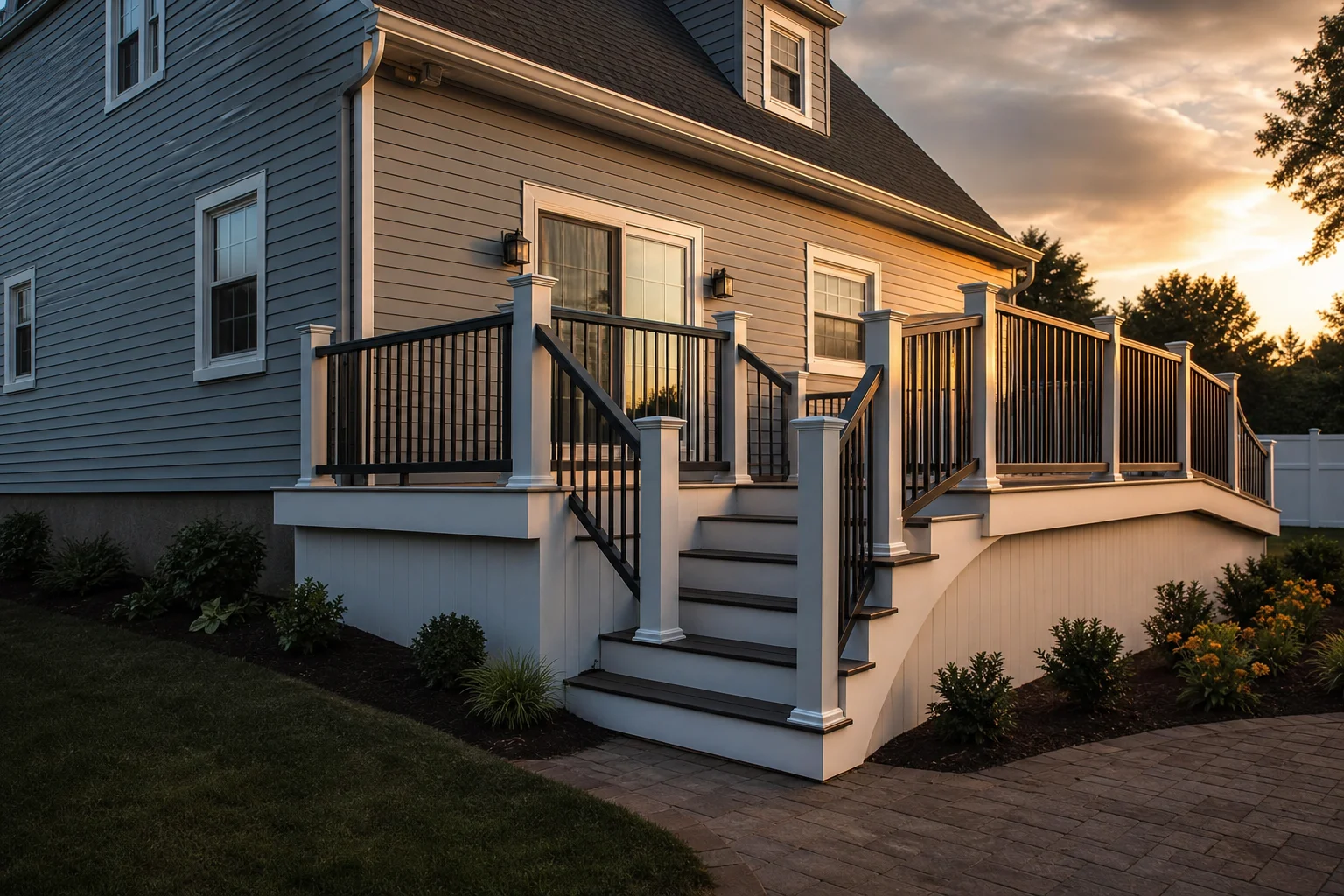
In New Jersey, a 200-square-foot composite deck package starts from about $16,000 in 2026, including Trex Enhance decking, Fiberon Regency railings, framing and installation. Whether you need a new deck depends less on its age than on the condition of its framing, connections and footings.
The most important signs a deck needs replacing are widespread rot, unstable supports and multiple failing structural connections. Faded stain or a few damaged boards, by contrast, may call for a much smaller repair.
What are the signs your deck needs replacing?
A deck may need replacement when deterioration extends beyond individual surface boards into the framing that carries people and furniture. Start by looking for soft wood, recurring moisture damage and decay in areas that are difficult to inspect or repair.
Soft, spongy or rotting deck boards and joists
Soft boards can indicate trapped moisture and fungal decay, especially where leaves collect or water cannot drain. A spongy surface may also point to weakened joists underneath, so replacing the visible board alone may not solve the problem.
Check suspect wood gently with an awl or screwdriver. If the tool sinks easily into several structural members, keep people off the affected area and arrange an inspection. An isolated damaged board or joist may be repairable, but widespread rot can make replacement the more practical choice.
Splintering, cracked or cupped boards
Cracks, splinters and cupping often result from weather exposure, drying and repeated wetting. They can create trip hazards even when the framing below is still sound.
A few damaged boards can often be replaced before the remaining surface is cleaned and refinished. If many boards are failing, check their fasteners and the joist tops before deciding whether to resurface the deck or rebuild it. Explore hardwood decking and deck installation options if you are considering a new surface.
Recurring moisture damage or insect activity
Persistent dampness and insect damage can weaken wood where you cannot readily see it, including around posts, joist ends and the house connection. Dark staining is a warning to investigate, although discoloration alone does not prove structural rot.
Look for blocked drainage, soil contact, damaged flashing and areas that stay wet after rain. Have a professional identify the extent of any decay or insect damage before covering it with new boards or stain.
Which deck safety problems need attention right away?
Loose railings, unstable stairs and movement at the house connection need prompt attention because they can fail under normal use. Keep people away from the affected area, and avoid using the deck altogether if the structure appears unstable.
Wobbly railings or loose stairs
A railing that shifts under gentle pressure or stairs that rock can have loose fasteners, decayed blocking, weakened stringers or failing post connections. A surface screw may not address the underlying attachment.
Have the railing posts, stair stringers, treads and supporting connections checked. A contractor may be able to rebuild the affected assembly if the surrounding structure is sound, but extensive framing damage can change the recommendation.
A ledger pulling away or corroded fasteners
A gap between the deck ledger and the house, or rusted connection hardware, can signal a serious structural problem. The ledger is the board that connects an attached deck to the house, and its fasteners and flashing are critical to keeping the connection secure and dry.
Water intrusion, incompatible hardware or an inadequate attachment can contribute to failure. Do not try to pull the ledger tight with a few extra screws. An experienced contractor should assess the ledger, house framing, flashing and connectors together.
Posts or footings that have shifted
Leaning posts, a sloping surface or footings that appear to have sunk or heaved can indicate movement in the deck’s support system. Soil conditions, drainage and freeze-thaw cycles may contribute, but the cause needs to be verified on site.
Check for movement at the post bases, beams and connections as well as the footings. A localized footing or post repair may be possible, while multiple shifted supports combined with decayed framing can justify a full rebuild.
What does a replacement deck cost in New Jersey?
In New Jersey, IAC’s composite deck packages start from about $16,000 for a 200-square-foot deck and about $24,000 for a 300-square-foot deck. These packages include Trex Enhance decking, Fiberon Regency railings, framing and installation.
What is included in the composite deck package?
The package covers the composite decking, specified railings, framing and installation. Gates, lattice and lighting are quoted separately, while cedar and IPE decking are priced on request.
The existing deck’s condition and the design of the replacement affect the project scope. IAC provides one clear project total after a free on-site measurement rather than treating a starting package price as a guaranteed quote.
What can waiting cost?
Waiting can allow a limited repair to become a larger project if water continues to reach joists, the ledger or the house framing. It can also leave a loose railing or stair in use longer than is safe.
For perspective, a full 200-square-foot composite deck package starts from about $16,000, while a 300-square-foot package starts from about $24,000. Those figures are for the complete packages described above, not for a railing, board repair or demolition alone. Repairs and other individual scopes are quoted per project after a free on-site visit.
How do you get an accurate deck estimate?
An accurate estimate starts with an on-site measurement and an assessment of what can safely remain. Be ready to discuss the deck’s size, access, desired material and features such as stairs or gates.
For a free on-site visit in Long Branch, Red Bank or nearby communities, call (848) 358-7694, text us a photo or request a free estimate.
Should you repair, restain or replace your deck?
Repair is usually worth considering when damage is localized and the structure is sound. Restaining addresses weathered wood, not structural weakness, while replacement becomes more compelling when deterioration affects multiple structural components.
When is deck repair enough?
Repair may be the right choice when a few boards, a stair assembly or an isolated connection has failed but the joists, beams, posts and footings remain sound. The repair should address the cause as well as the visible damage.
For example, replacing a rotted board without correcting the drainage problem may leave the new board exposed to the same moisture. Ask the contractor to inspect adjacent framing before deciding how much material to remove.
When can you clean and restain a deck?
Cleaning and restaining can help protect a structurally sound wood deck whose main issues are faded finish, surface grime or minor weathering. It cannot restore strength to a rotten joist or stabilize a loose railing.
Preparation typically involves cleaning, allowing the wood to dry and following the stain manufacturer’s moisture and application instructions. Product and weather conditions determine drying time. Our deck staining and sealing guide explains the maintenance process.
When is full deck replacement the better choice?
Replacement is often the better choice when rot is widespread, several supports or connections have failed, or the existing structure cannot reasonably support the planned surface and railing. It also gives you an opportunity to change the layout or choose a different decking material.
Resurfacing with composite boards does not automatically eliminate the need for new framing. The existing structure must be evaluated for its condition and for compatibility with the decking manufacturer’s installation requirements. Learn more about building an outdoor deck in New Jersey before selecting a design.
How can you check an old deck before calling a contractor?
A visual check can help you describe the problem, but it cannot confirm that hidden framing or connections are safe. Do not climb beneath an unstable deck or apply force to a railing that may fail.
What should homeowners look for?
Walk around the deck from a safe position and note changes in the surface, supports and connections. Photograph suspicious areas so you can show a contractor without disturbing them.
- Look for soft, split or raised boards and areas that hold water.
- Note loose stair treads, visible railing movement or missing hardware.
- Check from the ground for leaning posts, shifted footings and sagging beams.
- Look for a gap at the house connection, damaged flashing or heavily corroded fasteners.
In coastal communities such as Asbury Park and Long Branch, moisture exposure makes regular attention to wood and hardware especially useful. A contractor can assess concealed areas and determine whether the damage is isolated.
Which fix matches each warning sign?
The best fix depends on what an inspection reveals beneath the visible symptom. Use this table as a starting point, not as a substitute for a structural assessment.
| Sign | Likely cause | Best fix |
|---|---|---|
| Faded finish | Weather exposure | Clean and restain |
| Few cracked boards | Moisture and drying | Replace boards |
| Soft joists | Moisture and decay | Inspect; repair or rebuild |
| Loose railing | Failed connection | Rebuild attachment |
| Ledger gap | Connection failure | Restrict use; inspect |
| Leaning post | Support movement | Inspect footing and post |
A professional assessment should consider the deck as a system, including its load path from decking and joists through beams, posts and footings. Manufacturer instructions and guidance from the American Wood Council are useful references; the local building department can explain applicable permit and code requirements for the proposed work.
IAC is a full-service home improvement company serving New Jersey, New York and Pennsylvania, handling flooring, kitchen and bathroom remodeling, painting, carpentry, basements, decks, masonry, concrete and pavers. That gives homeowners one trusted contractor for projects throughout the home.
Frequently Asked Questions
These answers address common questions New Jersey homeowners have when deciding what to do with an aging deck.
How do I know if my deck is unsafe?
Warning signs include a moving railing, loose stairs, sagging framing, leaning posts and a gap where the ledger meets the house. Soft structural wood or heavily corroded connectors also deserve attention. Keep people away from an unstable area and arrange a professional inspection. A visual check alone cannot establish whether concealed connections are sound.
Can you put new deck boards on old framing?
Sometimes, but only if the existing framing and supports are sound and suitable for the new decking. A contractor should check joists, beams, fasteners, footings and the ledger before resurfacing. Composite products also have manufacturer-specific installation requirements. Covering damaged framing with new boards can conceal a problem without making the deck safe.
Is it better to stain or replace an old deck?
Staining makes sense when the wood and structural connections are sound and the main problem is a weathered surface. Replace damaged boards before refinishing and follow the stain manufacturer’s preparation instructions. If rot extends through multiple joists or the support system is failing, stain will not restore structural strength and replacement may be the better decision.
Does replacing a deck require a permit in New Jersey?
Permit requirements depend on the proposed work and how the local building department applies the relevant codes. Contact your municipality before starting, especially if the project changes the framing, size, stairs or railings. A contractor can help identify the scope for review, but the local department determines the required approvals.
Authoritative resource: North American Deck and Railing Association.