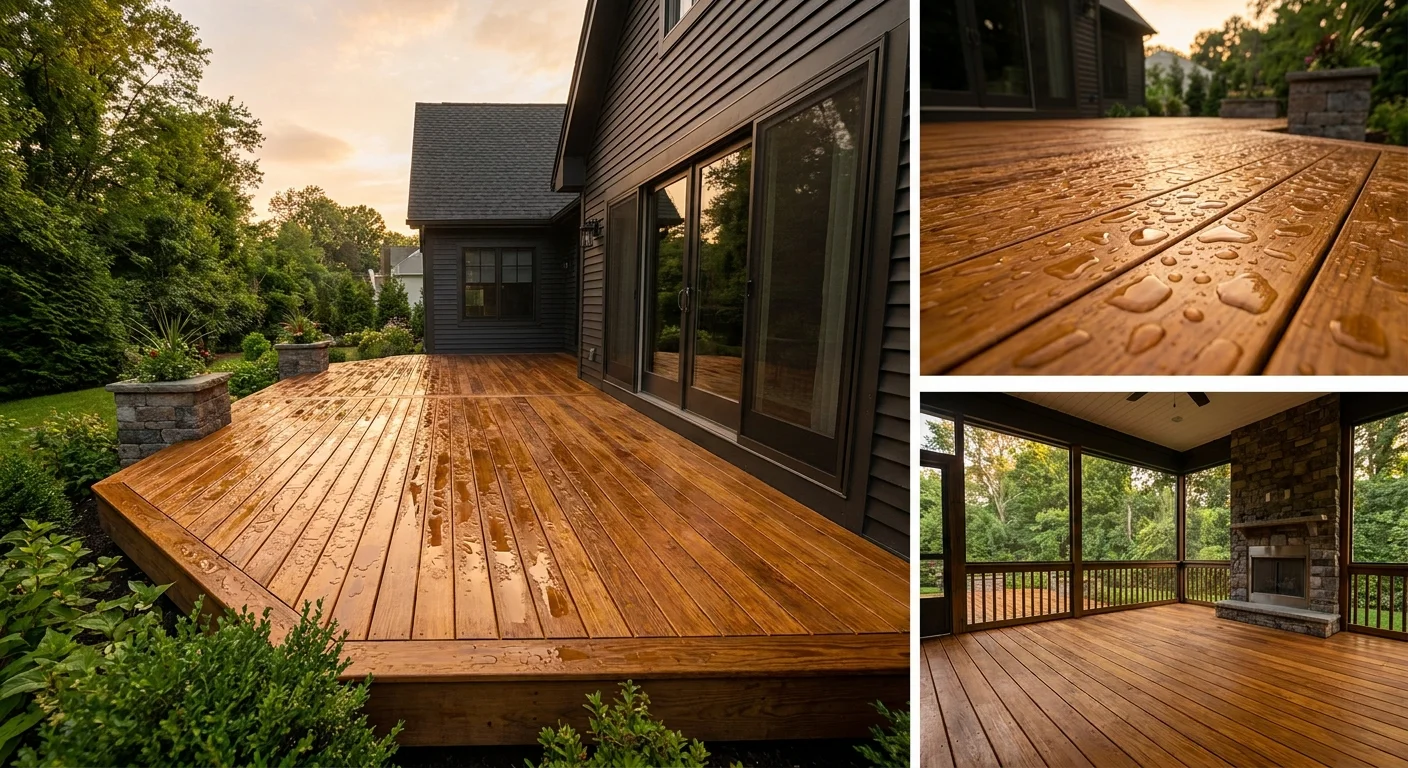
Deck staining and sealing are vital processes for preserving the beauty and structural integrity of your outdoor living space, especially in the diverse climate of New Jersey, New York, and Pennsylvania. Applying a high-quality stain and sealant protects your deck from moisture damage, UV radiation, and mildew growth, significantly extending its lifespan and enhancing its aesthetic appeal. This guide will walk you through everything you need to know to maintain a stunning and resilient deck.
Understanding Deck Staining and Sealing: Essential Protection for Your NJ Home
The Crucial Role of Stain and Sealer
A deck is a significant investment, providing a valuable extension of your living space for relaxation and entertainment. However, without proper protection, exposure to the elements can quickly lead to deterioration. Deck stains penetrate the wood fibers, providing color and UV protection, while sealers form a protective barrier on the surface, repelling water and preventing rot, mold, and mildew. Together, they act as your deck's first line of defense, preserving its structural soundness and visual appeal for years to come. Neglecting this maintenance can lead to costly repairs down the line, such as replacing warped boards or addressing widespread fungal growth.
Common Decking Materials in NJ, NY, PA
Decks in the Mid-Atlantic region are typically constructed from various wood types, each with unique characteristics that influence staining and sealing needs. Pressure-treated pine is the most common and cost-effective option, known for its resistance to rot and insects due but requiring regular maintenance. Cedar and redwood are naturally resistant to decay and insects, offering a beautiful aesthetic but are softer woods that benefit greatly from sealing to prevent weathering and graying. Hardwoods like ipe or tigerwood, while more expensive (new ipe decks are priced on request after a free on-site measurement), are incredibly durable and dense, requiring specific oil-based treatments to maintain their rich color and prevent checking. Understanding your deck's material is the first step in selecting the appropriate products and care regimen.
The Impact of the Mid-Atlantic Climate
The climate across New Jersey, New York, and Pennsylvania presents unique challenges for outdoor wooden structures. We experience hot, humid summers, freezing winters with snow and ice, and frequent freeze-thaw cycles. This constant fluctuation, combined with significant rainfall and intense UV exposure, puts immense stress on deck surfaces. Moisture penetration can lead to wood rot, swelling, and warping, while UV rays cause fading, graying, and surface cracking. A quality stain and sealer system is specifically designed to combat these environmental aggressors, creating a durable shield that helps your deck withstand the harsh conditions from the Jersey Shore to the mountainous regions of PA and NY.
Choosing the Right Deck Stain: Types and Finishes
Transparent and Semi-Transparent Stains
For those who love the natural grain and beauty of their wood deck, transparent and semi-transparent stains are excellent choices. Transparent stains offer minimal pigmentation, allowing the wood's natural color and grain to shine through completely while providing UV protection and water repellency. They are ideal for newer decks or woods with attractive natural characteristics. Semi-transparent stains contain slightly more pigment, adding a subtle tint to the wood while still allowing much of the grain to be visible. They provide enhanced UV protection compared to transparent options and can help unify the appearance of slightly aged wood. These stains typically require reapplication every 1-2 years for transparent and 2-3 years for semi-transparent to maintain optimal protection in the NJ climate.
Semi-Solid and Solid Stains
When your deck shows more signs of wear, or if you desire a more uniform, painted look, semi-solid and solid stains are the way to go. Semi-solid stains offer significant pigmentation, obscuring most of the wood grain but allowing some texture to show through. They are excellent for restoring older, weathered decks and providing superior UV protection and durability. Solid stains, sometimes referred to as deck paint, provide an opaque, uniform color that completely covers the wood grain. They are ideal for significantly aged or damaged decks, offering the highest level of protection against the elements and hiding imperfections. Solid stains typically last 3-5 years before needing reapplication and are a popular choice for homeowners in areas like Freehold and Colts Neck looking for a fresh, consistent aesthetic.
Oil-Based vs. Water-Based Formulations
The choice between oil-based and water-based stains depends on your specific needs and preferences. Oil-based stains penetrate deeper into the wood, offering excellent long-term protection against moisture and often enhancing the wood's natural oils. They tend to have a longer drying time (often 24-48 hours to be dry to the touch) and can be more challenging to clean up. Water-based stains, on the other hand, are easier to apply and clean up, dry faster, and are more environmentally friendly. They offer good UV protection and are less prone to cracking or peeling. Many modern water-based formulas now rival the durability of oil-based products. For optimal results, always follow the manufacturer's specific instructions, such as those from trusted brands like Sherwin-Williams or Behr, regarding application and cure times.
Preparing Your Deck for Staining: The Foundation of Longevity
Thorough Cleaning and Stripping Methods
Proper preparation is the most critical step for a long-lasting deck stain. For older decks, this often involves a thorough cleaning or stripping. Begin by removing all furniture, planters, and debris. Use a specialized deck cleaner or brightener, typically an oxygenated bleach or oxalic acid solution, to remove dirt, grime, mildew, and graying. For decks with peeling old stain or paint, a chemical stripper may be necessary. Always apply these products according to manufacturer directions, allowing them to dwell before scrubbing with a stiff brush and rinsing thoroughly with a pressure washer. Exercise caution with pressure washers; too much pressure (above 1500 PSI) can damage wood fibers, especially on softer woods like cedar. A gentle fan tip is usually sufficient.
Essential Repairs and Sanding
After cleaning and stripping, inspect your deck for any necessary repairs. This includes tightening loose screws, replacing rotten or severely warped boards, and hammering down any protruding nails. Sanding is crucial for creating a smooth, even surface that allows the new stain to adhere properly. For minor imperfections or to open the wood grain on a previously stained deck, a pole sander with 80-100 grit sandpaper is effective. For heavily weathered or rough decks, a power sander (orbital or belt sander) might be needed. Always sand in the direction of the wood grain. This step ensures consistent stain absorption and a professional finish, preventing patchy or uneven results often seen on decks in Monmouth County that haven't been adequately prepped.
Achieving Optimal Moisture Levels
Applying stain to wet wood is a common mistake that leads to poor adhesion and premature peeling. For best results, your deck must be completely dry before staining. After cleaning, allow the deck to dry for at least 48-72 hours, or even longer during periods of high humidity. You can test the wood's dryness by sprinkling a few drops of water on the surface; if they bead up, the wood is likely too wet. If they soak in quickly, it's ready for staining. The ideal wood moisture content for staining is typically below 15%. Using a moisture meter can provide precise readings and ensure your deck is perfectly primed for maximum stain penetration and longevity.
The Staining and Sealing Process: Best Practices for Lasting Results
Application Techniques for Even Coverage
Achieving a uniform finish requires careful application. Start by protecting surrounding areas with painter's tape and drop cloths. For large deck surfaces, a pump sprayer can provide quick and even application, followed immediately by back-brushing with a quality stain brush or roller to work the stain into the wood grain and remove any puddles. For railings, spindles, and intricate areas, a brush is essential. Apply stain in thin, even coats, working with the grain of the wood. Avoid applying too much product, as this can lead to sticky surfaces or uneven drying. For decks in high-traffic areas like Long Branch or Asbury Park, ensuring thorough coverage on all surfaces, including end grains, is key to preventing moisture intrusion.
Drying and Curing Times
Patience is paramount when it comes to drying and curing. While many stains are "dry to the touch" within 24-48 hours, they typically require a longer period to fully cure and achieve maximum durability. Most products recommend allowing at least 72 hours of dry weather before heavy foot traffic or replacing furniture. Full cure can take several days to a week, or even longer in cooler or more humid conditions. During this time, avoid placing heavy objects on the deck or subjecting it to excessive moisture. Premature exposure can compromise the stain's adherence and protective qualities, leading to a shorter lifespan for your deck finish.
The Importance of Multiple Coats
While some transparent sealers may only require one coat, most deck stains benefit from two thin coats, especially semi-transparent, semi-solid, and solid formulations. The first coat penetrates the wood, providing initial color and protection. The second coat builds upon this foundation, enhancing color depth, improving UV resistance, and reinforcing the protective barrier. Always allow the first coat to dry sufficiently (check manufacturer's recommendations, usually 4-6 hours) before applying the second. Applying too many thick coats can lead to a film that peels or flakes prematurely. A well-applied two-coat system ensures robust protection against the elements, a professional appearance, and greater longevity for your deck.
Maintaining Your Deck: How Often to Re-Stain in the NJ Climate
Factors Influencing Re-Staining Frequency
The lifespan of your deck stain is influenced by several factors unique to the NJ, NY, and PA region. These include:
- Type of Stain: Transparent stains generally last 1-2 years, semi-transparent 2-3 years, semi-solid 3-4 years, and solid stains 3-5 years.
- Exposure to Elements: Decks fully exposed to direct sunlight and rain will degrade faster than those partially shaded.
- Deck Material: Softer woods like pressure-treated pine may absorb stain differently and show wear faster than denser hardwoods.
- Traffic Levels: High-traffic areas, common in family homes in Holmdel or Red Bank, will wear down faster.
- Quality of Preparation and Product: A poorly prepped deck or an inferior stain will naturally fail sooner.
Recognizing When Your Deck Needs Attention
Your deck will give you clear signs when it's time for re-staining. Perform a simple "water bead test": sprinkle water on the deck surface. If the water beads up, the stain/sealant is still performing well. If the water soaks into the wood, it's a strong indicator that the protective barrier has broken down and it's time to reapply. Other signs include:
- Fading or graying of the wood color.
- Visible mildew or algae growth that reappears quickly after cleaning.
- Cracking, peeling, or blistering of the existing finish.
- Rough or splintering wood surfaces.
Seasonal Care Tips for Decks in New Jersey
To maximize the life of your deck stain and keep your deck looking its best year-round, consider these seasonal tips:
- Spring: After winter, clean off any debris, check for loose boards or nails, and assess the stain's condition with a water bead test. This is often the ideal time for re-staining.
- Summer: Keep the deck clean of dirt and pollen. If spills occur, clean them promptly to prevent staining. Ensure good ventilation under the deck to prevent moisture buildup.
- Fall: Clear leaves and other organic matter regularly, as decaying debris can trap moisture and promote mildew growth.
- Winter: Avoid using metal shovels to clear snow, which can scratch the surface. Use de-icing products sparingly and opt for pet-safe, wood-friendly alternatives if possible.
DIY vs. Professional Deck Staining: Cost, Quality, and Convenience
Understanding the Costs Involved
The cost of deck staining varies depending on whether you choose a DIY approach or hire professionals. For DIY, you'll primarily pay for materials:
- Deck Cleaner/Stripper: $20-$50 per gallon (covers 100-200 sq ft)
- Deck Stain/Sealer: $30-$60 per gallon (covers 150-250 sq ft per coat)
- Tools: Brushes, rollers, sprayer, sandpaper, safety gear ($50-$150)
Why Professional Service Pays Off
Hiring a professional for deck staining offers significant advantages. Experts like IAC Home Improvement bring extensive experience, ensuring proper surface preparation, the correct selection of stains for your wood type and climate, and flawless application techniques. We have access to commercial-grade products and equipment that deliver superior results and durability compared to typical DIY efforts. A professionally stained deck will not only look better but will also last longer, providing better protection against the elements and ultimately saving you money on future repairs or premature re-staining. Plus, you save valuable time and avoid the physical demands of the job, allowing you to simply enjoy your beautifully restored deck.
IAC Home Improvement: Your Trusted Partner for Deck Care
At IAC Home Improvement, we understand the specific needs of decks in New Jersey, New York, and Pennsylvania. With a 5.0 rating from over 100 Google reviews, we pride ourselves on delivering exceptional service and lasting results. Our team of skilled professionals handles every aspect of your deck staining project, from meticulous cleaning and repairs to expert application of premium stains and sealers. We are a full-service home improvement and construction company, meaning we can handle not just your deck, but also your entire project, from flooring (hardwood refinishing at $2 to $4 per sq ft all-inclusive with a $1,600 minimum, and luxury vinyl plank at about $8 per sq ft installed with the plank and shoe molding included, from $1,300 per project) to kitchen & bathroom remodeling ($17K-$45K for kitchens, $9K-$25K for bathrooms), interior/exterior painting ($6-$11/sqft), carpentry, masonry, and more. When you choose IAC Home Improvement, you're choosing one trusted contractor for anything your home needs. Contact us today for a free consultation at (848) 234-0283 or explore our services at iachomeimprovement.com. Our NJ License #13VH13143000 and PA License #188007 ensure peace of mind.
Frequently Asked Questions About Deck Staining and Sealing
How long does deck stain last in New Jersey?
In New Jersey's variable climate, the lifespan of deck stain typically ranges from 1 to 5 years, depending on the stain type. Transparent stains last 1-2 years, semi-transparent 2-3 years, semi-solid 3-4 years, and solid stains can last 3-5 years. Factors like sun exposure, traffic, and initial deck preparation significantly influence this duration.
What's the difference between deck stain and sealer?
Deck stain primarily adds color and UV protection to the wood, penetrating the surface. A deck sealer, on the other hand, forms a protective, water-repellent barrier on the wood's surface to prevent moisture penetration, rot, and mildew. Many modern products combine both stain and sealer functions for comprehensive protection.
Can I stain a new deck immediately after installation?
For new pressure-treated decks, it's generally recommended to wait 6-12 months before staining. This allows the wood to fully dry out and "weather" naturally, ensuring better stain absorption and adhesion. Staining too early can trap moisture and lead to premature peeling or uneven results. For natural woods like cedar, a shorter waiting period of a few weeks may suffice after a thorough cleaning.
What is the best time of year to stain a deck in NJ?
The best time to stain a deck in New Jersey is typically late spring (May-June) or early fall (September-October). These periods offer moderate temperatures (50-90°F), lower humidity, and less chance of rain, providing ideal conditions for proper drying and curing. Avoid staining in direct, intense sunlight or when temperatures are expected to drop below 40°F within 48 hours.
Authoritative resource: North American Deck and Railing Association.