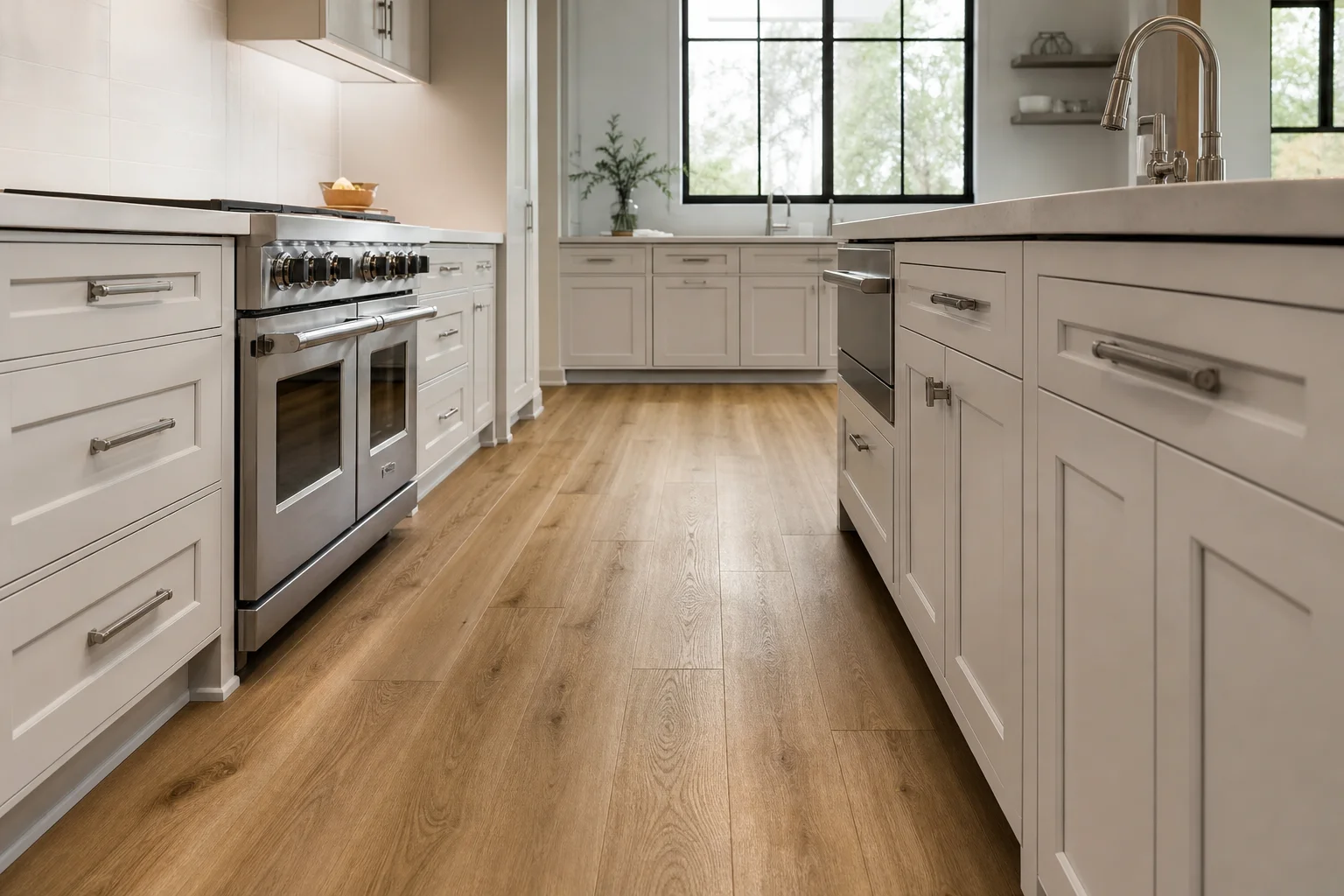
In 2026, the best kitchen flooring for many New Jersey homes is luxury vinyl plank for comfort and spill resistance, porcelain tile for water resistance and long wear, or hardwood for a continuous natural-wood look. The right choice depends on how your kitchen is used, the condition of the subfloor and the installation requirements.
For a busy family kitchen, the decision is not just about appearance. Consider standing comfort, dropped cookware, pet traffic, transitions to adjacent rooms and how each material fits into the larger remodel.
What is the best flooring for a kitchen?
The best kitchen floor balances moisture resistance, daily comfort and durability with the look you want throughout your home. No single material wins every category, so start with the conditions your floor will face most often.
When is luxury vinyl plank the right choice?
Luxury vinyl plank, often called LVP, is a practical choice when you want a wood look with a more forgiving surface underfoot. It suits a busy Middletown kitchen where children, pets and frequent cooking make spills and comfort important.
Many LVP products have a waterproof core, but that does not make the entire floor assembly waterproof. Seams, perimeter gaps and the subfloor still need attention, and standing water should be cleaned up promptly.
When is porcelain tile the right choice?
Porcelain tile is a strong choice when water resistance and a hard-wearing surface matter most. It works well near an exterior door in a Long Branch kitchen, where wet shoes, sand and frequent cleaning are part of daily life.
Tile is rigid, so its performance depends heavily on the assembly underneath. A suitable substrate, movement joints and a sound installation help reduce the risk of cracked tile or grout.
When is hardwood the right choice?
Hardwood is the right choice when natural character and continuity with adjoining wood floors are your priorities. It can be sanded and refinished when its construction and remaining wear layer permit, but it requires more care around spills and plumbing leaks.
Solid and engineered hardwood are different products. Engineered wood has a real-wood surface over a layered core, while solid wood is milled from a single piece. Confirm each product’s moisture and installation requirements before choosing.
How do tile, LVP and hardwood compare in a kitchen?
Tile generally offers the strongest resistance to surface water, LVP offers a comfortable and practical balance, and hardwood offers natural warmth with greater moisture sensitivity. The tables compare the materials in pairs so the details remain easy to read on a phone.
How does tile compare with LVP?
Both can work well in a busy kitchen, but they feel and perform differently. Porcelain is hard and stable, while LVP is typically more forgiving when you stand or drop an object.
| Criterion | Porcelain tile | LVP |
|---|---|---|
| Surface water | Highly resistant | Often waterproof core |
| Standing comfort | Hard, cool | More forgiving |
| Impact | Can chip | Can dent or gouge |
| Maintenance | Clean tile and grout | Clean seams and surface |
Porcelain is classified by the Tile Council of North America using a water absorption rate of 0.5% or less. That describes the tile itself, not the waterproofing of the entire floor assembly or its grout joints.
How does LVP compare with hardwood?
LVP is usually easier to live with around routine splashes, while hardwood offers real wood grain and potential refinishing. The best choice depends on whether moisture tolerance or the natural material is more important to you.
| Criterion | LVP | Hardwood |
|---|---|---|
| Spills | Clean promptly | Clean immediately |
| Appearance | Printed wood look | Natural wood grain |
| Wear | Wear layer matters | Finish and wood matter |
| Refinishing | Not sanded | Sometimes possible |
For LVP, compare the wear layer and manufacturer’s residential use guidance rather than choosing by appearance alone. For hardwood, species, finish and whether the product is solid or engineered affect how it handles wear and future refinishing.
What should you compare beyond the sample?
Compare the whole floor assembly, not just the material on display. Subfloor flatness, moisture conditions and transitions can influence which product is appropriate and how much preparation the project needs.
During kitchen remodeling planning, consider floor height alongside appliances, cabinet layout and adjoining rooms. A sample viewed in your kitchen’s natural and artificial light also gives a more useful impression than one viewed only in a showroom.
What does kitchen flooring cost for 200 square feet in NJ?
For a 200-square-foot kitchen, tile, LVP and hardwood are each quoted per project after a free on-site visit. IAC has not published an approved installed price for these flooring scopes, so a reliable side-by-side dollar comparison requires project-specific quotes.
How do the three options compare for the same room?
Use the same measured kitchen and installation scope when requesting each option. Ask whether the proposed products and necessary site preparation are included, rather than assuming every flooring quote covers the same work.
| 200 sq ft scope | Pricing | Check before comparing |
|---|---|---|
| Porcelain tile | Quoted per project | Tile and substrate needs |
| LVP | Quoted per project | Product and floor prep |
| Hardwood | Quoted per project | Wood and installation scope |
A labor-only installation quote does not include the flooring material: the material is chosen and priced separately. Do not compare that figure directly with a quote that includes material and installation as though both cover the same scope.
What can change the project quote?
The existing floor and subfloor can be as important to the quote as the finish material. Removing an old covering, correcting an uneven surface or addressing moisture can change the work needed before the new floor goes down.
Room shape, thresholds, appliance movement and the selected product also affect the scope. IAC provides one clear project total after a free on-site measurement, giving you a proposal based on the conditions in your home.
How does flooring relate to a full kitchen remodel budget?
A flooring-only quote is separate from the scope and pricing of a kitchen remodel. For context, IAC’s kitchen remodels typically fall into these approved tiers:
- Minor Refresh: typically $17,000-$25,000.
- Major Remodel: typically $25,000-$37,000.
- Full Gut + Expansion: typically $37,000-$45,000.
These are whole-remodel tiers, not flooring prices. The scope of your project determines which work is proposed and how it is quoted.
For help comparing floors in your kitchen, call (848) 358-7694, text us a photo, or request a free estimate.
Which kitchen floor handles spills, dropped pans and pets best?
Porcelain handles routine surface water well, LVP provides a more forgiving surface, and hardwood can handle daily use when spills are addressed quickly. For any of them, a prolonged leak is a different problem from a splash and should be investigated promptly.
What happens when water reaches the floor?
Porcelain tile resists water absorption, but grout and joints are not a substitute for a waterproofing system. Water can travel through vulnerable areas, so discuss the appropriate assembly and moisture protection for your kitchen.
Waterproof-core LVP can resist spills on its surface, but water may reach the subfloor at edges or seams. Hardwood can swell, cup or stain when exposed to excess moisture, making quick cleanup and early leak detection especially important.
Which surface is most comfortable for cooking?
LVP generally feels more forgiving underfoot than tile during long cooking sessions. Hardwood also provides a warmer, less rigid feel than porcelain, although comfort varies with the product and installation.
Tile can feel cool and hard, especially in winter. A kitchen-safe mat at the sink or prep area can add cushioning, provided it is compatible with the flooring manufacturer’s care instructions.
How do scratches and impacts affect each floor?
No floor is immune to damage: tile can chip, LVP can gouge, and hardwood can scratch or dent. A heavy pan may chip a tile or mark wood or vinyl, while pet claws and tracked-in grit can wear any surface over time.
Use furniture pads, keep pet nails trimmed and remove abrasive grit regularly. For tile, ask about slip resistance and the suitability of the specific product for floors. For LVP or hardwood, review the manufacturer’s cleaning and maintenance instructions before using a new cleaner.
How should you choose and install kitchen flooring?
Choose the material after checking your household’s priorities, the existing floor and the sequence of the remodel. A successful installation starts below the visible surface and accounts for cabinets, appliances and adjoining rooms.
Should flooring go in before or after kitchen cabinets?
The answer depends on the flooring system and cabinet design. Tile or hardwood may be installed before cabinets in some projects, while a floating LVP floor generally needs to remain free to move and should not be trapped under fixed cabinets unless the manufacturer permits it.
Plan dishwasher clearance, appliance height and finished-floor transitions before work begins. Installing cabinets first can make future floor replacement simpler, but the installer still needs to manage exposed edges and ensure appliances can be removed for service.
What should happen before the new floor is installed?
The installer should assess the substrate, moisture conditions and manufacturer’s requirements before laying the finish floor. Preparation differs by material: tile needs an appropriate rigid assembly, while floating LVP needs a sufficiently flat surface and specified expansion space.
- Measure the kitchen and inspect the existing floor and transitions.
- Check for moisture concerns and identify necessary subfloor repairs or preparation.
- Confirm the product, installation method and cabinet sequence.
- Follow the manufacturer’s instructions for acclimation, setting materials and use after installation.
For tile floor installation, substrate selection and mortar coverage matter. With vinyl flooring installation, flatness and the correct perimeter clearance are particularly important for a floating system.
What does IAC usually recommend for NJ kitchens?
IAC generally recommends starting with LVP for a busy kitchen where comfort and routine spill resistance are priorities, then considering porcelain for homeowners who prefer a hard, water-resistant surface. Hardwood is a good fit when matching adjacent wood floors matters most and the household is comfortable with its moisture care.
The final recommendation depends on the home, not a blanket rule. A Red Bank household with pets may value a forgiving floor, while a homeowner in Holmdel may prioritize a seamless hardwood transition into the dining room.
IAC is a full-service home improvement company serving New Jersey, New York and Pennsylvania. Along with flooring, it handles kitchen and bathroom remodeling, painting, carpentry, basements, decks, masonry, concrete and pavers, giving homeowners one trusted contractor for the whole home.
Frequently Asked Questions
These answers address common concerns about water, pets, flooring construction and installation sequence. The right product still depends on your kitchen’s conditions and the manufacturer’s instructions.
Is vinyl plank flooring waterproof enough for a kitchen?
Many luxury vinyl plank products have a waterproof core and handle ordinary kitchen spills well when cleaned promptly. That does not mean water cannot reach the subfloor through seams, perimeter gaps or a plumbing leak. Check the specific product’s instructions and address standing water or leaks quickly.
Is tile or vinyl plank better for a kitchen with dogs?
Porcelain tile resists surface wear well, while vinyl plank is generally more forgiving underfoot and may be more comfortable for pets. Either can be damaged by grit or impact, and vinyl can gouge. Compare the tile’s slip resistance or the plank’s wear layer, and keep claws trimmed and floors clean.
Can you put hardwood flooring in a kitchen?
Yes, hardwood can be installed in a kitchen when the product and site conditions are suitable. It creates a natural look that can flow into adjacent rooms, but spills should be wiped up immediately and leaks addressed promptly. Ask whether solid or engineered wood is appropriate for the subfloor and moisture conditions.
Should kitchen flooring go under cabinets?
It depends on the material and installation method. Tile and hardwood may go under cabinets in some designs, but floating vinyl plank generally needs room to expand and should not be pinned beneath fixed cabinets unless its manufacturer allows it. Plan the sequence around appliance clearance and finished-floor height.
Authoritative resource: This Old House.