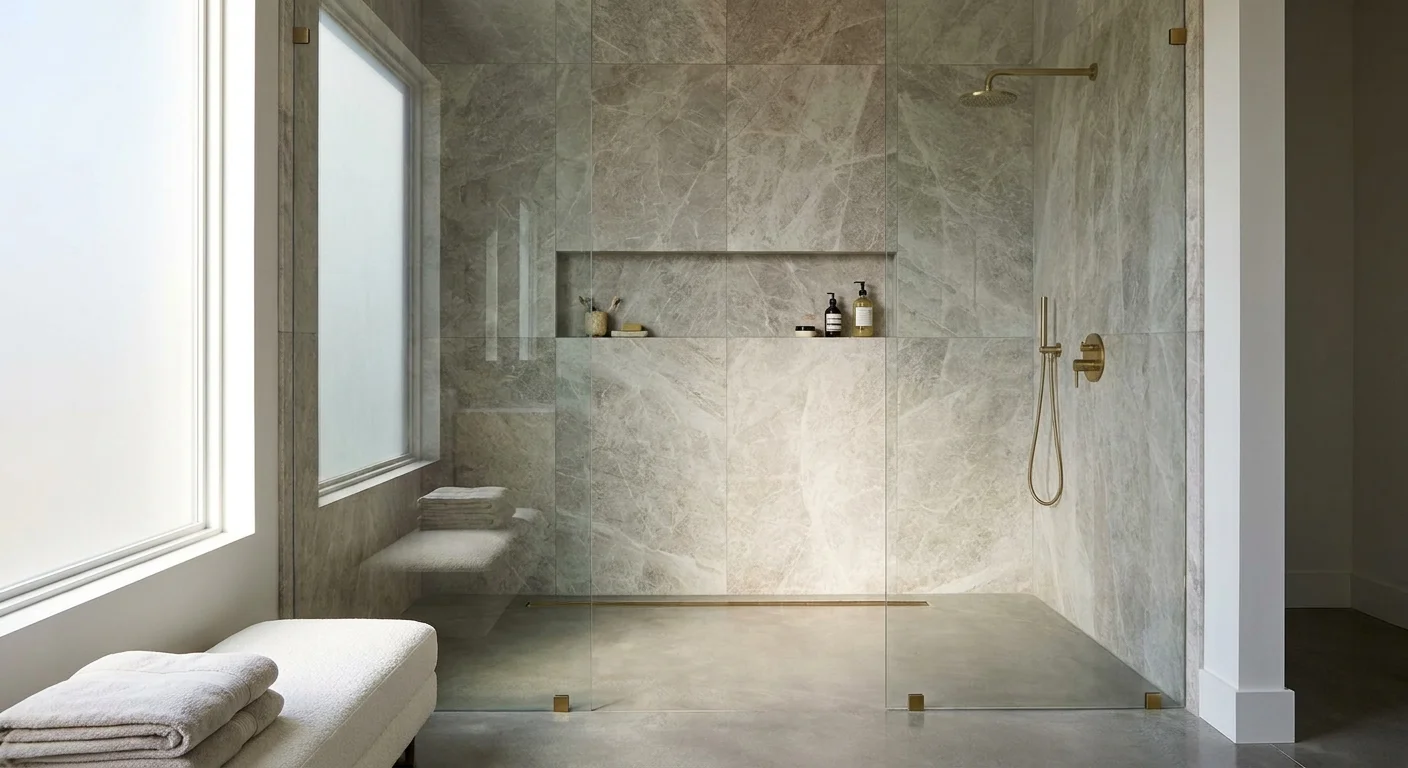
Transforming your bathroom with a walk-in shower is one of the most impactful upgrades a New Jersey homeowner can make, offering a blend of modern aesthetics, enhanced functionality, and increased accessibility. These sleek, open designs not only elevate your home's appeal but also provide a more spacious and spa-like bathing experience. This comprehensive guide from IAC Home Improvement will walk you through every aspect of planning and executing a successful walk-in shower remodel, ensuring a stunning and durable result.
Understanding the Allure of a Walk-In Shower
Defining the Modern Walk-In Shower
A walk-in shower is characterized by its open, often doorless design or minimalist glass enclosures, providing a seamless transition into the showering space. Unlike traditional showers that might be enclosed by a curtain or a framed door, walk-ins create an illusion of greater space and offer a more contemporary aesthetic. They typically feature a low or zero-threshold entry, making them highly accessible. In towns like Long Branch and Asbury Park, where modern coastal designs are popular, walk-in showers are a staple, reflecting a desire for clean lines and functional elegance.
Key Benefits for New Jersey Homeowners
For homeowners across Monmouth County and beyond, investing in a walk-in shower remodel offers numerous advantages. Firstly, they significantly enhance a bathroom's aesthetic appeal, contributing to a more luxurious and updated feel. Secondly, their open design makes bathrooms appear larger and brighter, a major plus for properties in denser areas like Red Bank or Freehold. Perhaps most importantly, walk-in showers offer superior accessibility, making them ideal for aging-in-place strategies or for individuals with mobility challenges. This forward-thinking design can also boost your home's resale value, as modern and accessible bathrooms are highly sought after by prospective buyers in the competitive NJ, NY, and PA markets.
Walk-In Shower vs. Traditional Tub: Making the Right Choice
The decision between retaining a bathtub or opting for a walk-in shower often depends on household needs and available space. While a bathtub is essential for families with young children, many adults find they rarely use a tub for bathing, preferring the speed and efficiency of a shower. Converting a tub-shower combo into a dedicated walk-in shower can dramatically open up a smaller bathroom, such as those common in older homes near the Jersey Shore. For larger master bathrooms in Colts Neck or Holmdel, homeowners might choose to include both a spacious walk-in shower and a freestanding soaking tub, creating a true spa sanctuary. Consider your lifestyle, future needs, and the overall value proposition for your specific property when making this crucial decision.
Designing Your Dream Walk-In Shower in NJ
Space Planning, Layout, and Dimensions
Effective space planning is paramount for a functional and aesthetically pleasing walk-in shower. The minimum recommended interior dimensions for a comfortable walk-in shower are typically 36x36 inches, though larger spaces like 48x60 inches allow for more luxurious features such as dual showerheads. Our design experts at IAC Home Improvement will help you optimize your existing bathroom footprint, considering factors like door swings (if any), fixture placement, and the flow of traffic. We ensure that your new shower integrates seamlessly into your bathroom's overall design, whether you're in a compact city apartment in NYC or a sprawling suburban home in Pennsylvania.
Curbless and ADA-Compliant Shower Design
Curbless showers are a hallmark of modern, accessible design, featuring a seamless transition from the bathroom floor directly into the shower area without a raised curb. This not only creates a sleek, open look but also eliminates a tripping hazard, making the shower highly accessible for wheelchairs, walkers, and individuals with limited mobility. Achieving a truly curbless design requires precise floor sloping for proper drainage, often necessitating a linear drain and careful subfloor modification. When designed to ADA (Americans with Disabilities Act) standards, these showers include specific dimensions, grab bar placements, and non-slip flooring, providing safety and independence for all users. IAC Home Improvement specializes in these intricate installations, ensuring compliance and superior functionality.
Selecting the Perfect Glass Enclosure and Door System
The choice of glass enclosure significantly impacts the visual appeal and functionality of your walk-in shower. Options range from entirely doorless designs, which require a larger shower footprint to prevent water splash, to minimalist frameless glass panels that provide a clean, unobstructed view. Semi-frameless and framed options offer different aesthetic profiles and price points. The thickness of the glass (typically 3/8-inch or 1/2-inch for frameless) contributes to its durability and luxurious feel. Our team helps you select the ideal glass type (clear, frosted, or textured) and hardware finish to complement your bathroom's style, ensuring a cohesive and elegant result for your Monmouth County home.
Essential Materials and Waterproofing for Longevity
The Critical Role of Waterproofing Systems
The foundation of any durable walk-in shower is a robust waterproofing system. This is not an area to cut corners. Modern systems, such as those by Schluter-Kerdi or Wedi, utilize integrated membranes and panels to create a continuous, watertight barrier beneath your tile. These systems prevent moisture penetration into the wall cavity and subfloor, guarding against mold, mildew, and structural damage. Proper sloping of the shower pan (minimum 1/4 inch per foot) towards the drain is also vital for efficient water runoff. IAC Home Improvement adheres strictly to manufacturer specifications and industry best practices for waterproofing, often providing a 10-year warranty on our waterproofing installations for peace of mind.
Flooring and Wall Tile Selections
Tile is the predominant material for walk-in showers, offering endless design possibilities and superior water resistance.
- Porcelain Tile: Extremely durable, non-porous, and resistant to stains and moisture. It's an excellent choice for both walls and floors, available in a vast array of colors, patterns, and sizes, including large-format tiles that minimize grout lines. Porcelain typically boasts a PEI (Porcelain Enamel Institute) rating of 4 or 5, indicating high resistance to abrasion.
- Ceramic Tile: A more budget-friendly option, ceramic is durable but generally less dense and slightly more porous than porcelain. It's well-suited for shower walls but should be chosen carefully for floors, ensuring adequate slip resistance.
- Natural Stone: Materials like marble, travertine, and granite offer unparalleled beauty and luxury. However, they are porous and require regular sealing to prevent staining and water absorption. They also tend to be softer and can scratch more easily than porcelain.
- Grout: Epoxy grout offers superior stain resistance and durability compared to traditional cementitious grout, making it ideal for wet environments. Standard grout should be sealed annually to maintain its integrity.
Fixtures, Showerheads, and Control Systems
The right fixtures transform a shower from functional to luxurious. Consider a thermostatic mixing valve for precise temperature control, preventing sudden shifts in water temperature. Showerhead options include:
- Rainfall Showerheads: Mounted overhead, providing a wide, gentle downpour for a spa-like experience.
- Wall-Mounted Showerheads: The traditional choice, offering various spray patterns.
- Handheld Showerheads: Excellent for rinsing, cleaning the shower, and assisting with accessibility.
- Body Jets: Multiple small nozzles integrated into the wall, providing a targeted massage.
Enhancing Functionality and Aesthetics: Features & Finishes
Integrated Storage: Niches, Benches, and Shelving
Thoughtful storage solutions are crucial for maintaining a clutter-free and organized walk-in shower. Recessed niches, built directly into the wall, provide discreet and convenient storage for shampoos and soaps without protruding into the shower space. Benches, whether built-in or freestanding, offer a comfortable place to sit, shave, or simply relax, and are particularly beneficial for accessibility. Floating shelves or corner caddies can also add practical storage and design flair. When designing these elements, we consider material continuity with your chosen tile to ensure a cohesive and elegant look.
Optimal Lighting, Ventilation, and Heating
Proper lighting, ventilation, and even heating can significantly enhance your shower experience and the longevity of your bathroom. Damp environments are prone to mold and mildew, so a powerful exhaust fan (rated for your bathroom's square footage) is essential. Consider a fan with a humidity sensor for automatic operation. In-shower lighting, often achieved with recessed, wet-rated LED fixtures, improves visibility and creates ambiance. For ultimate comfort on chilly New Jersey mornings, radiant floor heating can extend into the shower pan, providing a warm and inviting surface underfoot.
Safety and Comfort: Non-Slip Surfaces and Grab Bars
Safety should always be a priority in bathroom design, especially in wet areas. For shower floors, select tiles with a high coefficient of friction (COF) or a textured finish to prevent slips. Smaller format tiles also offer more grout lines, which provide additional grip. Strategically placed grab bars, installed into blocking within the wall, offer crucial support and stability, particularly for children, seniors, or anyone needing extra balance. These can be chosen in finishes that blend seamlessly with your other fixtures, ensuring safety doesn't compromise style.
Navigating Your Walk-In Shower Remodel: Costs and Process
Understanding Walk-In Shower Remodel Costs in New Jersey
The cost of a walk-in shower remodel in NJ can vary widely, typically ranging from $9,000 to $25,000 for a comprehensive bathroom renovation, with the shower portion being a significant component. Several factors influence the final price:
- Size of the Shower: Larger showers require more materials and labor.
- Material Choices: High-end porcelain, natural stone, custom glass, and premium fixtures will increase costs. Shower walls, large-format tile and natural stone are quoted per project, while a straight-lay tile floor with standard porcelain or ceramic tile included starts at about $13 per sq ft installed, with a $1,500 project minimum.
- Complexity of Design: Curbless designs, intricate tile patterns, and extensive custom features (niches, benches, multiple showerheads) require more specialized labor and time.
- Plumbing Modifications: Relocating drains or adding new water lines for multiple fixtures can add to the expense.
- Waterproofing System: Investing in a superior waterproofing system is critical and contributes to the overall cost but prevents future, more expensive issues.
The IAC Home Improvement Remodeling Process
Our process is designed to be seamless and stress-free for homeowners across NJ, NY, and PA.
- Initial Consultation: We begin with a free, in-home consultation to discuss your vision, needs, and budget.
- Design & Planning: Our experts assist with material selection, layout design, and fixture choices, creating a detailed plan.
- Permitting: We handle all necessary permits and inspections required by local municipalities, such as those in Monmouth County.
- Preparation & Demolition: Careful demolition and site preparation ensure a clean slate for your new shower.
- Installation: Our skilled craftsmen execute the remodel, focusing on precision in waterproofing, tiling, and fixture installation.
- Final Walkthrough: We conduct a thorough walkthrough with you to ensure every detail meets your satisfaction.
Why Partner with a Full-Service Local Expert
Choosing a full-service contractor like IAC Home Improvement means you have one trusted partner managing your entire project, from concept to completion. We are not just flooring specialists; our expertise extends to kitchen & bathroom remodeling, interior/exterior painting, carpentry, decks, masonry, landscaping, and more. This comprehensive approach simplifies communication, streamlines timelines, and ensures consistent quality across all aspects of your home improvement. With NJ License #13VH13143000 and PA License #188007, a 5.0 rating with 100+ Google reviews, and a commitment to excellence, IAC Home Improvement is your reliable choice for any home renovation in New Jersey, New York, or Pennsylvania. Contact us today at (848) 234-0283 or email contact@iachomeimprovement.com to start your walk-in shower transformation.
Frequently Asked Questions About Walk-In Shower Remodels
How long does a walk-in shower remodel typically take?
A standard walk-in shower remodel, replacing an existing tub or shower, typically takes about 2 to 4 weeks from demolition to completion. This timeframe accounts for demolition, plumbing rough-ins, waterproofing installation (which requires drying/curing time), tile setting, grouting, fixture installation, and glass enclosure setup. More complex designs or unforeseen structural issues can extend this timeline.
What is the average cost for a walk-in shower in New Jersey?
In New Jersey, the average cost for a walk-in shower remodel can range from $9,000 to $25,000 as part of a larger bathroom renovation. Key factors influencing this cost include the shower's size, the type of materials chosen (e.g., porcelain vs. natural stone, standard vs. custom glass), the complexity of plumbing modifications, and whether it's a curbless design. For tile floors, IAC's pricing starts at about $13 per sq ft installed with standard porcelain or ceramic tile included (straight lay), while shower walls, large-format tile and natural stone are quoted per project; tile projects start at $1,500.
Do curbless showers require special drainage?
Yes, curbless showers require specialized drainage and careful floor sloping to ensure efficient water runoff. A linear drain is often preferred for curbless designs as it can be placed along one wall, simplifying the floor slope. The entire shower floor, and sometimes a portion of the bathroom floor adjacent to the shower, must be sloped correctly towards the drain to prevent water from escaping the shower area.
What are the best materials for a walk-in shower floor?
The best materials for a walk-in shower floor prioritize slip resistance and water impermeability. Porcelain tile is highly recommended due to its durability, low porosity, and availability in various textures and small formats that provide more grip. Small mosaic tiles are also popular because the increased number of grout lines offers better traction. Natural stone can be used but requires regular sealing and careful selection for texture to ensure safety.
Authoritative resource: This Old House.