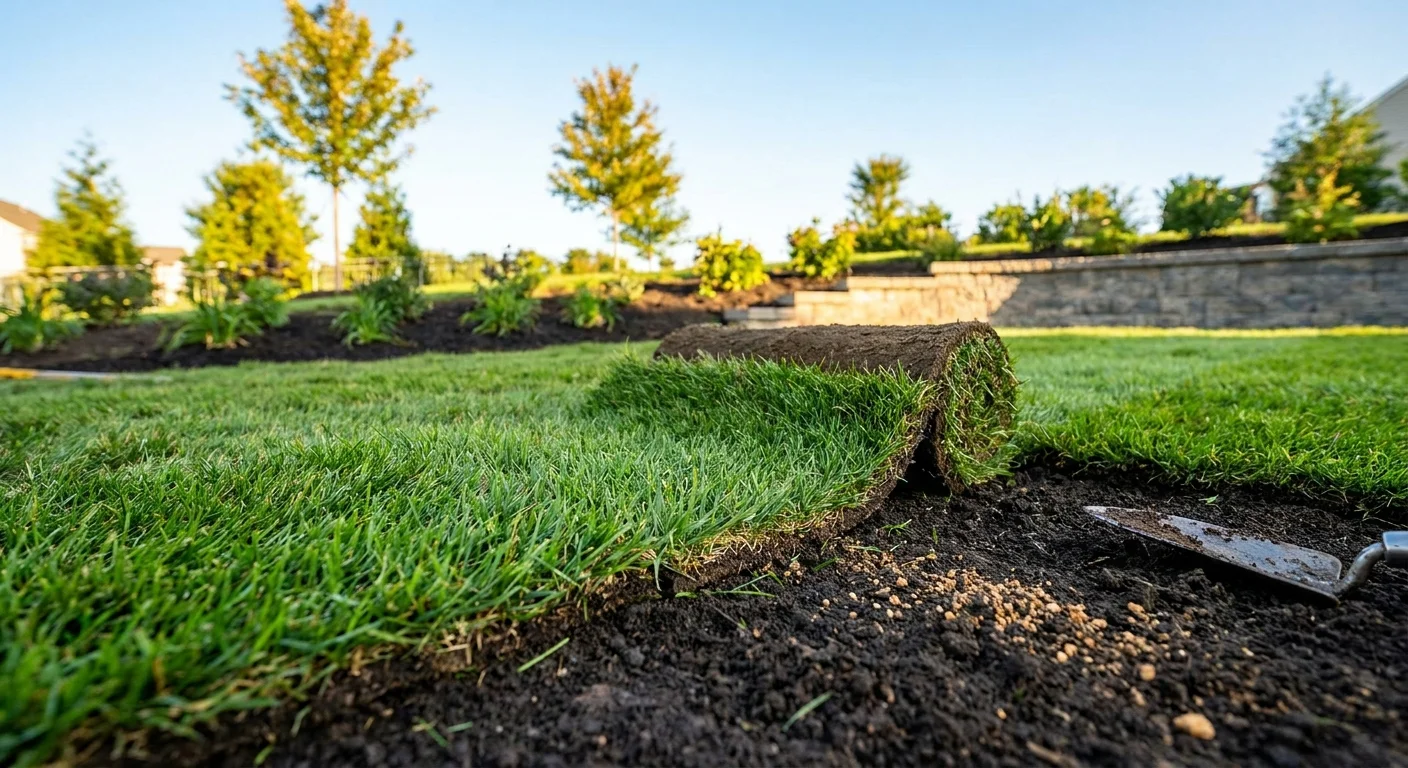
A lush, vibrant lawn dramatically enhances curb appeal and provides a beautiful space for outdoor living. For homeowners in New Jersey, New York, and Pennsylvania seeking an immediate transformation, sod installation offers an instant, mature lawn without the long wait of seeding. This process involves laying pre-grown grass rolls directly onto prepared soil, providing an established root system and a ready-to-enjoy green carpet in a matter of hours, making it an ideal solution for quick and effective lawn renovation.
Understanding Sod Installation and Lawn Renovation
Lawn renovation encompasses various strategies to restore or establish a healthy, attractive turf. While seeding is a common method, sod installation provides a unique advantage by delivering an instant lawn, bypassing the vulnerable germination period. This approach is particularly popular for new construction, erosion control, or when homeowners desire immediate aesthetic improvement.
Sod vs. Seed: Making the Right Choice for Your NJ Home
When deciding between sod and seed for your Freehold, Long Branch, or Holmdel property, several factors come into play. Seed is generally more economical upfront, costing roughly $0.10-$0.20 per square foot for materials, but requires extensive care over several months to establish. It's also susceptible to weed competition, erosion, and inconsistent growth. Sod, while initially more expensive (typically $1.00-$2.00 per square foot for the sod itself, or $3.00-$6.00 per square foot installed), provides an immediate, dense lawn with a mature root system. This instant gratification also means less vulnerability to weeds and erosion, making it a superior choice for sloped areas or high-traffic zones. For a quick turnaround and guaranteed density, sod is often the preferred option for homeowners across Monmouth County and beyond.
Benefits of Professional Sod Installation
Hiring professionals like IAC Home Improvement for sod installation ensures a successful, long-lasting lawn. Our expertise guarantees proper soil preparation, which is the most critical step, as well as correct sod laying techniques to prevent gaps and unevenness. Professionals also have access to high-quality, regionally appropriate turf varieties, ensuring your new lawn thrives in the specific climate of NJ, NY, or PA. This minimizes the risk of costly mistakes and ensures your investment yields a beautiful, healthy lawn for years to come.
The Foundation: Preparing Your Soil for Success
The success of any sod installation hinges on meticulous soil preparation. Without a properly prepared base, even the highest quality sod will struggle to root and flourish, leading to a patchy, unhealthy lawn. This foundational work sets the stage for a vibrant, resilient turf.
Soil Testing and Amendments
Before any sod is laid, a comprehensive soil test is essential. This analysis, typically costing $20-$50, identifies nutrient deficiencies (like nitrogen, phosphorus, and potassium) and imbalances in pH levels. For optimal turf growth, soil pH should ideally be between 6.0 and 7.0. Based on test results, amendments such as lime (to raise pH) or sulfur (to lower pH) may be necessary. Incorporating 2-4 inches of high-quality organic matter, like compost, into the top 4-6 inches of soil is also crucial. This improves soil structure, water retention, and nutrient availability, providing an ideal environment for new sod roots to establish quickly. For properties in Colts Neck or Asbury Park, understanding local soil conditions is key to selecting the right amendments.
Grading and Leveling the Landscape
Proper grading is vital for both the health of your lawn and the drainage around your home. The ground should gently slope away from your foundation at a minimum grade of 2% (a drop of 2 feet over 100 feet) to prevent water accumulation and potential structural damage. After rough grading, the area needs to be finely leveled to create a smooth, even surface. Any depressions or high spots will lead to uneven water distribution, causing some areas to dry out while others become waterlogged. Using a rake and roller to achieve a consistent, firm surface ensures that each sod roll makes full contact with the prepared soil, promoting uniform rooting and a perfectly level finished lawn.
The Professional Sod Installation Process
Once the soil is meticulously prepared, the actual laying of the sod begins. This process requires precision and efficiency to ensure a seamless, healthy transition for the turf. IAC Home Improvement's experienced team handles every step, from accurate measurement to the final roll.
Measuring and Ordering Sod
Accurate measurement is critical to avoid waste or shortages. Our team carefully measures the area to be sodded in square feet, adding an additional 5-10% to account for irregular shapes and cuts. Sod is typically delivered in rolls or slabs, often measuring 2 feet by 5 feet (10 square feet) or 18 inches by 6 feet (9 square feet). It's crucial that sod is installed within 24 hours of delivery, especially during warmer months, as it can quickly deteriorate if left rolled up. We coordinate delivery precisely with the installation schedule to ensure the freshest sod for your Freehold or Red Bank property.
Laying Sod Rolls: Techniques for a Seamless Lawn
Sod should be laid immediately after delivery onto the moist, prepared soil. The process involves laying rolls in a staggered brick-like pattern, ensuring tight seams without overlapping.
- Start along a straight edge, such as a driveway or walkway, to establish a clean line.
- Lay subsequent rows parallel to the first, staggering the seams from one row to the next.
- Press sod firmly against the soil to ensure good contact, eliminating air pockets.
- Trim sod rolls with a sharp utility knife or spade to fit around curves, obstacles, and at the edges.
- Avoid leaving small pieces of sod at the edges, as they dry out quickly. Integrate them into the main body of the lawn where possible.
Initial Rolling and Watering
After all the sod is laid, the entire area should be gently rolled with a lawn roller. This crucial step removes any remaining air pockets between the sod and the soil, ensuring maximum root-to-soil contact. Immediately following rolling, the new sod requires a thorough initial watering. This first watering should be deep enough to penetrate the sod layer and at least 3-4 inches into the underlying soil. This saturates the new turf and provides the essential moisture for the roots to begin their establishment process. Proper initial watering is paramount for the survival and health of your new lawn.
Essential Aftercare for a Thriving New Lawn
The work doesn't end when the last roll of sod is laid. The first few weeks of aftercare are critical for the successful establishment of your new lawn. Following a strict watering and maintenance schedule will ensure your sod roots deeply and develops into a lush, resilient turf.
Watering Schedule for New Sod
Proper watering is the single most important factor for new sod. For the first 1-2 weeks, your new lawn in NJ, NY, or PA will need frequent, shallow watering.
- Weeks 1-2: Water 2-3 times daily for 15-20 minutes each session, or until the sod and underlying soil are moist but not waterlogged. The goal is to keep the sod consistently damp to encourage root growth.
- Weeks 3-4: Gradually reduce frequency to once daily, but increase the duration to ensure deeper penetration, encouraging roots to grow further down into the soil.
- After 4 Weeks: Transition to watering 2-3 times per week, delivering about 1 inch of water per session. This promotes a strong, deep root system, making the lawn more drought-tolerant.
Mowing and Fertilizing Best Practices
Wait at least 10-14 days, or until the sod is firmly rooted and cannot be easily lifted, before the first mowing. Set your mower to its highest setting (typically 2.5-3 inches) and never remove more than one-third of the blade height at a time. A sharp blade is crucial to prevent tearing the new grass. Fertilizing new sod is generally not recommended immediately after installation, as the sod farm typically pre-fertilizes the turf. About 4-6 weeks after installation, once the roots are well-established, a starter fertilizer low in nitrogen and high in phosphorus (e.g., 5-10-10) can be applied to further promote root development. Always follow manufacturer instructions carefully.
Troubleshooting Common New Sod Issues
Even with the best care, new sod can sometimes face challenges.
- Brown or Yellowing Patches: Often indicates insufficient watering or, paradoxically, overwatering leading to root rot. Check soil moisture and adjust your schedule.
- Gaps Between Rolls: Can occur if sod shrinks slightly. Fill with a sandy topsoil mix and overseed if necessary, or carefully cut and insert small pieces of sod.
- Weed Growth: While sod is dense, dormant weed seeds in the underlying soil can sprout. Hand-pulling is the safest method for new lawns; avoid herbicides for at least 6-8 weeks.
- Fungal Issues: Poor drainage or excessive watering can lead to fungal diseases. Ensure good air circulation and proper watering techniques.
Investing in Your Landscape: Costs and Value
Understanding the financial aspect of sod installation helps homeowners make informed decisions. While it represents an initial investment, the long-term benefits and property value enhancement often outweigh the costs.
Cost Factors for Sod Installation in NJ, NY, PA
The cost of sod installation varies based on several factors, including the size of the area, the type of sod selected, site preparation needs, and labor rates in specific regions like Monmouth County or the Jersey Shore. On average, homeowners in New Jersey, New York, and Pennsylvania can expect to pay between $3.00 and $6.00 per square foot for professional sod installation, including materials and labor. This typically breaks down as:
| Item | Estimated Cost Per Square Foot |
|---|---|
| Sod Material (Kentucky Bluegrass, Fescue blends) | $1.00 - $2.00 |
| Soil Preparation (tilling, amendments, grading) | $0.50 - $1.50 |
| Labor for Installation | $1.50 - $2.50 |
| Total Professional Installation | $3.00 - $6.00 |
Long-Term Benefits and Property Value
A professionally installed sod lawn offers significant long-term value. It provides immediate erosion control, preventing soil loss on sloped areas. The dense turf acts as a natural filter, improving air quality and reducing dust. From a property value perspective, a healthy, green lawn can increase a home's curb appeal by 10-15%, making it more attractive to potential buyers should you ever decide to sell. Beyond aesthetics, sod creates a usable outdoor space for families to enjoy instantly, enhancing quality of life. While the upfront investment is higher than seeding, the instant results, reduced maintenance during establishment, and robust health often make sod a worthwhile choice for homeowners in Freehold, Long Branch, and throughout our service areas.
Beyond Sod: Comprehensive Home Improvement with IAC Home Improvement
At IAC Home Improvement, we understand that a beautiful lawn is often just one piece of a larger home vision. We are a full-service home improvement and construction company, ready to tackle any project your home needs, from the ground up.
Integrating Landscape Projects with Full Home Renovations
Imagine a seamless transformation of your entire property. While we expertly handle your sod installation and lawn renovation, we can also integrate it with broader landscaping designs, such as installing new paver patios, walkways, or even a deck for outdoor entertaining. Our expertise extends indoors as well. Perhaps you're considering a full kitchen remodel, which typically ranges from $17,000 to $45,000, or a bathroom renovation, often costing $9,000 to $25,000. We also offer expert flooring installation for hardwood ($4-$7/sqft), vinyl ($3-$5/sqft), tile ($7-$12/sqft), laminate ($3.50-$4.50/sqft), and carpet ($1.50-$3/sqft). Need a fresh look for your interior? Our interior painting services are priced competitively at $6-$11 per square foot depending on complexity. By choosing IAC Home Improvement, you gain the convenience and peace of mind of working with one trusted contractor for all your home improvement needs, ensuring consistency, quality, and streamlined project management from start to finish.
Why Choose IAC Home Improvement for Your Project
Choosing IAC Home Improvement means partnering with a team dedicated to excellence. With a 5.0 rating based on over 100 Google reviews, we pride ourselves on delivering exceptional results and customer satisfaction. We are fully licensed in New Jersey (NJ License #13VH13143000) and Pennsylvania (PA License #PA188007), ensuring professional, compliant service. Whether you're in Freehold, Red Bank, or anywhere across NJ, NY, or PA, our comprehensive services cover everything from flooring, kitchen & bathroom remodeling, interior/exterior painting, carpentry, decks, masonry/concrete/paver work, to landscaping. For a detailed quote on your sod installation or any other home renovation project, use our convenient online cost calculator or contact us today at (848) 234-0283 or via email at contact@iachomeimprovement.com. Let us bring your vision to life.
Frequently Asked Questions
When is the best time to install sod in New Jersey?
The best times to install sod in New Jersey are typically during the cooler, milder seasons: late spring (April-May) or early fall (September-October). These periods offer moderate temperatures and adequate rainfall, which are ideal for root establishment without the stress of extreme summer heat or winter cold. Sod can be installed in summer, but it requires more diligent watering.
How much does sod installation typically cost?
Professional sod installation in New Jersey, including materials and labor, generally costs between $3.00 and $6.00 per square foot. This price can fluctuate based on the type of sod, the size of the area, the extent of soil preparation required, and regional labor rates.
How often should I water new sod?
For the first 1-2 weeks, new sod requires frequent, shallow watering 2-3 times daily to keep it consistently moist. In weeks 3-4, reduce frequency but increase duration to water once daily and more deeply. After a month, transition to watering 2-3 times per week, aiming for about 1 inch of water per session to encourage deep root growth.
Can I install sod myself, or should I hire a professional?
While DIY sod installation is possible for small, straightforward areas, hiring a professional is highly recommended for larger projects or challenging landscapes. Professionals ensure proper soil preparation, efficient laying techniques, and correct initial care, minimizing the risk of costly mistakes and guaranteeing a healthy, uniform lawn, especially given the tight timeframe for laying sod after delivery.
Authoritative resource: This Old House.