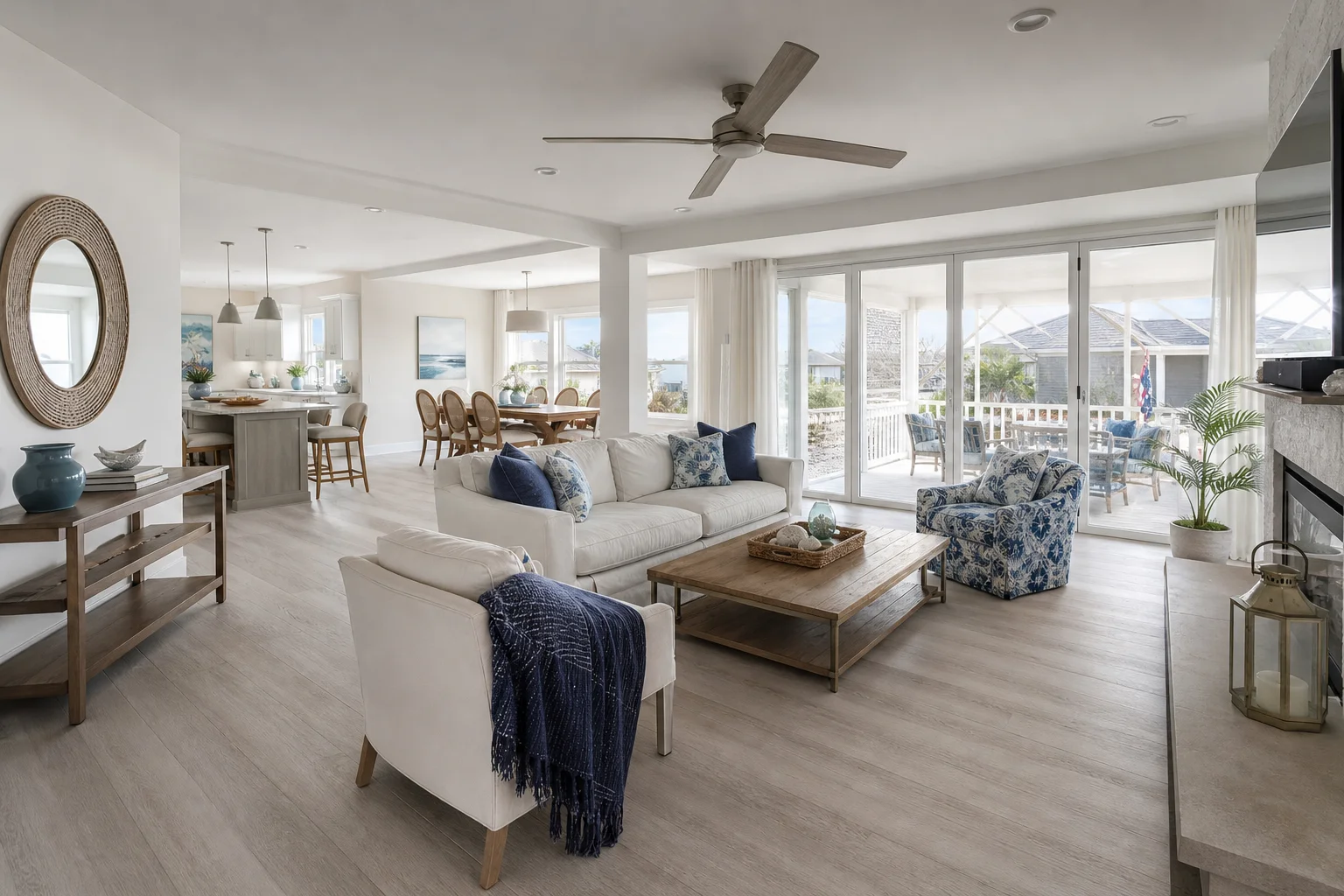
In 2026, luxury vinyl plank flooring in Long Branch, NJ typically costs about $8 per square foot all-inclusive, covering the plank, installation and shoe molding. If you supply the flooring, installation starts from $4 per square foot, with projects from $1,300. The final quote depends on your rooms, subfloor and selected materials.
For homeowners ready to replace worn flooring, this guide explains what affects the quote, how installation works and what to check before hiring a local contractor. Explore IAC’s vinyl flooring installation service for an overview of the work.
What is luxury vinyl plank flooring?
Luxury vinyl plank, or LVP, is a resilient flooring product made in planks that resemble wood. It combines a decorative layer with a protective wear layer and a core designed for everyday residential use.
How is LVP installed?
Many LVP products use click-lock edges to form a floating floor, while others are designed for glue-down installation. The appropriate method depends on the product, the subfloor and the manufacturer’s instructions.
A floating floor needs the specified expansion space around walls and fixed objects. Shoe molding or another approved trim can conceal that gap without fastening the planks to the wall.
Is waterproof LVP suitable for a coastal home?
Waterproof LVP can be a practical choice for Long Branch homes where wet shoes, humidity and occasional spills are concerns. Long Branch is on the Atlantic coast, so sand and salt carried indoors can also affect floor care.
Waterproof planks do not make the subfloor or an entire room waterproof. Wipe up spills, use entry mats to catch grit and follow the flooring manufacturer’s cleaning instructions. Seasonal humidity changes can also affect the subfloor and surrounding woodwork.
What should homeowners compare when choosing planks?
Compare the wear layer, core construction, surface texture and installation instructions, not just the printed wood pattern. A thicker wear layer may be useful in a busy hallway, while texture and color influence how visible dust and scratches are.
Check whether the product has attached underlayment and whether additional underlayment is permitted. The luxury vinyl plank flooring guide explains more about choosing a product for your home.
How much does LVP flooring installation cost in Long Branch?
LVP typically costs about $8 per square foot all-inclusive in Long Branch, including plank, installation and shoe molding. Installation only starts from $4 per square foot when you supply the flooring, with projects from $1,300.
What is included in each pricing option?
The all-inclusive figure covers the listed plank and installation scope. The installation-only figure is labor for client-supplied flooring, so the material is chosen and priced separately.
| Option | Typical starting price | Scope |
|---|---|---|
| All-inclusive LVP | About $8 per sq ft | Plank, installation and shoe molding |
| Installation only | From $4 per sq ft | Client supplies flooring; projects from $1,300 |
These options do not cover the same scope, so compare what each includes rather than treating the two figures as interchangeable. The final project quote is based on an on-site measurement and the work your floor requires.
What can change the final quote?
Room layout, existing flooring and subfloor condition can change the amount of preparation and cutting required. Doorways, transitions, built-ins and the number of rooms also influence the installation approach.
- Existing surface: Removal or preparation depends on what is already on the floor.
- Subfloor: High spots, low spots, damage or moisture concerns may need attention before planks go down.
- Finishing details: Door casings, transitions and trim affect how the finished floor meets adjacent surfaces.
- Product selection: Plank construction and manufacturer requirements determine the installation method.
How does IAC prepare an estimate?
IAC offers a free on-site measurement and provides one clear project total based on the observed conditions and requested scope. This visit helps establish which areas will be covered and whether the existing floor needs further evaluation.
Call (848) 358-7694, text us a photo, or request a free estimate.
What is the LVP installation process?
LVP installation typically starts with measuring and evaluating the existing floor, then moves through preparation, plank installation and finishing. The ranges below are general planning estimates, not a promised schedule, and preparation or product requirements can extend the work.
What happens before installation day?
The installer checks the room dimensions, existing surface and access, then reviews the selected product’s requirements. If you are supplying planks, have the product information available so the installation method and any acclimation requirements can be checked.
Homeowners should discuss moving furniture, removing existing flooring and arranging access before work begins. The manufacturer may require the flooring to be stored in the home before installation, with conditions and timing varying by product.
How long does each step typically take?
For a straightforward residential project, these stages provide a useful general sequence. Room size, furniture, subfloor repairs and the chosen product can change the duration substantially.
- Measure and inspect, typically 1 to 2 hours: Assess the rooms, transitions and visible subfloor conditions, and discuss the flooring selection.
- Prepare the space, typically 2 to 6 hours: Clear the work area and address the existing floor as needed. Removal and disposal requirements vary.
- Prepare the subfloor, typically several hours to a day: Clean the surface and correct conditions that prevent it from meeting the plank manufacturer’s flatness requirements. Patching compounds may need additional drying time.
- Lay the planks, typically 1 to 2 days: Plan the layout, cut the planks and install them using the specified click-lock or glue-down method.
- Finish and review, typically 1 to 3 hours: Install appropriate transitions and shoe molding, clean the work area and check the finished floor.
When can you use the new floor?
Use the floor according to the plank and adhesive manufacturers’ instructions. A floating floor may be ready for normal foot traffic sooner than a glue-down floor, but adhesive cure times and restrictions vary.
Ask before returning heavy furniture or placing rugs. Following the product’s guidance helps protect seams, adhesive and the finished surface during the initial period.
What should Long Branch homeowners consider before installation?
Long Branch has both older homes and newer residences, so the condition beneath the existing floor can vary considerably. The installer should assess the actual subfloor rather than assume it is ready for planks.
Why does the subfloor matter?
LVP needs a clean, sound and sufficiently flat substrate to support its locking joints or adhesive bond. Flatness is different from level: a floor can slope gently and still be flat, but abrupt dips and ridges need attention.
Concrete may require moisture testing, while a wood subfloor should be checked for damage and movement. ASTM International publishes test methods relevant to concrete moisture, but the flooring and adhesive manufacturers’ specific limits govern the product being installed.
Which rooms are good candidates for LVP?
Living rooms, bedrooms, kitchens and entryways can all be candidates for LVP when the selected product is approved for the space. A consistent plank across connected rooms can create a continuous look, provided the layout and transition requirements allow it.
In a bathroom, check the manufacturer’s rules for perimeter sealing, fixtures and wet areas. LVP is not a substitute for correcting leaks or protecting the structure from ongoing moisture.
Are permits needed for flooring work?
Permit requirements depend on the full scope of the project, not simply the flooring name. Basic flooring replacement may be treated differently from a renovation that changes structural, electrical or plumbing work.
Confirm applicable requirements with the Long Branch construction office before work begins. An installer can discuss the planned scope, but homeowners should not assume a permit is required or unnecessary without checking.
How do you choose a local LVP installer?
Choose an installer who can assess the floor in person, explain the proposed scope and identify the product requirements before work starts. Verify the contractor’s registration and ask how transitions, trim and unexpected subfloor conditions will be handled.
Why do Long Branch homeowners consider IAC?
IAC Home Improvement is based in Long Branch and has been in business since 2015. Its New Jersey home improvement contractor registration is #13VH13143000, and the company is rated 5.0 on Google with more than 100 reviews.
IAC also offers home improvement services in Long Branch. As a full-service company, it handles flooring, kitchen and bathroom remodeling, painting, carpentry, basements, decks, masonry, concrete and pavers, giving homeowners one contractor to contact for the whole home.
What should you ask before accepting a quote?
Ask which flooring and trim are included, whether existing material will be removed and how any subfloor concerns will be addressed. If you are buying the planks yourself, confirm that the selected product is suitable for the room and proposed installation method.
Also discuss who will move furniture, what happens at doorways and when the room can be used. A free on-site measurement gives both homeowner and contractor a chance to review these practical details before the project begins.
Does IAC serve towns near Long Branch?
Yes. IAC serves nearby communities including Eatontown, Red Bank and Asbury Park, as well as other areas in New Jersey, New York and Pennsylvania. Homeowners can also explore vinyl flooring installation in Eatontown for information specific to that neighboring town.
Frequently Asked Questions
How much does it cost to install LVP flooring in Long Branch, NJ?
LVP flooring typically costs about $8 per square foot all-inclusive, covering the plank, installation and shoe molding. If you supply the flooring, installation starts from $4 per square foot, with projects from $1,300. The flooring material is chosen and priced separately for installation-only work. An on-site measurement establishes the project quote.
How long does LVP flooring installation take?
Laying planks in a straightforward residential project typically takes one to two days, but the complete project can take longer. Furniture removal, existing flooring, subfloor preparation and product requirements all affect the schedule. Patching materials or adhesives may also require drying or curing time before the floor can be used.
Can LVP be installed over an existing floor?
Some LVP products can be installed over an existing floor if the manufacturer permits it and the surface is clean, sound, dry and sufficiently flat. Loose material, uneven areas and excess floor height at doors or transitions may make removal or preparation necessary. The existing surface should be evaluated before choosing the installation method.
Is IAC licensed to install flooring in New Jersey?
IAC Home Improvement holds New Jersey home improvement contractor registration #13VH13143000. The company is based in Long Branch and has been in business since 2015. Before hiring any contractor, homeowners can verify registration and discuss the project scope, including whether any part of a broader renovation requires additional permits or credentials.
Authoritative resource: This Old House.