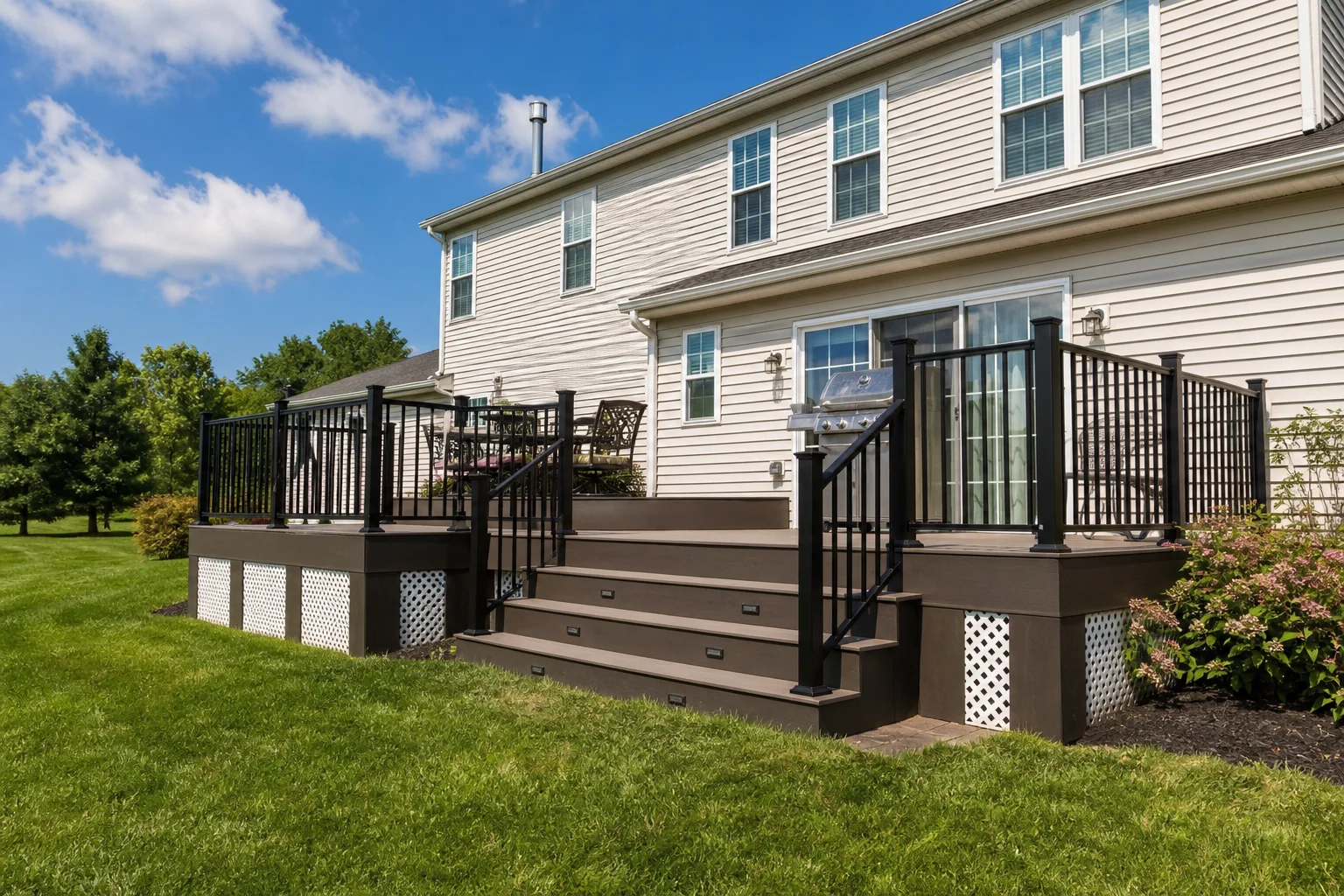
In 2026, New Jersey homeowners comparing deck builders should verify the contractor’s home improvement registration, insurance, permit plan, and written contract before signing. IAC Home Improvement’s New Jersey registration number is 13VH13143000.
The right questions to ask a deck builder cover more than the surface boards. Use this phase-by-phase checklist to compare structural details, product choices, project totals, inspections, and warranty coverage on the same terms.
1. Is the deck builder registered and insured in New Jersey?
Start by verifying the business’s New Jersey registration and insurance directly, rather than relying on a number printed in an advertisement. Ask who will perform the work and whether any specialty trades need separate credentials.
How do I verify a contractor’s registration?
Ask for the legal business name and New Jersey home improvement contractor registration number, then check the New Jersey Division of Consumer Affairs’ public lookup. Confirm that the name and registration status match the company on your proposal.
Registration is not the same as a professional engineering or electrical license. If the project requires electrical work, ask who holds the appropriate license and who will arrange any associated inspections.
What insurance documents should I request?
Request a current certificate of general liability insurance and ask about workers’ compensation coverage for the people on the job. Confirm that the policy dates cover the anticipated work period and contact the insurer or agent if you need to verify coverage.
Also ask whether subcontractors carry their own coverage. A homeowner can collect and verify documents, but should not assume a contractor’s registration alone proves that every worker is insured.
2. Who handles the deck permit and inspections?
Agree in writing on who prepares the application, obtains the permit, and schedules required inspections. Your local construction office makes the final determination about submissions and inspections for your specific deck.
What should I ask about plans and approvals?
Ask whether the proposal includes drawings, permit coordination, and responses to the municipal construction office. A deck may also need zoning review for setbacks or lot coverage, and a homeowners association may have its own approval process.
For a project in Long Branch or Red Bank, contact the municipality before work starts rather than assuming a rule from another town applies. Our guide to building an outdoor deck in NJ explains more of the planning process.
Which tasks can I do, and which need a pro?
A homeowner can compare proposals, check registration, contact the building department, and review product selections. The builder should coordinate structural construction and the required inspections, with properly licensed professionals handling work such as electrical connections when applicable.
Ask whether an engineer’s design is needed for unusual spans, difficult soil, or a complex attachment. Do not cover footings or framing until the construction office has completed any required inspections.
3. What is included in a deck builder’s quote?
A useful quote identifies the finished scope, products, payment terms, and exclusions, so you can compare builders without guessing. Ask each contractor to explain how changes or concealed site conditions will be handled before work begins.
How do I compare the project totals?
Compare proposals for the same deck size, layout, framing, railing, stairs, removal work, and site access. IAC quotes show one clear project total after a free on-site measurement, rather than a breakdown of labor, materials, and preparation.
IAC composite deck packages typically start from about $16,000 for a 200-square-foot deck and about $24,000 for a 300-square-foot deck. Those packages include Trex Enhance decking, Fiberon Regency railings, framing, and installation. Gates, lattice, and lighting are quoted separately; cedar and IPE are priced on request.
Ask whether demolition, disposal, permit coordination, and restoration around the work area are included in your particular proposal. For material and design options, explore IAC’s hardwood decking services.
What payment and change terms should be in writing?
Review the deposit, payment schedule, accepted payment methods, and conditions for final payment before signing. Ask how the contractor documents an unexpected issue, such as concealed rot behind the existing ledger, and whether you must approve a written change before extra work proceeds.
Keep a copy of the signed contract, drawings, selections, and approved changes. A low initial total is less useful if essential stairs, railings, or disposal are left unclear.
To discuss your deck, call (848) 358-7694, text us a photo, or request a free estimate.
4. How will the deck be designed and built?
Ask for the proposed materials and structural approach, not just a picture of the finished deck. The answers should address the decking, railing, footings, frame, and connection to your home.
Which decking and railing products will you install?
Request the manufacturer, product line, color, and fastening method in writing. Composite, cedar, and IPE differ in appearance, maintenance, fastening requirements, and availability, so confirm what you are choosing before ordering.
Ask how the builder will follow manufacturer instructions for joist spacing, ventilation, expansion gaps, and end fastening. Discuss railing style, stair treads, and slip considerations as well, particularly for a shaded or frequently wet area.
How will you build the footings, ledger, and frame?
Ask how footing depth and size will be determined for local conditions and the approved design. The frame should use suitable pressure-treated lumber or another specified structural material, with corrosion-resistant connectors and fasteners appropriate to the environment.
For an attached deck, ask how the ledger will be fastened and flashed to direct water away from the house. A freestanding deck may be a better solution where the house cannot support a ledger; the design and local approvals determine the appropriate approach.
What details do homeowners often forget?
Small decisions can affect the finished deck’s safety, drainage, and usability. Review these items before the contract and drawings are final:
- Stair location, handrails, and a safe landing.
- Access to doors, utilities, vents, and outdoor faucets.
- Flashing at the house and drainage beneath the deck.
- Gate, lattice, lighting, and privacy-screen requirements.
- Debris removal, lawn protection, and repair of disturbed areas.
- Coastal exposure and suitable hardware near Asbury Park or Long Branch.
5. How long will the deck take, and what should I check before signing?
Ask for a projected sequence from approvals through final inspection, rather than a single completion date. Permits, product availability, weather, and inspection scheduling can all affect the actual timeline.
What should the project schedule cover?
Confirm when the builder expects to order materials, begin construction, request inspections, and clean up. A straightforward deck typically takes several days to a few weeks to build, but design complexity and site conditions can extend the work, and permit review may add time before construction.
| Task | When | Why it matters |
|---|---|---|
| Verify credentials | Before signing | Confirms registration and coverage |
| Approve scope | Before signing | Clarifies products and exclusions |
| Secure approvals | Before work | Addresses permit requirements |
| Inspect framing | Before covering | Allows required review |
| Review finished deck | At completion | Identifies remaining items |
What warranty and final-review questions should I ask?
Ask for the workmanship warranty in writing, including its duration, exclusions, and claim process. Separately review the manufacturer’s decking and railing warranties, since product coverage and installation coverage may come from different parties.
Before final payment, walk the deck with the builder and document any agreed remaining work. Confirm the status of required final inspections and keep product information, warranty documents, and approved changes together.
How do I choose between qualified builders?
Use the same checklist for each proposal and choose the contractor who can explain the work clearly, document the scope, and answer structural and permit questions. Consider communication and relevant experience alongside the total, not price alone.
- Verify registration, insurance, and the proposed trade partners.
- Compare the same layout, products, inclusions, and exclusions.
- Confirm permit responsibilities, inspection plans, and change procedures.
- Read payment and warranty terms before signing.
IAC is a full-service home improvement company serving communities including Eatontown, Middletown, and Freehold. Its work includes flooring, kitchen and bathroom remodeling, painting, carpentry, basements, decks, masonry, concrete, and pavers, giving homeowners one contractor to consider for the whole home. Learn more about IAC Home Improvement.
Frequently Asked Questions
These answers address common final questions homeowners have when comparing New Jersey deck builders.
Does a deck builder need to be licensed in New Jersey?
A deck builder performing home improvement work generally needs the appropriate New Jersey home improvement contractor registration. Verify the business name and registration through the Division of Consumer Affairs. Certain related work, such as electrical work, may require a separately licensed professional. Ask who will perform each part of your project.
Do I need a permit to build a deck in NJ?
Many New Jersey deck projects require construction permits, and zoning approval may also apply. Requirements depend on the project and municipality, so contact your local construction and zoning offices. Your contract should state who prepares and submits the application, pays applicable fees, and schedules required inspections.
What should a deck building contract include?
A deck contract should identify the parties, project scope, materials, total price, payment schedule, permit responsibilities, and process for changes. It should also explain the anticipated schedule and applicable warranty terms. Review exclusions such as demolition, lighting, gates, and site restoration so you know what is not included.
How long does it take to build a deck in New Jersey?
A straightforward deck typically takes several days to a few weeks to build once work begins. Permit review, weather, material availability, structural complexity, and inspection scheduling can add time. Ask each builder for a projected sequence and an explanation of the factors that could change it, rather than treating an estimate as a guarantee.
Authoritative resource: North American Deck and Railing Association.