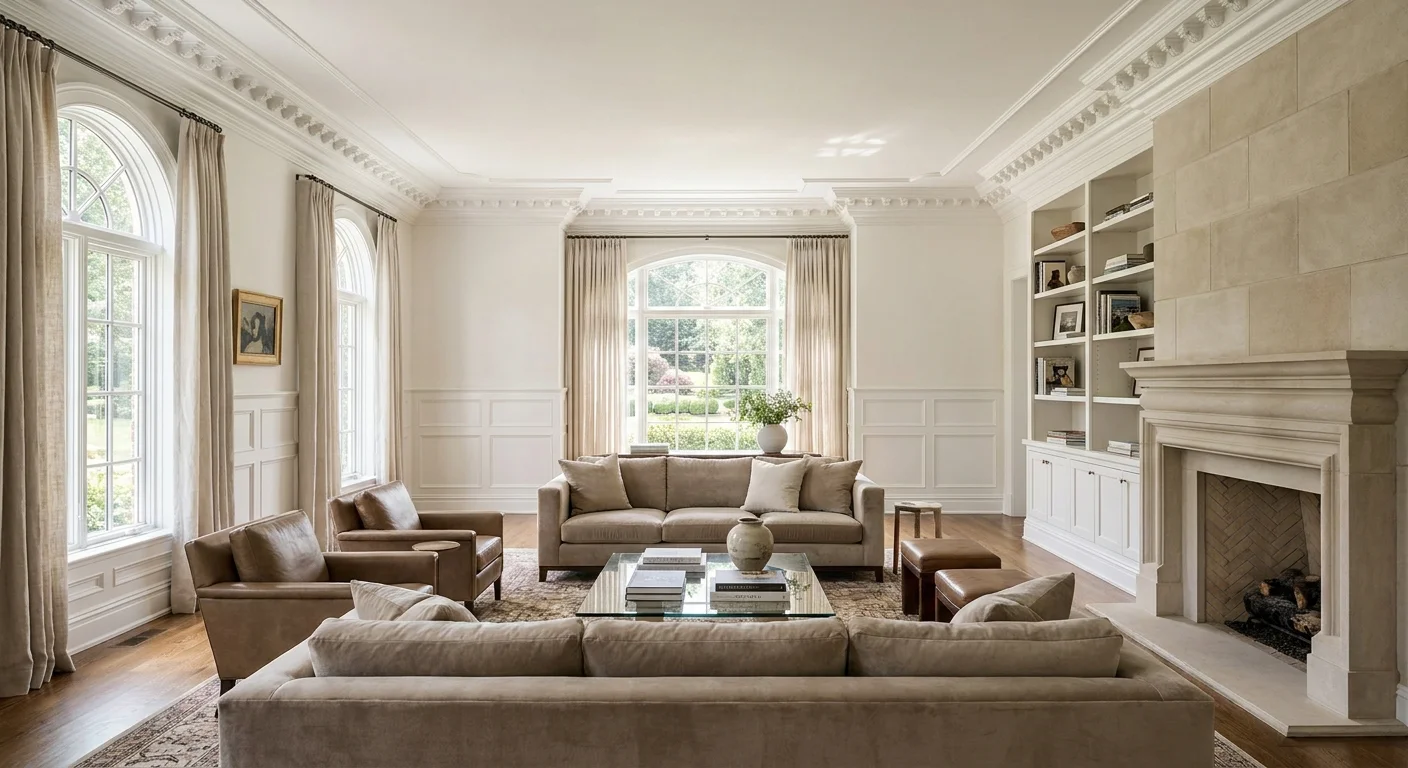
Crown molding and interior trim are architectural details that significantly enhance a home's aesthetic appeal, transforming ordinary rooms into elegant, custom-designed spaces. They add character, define architectural styles, and can substantially increase a property's perceived value and visual richness. For homeowners across New Jersey, New York, and Pennsylvania, investing in quality trim work offers a noticeable upgrade that elevates the entire living environment.
The Transformative Power of Interior Trim and Molding
What Exactly is Interior Trim and Molding?
Interior trim, often referred to as millwork, encompasses all the decorative and functional elements that frame and finish the junctions of walls, ceilings, floors, doors, and windows within a home. It includes a wide range of components such as crown molding, baseboards, door and window casings, chair rails, and wainscoting. Beyond mere decoration, these elements serve to conceal gaps, protect wall surfaces, and provide a cohesive architectural language throughout a living space. Materials vary from cost-effective Medium-Density Fiberboard (MDF) to various solid wood species like pine, poplar, or oak, each offering distinct advantages in terms of durability, finish, and cost.
Beyond Aesthetics: The Functional Benefits
While the primary appeal of interior trim is its ability to beautify a home, its functions extend far beyond mere aesthetics. Trim work plays a crucial role in protecting vulnerable areas of your walls from everyday wear and tear, such as scuffs from vacuum cleaners or impacts from furniture. Baseboards, for example, shield the bottom of walls and create a seamless transition from flooring to wall. Door and window casings hide the rough edges where frames meet plaster or drywall, providing a clean, finished look. Furthermore, crown molding can subtly mask imperfections where walls meet ceilings, providing a crisp, straight line even in older homes with slight structural shifts.
Why Trim Work Makes a Home Look Custom
The addition of well-chosen and expertly installed trim elevates a standard home to one that feels custom-built and thoughtfully designed. It’s akin to adding the perfect accessories to an outfit: they complete the look and reflect attention to detail. Builders often opt for minimal or basic trim profiles to save on costs, leaving homes feeling somewhat unfinished. By contrast, substantial crown molding, elegant wainscoting, or custom door casings introduce architectural depth and visual interest that standard construction often lacks. This detailing creates a sense of luxury and permanence, making rooms feel more established and intentionally crafted, a highly sought-after quality in residential properties across areas like Holmdel, Colts Neck, and the Jersey Shore.
Understanding Key Types of Architectural Trim
Crown Molding: The "Jewelry" of the Ceiling
Crown molding is a decorative trim piece that bridges the transition between the walls and the ceiling. Installed at an angle, it adds a dramatic, elegant flourish that draws the eye upward, making rooms feel taller and more grand. Available in a vast array of profiles, from simple cove and ogee designs to intricate dentil and egg-and-dart patterns, crown molding can complement any architectural style, from Victorian to modern. It's particularly effective in formal living rooms, dining rooms, and master bedrooms, providing a finished look that can significantly enhance a home's interior.
Baseboards and Shoe Molding: Foundation for Style
Baseboards are an essential component of interior trim, installed at the bottom of walls where they meet the floor. Their primary role is to protect the wall from scuffs and impacts while providing a clean, finished edge to the flooring. Like crown molding, baseboards come in various heights and profiles, allowing homeowners to choose a style that matches their home's character. Taller baseboards (5-8 inches) tend to lend a more luxurious feel, common in older homes in Philadelphia or historic districts in New Jersey. Shoe molding, a smaller, often quarter-round or half-round trim, is sometimes added at the very bottom of the baseboard, providing an additional layer of protection and seamlessly bridging any slight gaps between the baseboard and the flooring, which is especially useful when installing new flooring.
Wainscoting, Chair Rails, and Panel Molding: Adding Wall Character
These wall-mounted trim elements are designed to add texture, protection, and visual interest to the lower portion of walls.
- Wainscoting: Typically covers the bottom third or half of a wall and can consist of various styles, including beadboard (vertical planks), raised panels (classic and formal), or recessed panels (shaker style). It's popular in dining rooms, entryways, and bathrooms, offering both decorative appeal and enhanced wall protection.
- Chair Rails: A horizontal trim piece installed around the perimeter of a room, traditionally at a height (often 32-36 inches from the floor) designed to prevent chairs from scuffing the wall. Today, chair rails primarily serve a decorative purpose, often used in conjunction with wainscoting or as a dividing line for two-tone wall paint.
- Panel Molding: Thin, decorative strips of molding applied directly to walls to create geometric patterns or faux panels. This technique adds architectural detail and elegance without the expense or depth of full wainscoting, making it a versatile option for adding character to otherwise plain walls.
Door and Window Casing: Framing Your Views
Door and window casings are the trim pieces that frame the perimeter of doors and windows, covering the gap between the frame and the wall. They are crucial for creating a finished, polished look around openings. Casings come in countless profiles, from simple, flat designs to more elaborate, built-up styles. Matching the casing profile to the baseboards and crown molding helps create a consistent architectural theme throughout your home. In areas like Red Bank or Freehold, where homes range from historic to contemporary, selecting the right casing style can significantly impact the overall feel of a room, tying together various design elements.
Choosing the Right Trim Style to Enhance Your Home's Value
Popular Trim Styles: From Traditional to Modern
The world of trim offers styles to suit every architectural period and personal preference.
- Colonial: Often features rounded edges and simple, elegant profiles, common in homes throughout Monmouth County and the tri-state area.
- Craftsman: Characterized by thicker, flatter, and often square-edged profiles, emphasizing sturdy, handcrafted aesthetics.
- Victorian: Known for its intricate, ornate details, often with multiple layers and complex patterns, ideal for period homes.
- Modern/Minimalist: Focuses on clean lines, simple profiles, and often flush or very subtle trim, complementing contemporary designs.
- Transitional: A blend of traditional and modern elements, offering versatility and broad appeal.
Matching Trim to Your Home's Architectural Era
For homes with a distinct architectural style (be it a Victorian in Asbury Park, a Colonial in Long Branch, or a Craftsman bungalow in suburban Philadelphia), selecting trim that aligns with that era is paramount. Historically accurate or complementary trim enhances the home's authenticity and appeal. For example, a modern, sleek trim would look out of place in a classic farmhouse, just as overly ornate Victorian trim might overwhelm a minimalist contemporary space. Consulting with an experienced finish carpenter can help you identify styles that will best complement your home's unique character and architectural heritage.
Trim Styles That Add the Most Value
While any well-executed trim work adds value, certain styles and applications have a greater impact. Generally, substantial, well-proportioned trim that complements the home's architecture tends to be most impactful. Taller baseboards (6-8 inches), classic crown molding, and elegant wainscoting are often cited as features that significantly boost perceived value. These elements convey a sense of quality, craftsmanship, and a higher-end finish that buyers appreciate. In competitive real estate markets across NJ, NY, and PA, homes with upgraded trim often stand out, potentially increasing sale value by 2% to 5% and attracting more discerning buyers.
Materials, Installation, and Finishing for Lasting Beauty
Common Materials for Molding and Trim
The choice of material for your molding and trim impacts durability, appearance, and cost:
- MDF (Medium-Density Fiberboard): An engineered wood product that is cost-effective, smooth, and excellent for painting. It's stable and won't warp, making it a popular choice for paint-grade applications.
- Solid Wood (Pine, Poplar, Oak, Maple): Offers natural beauty, durability, and the option for staining to highlight wood grain. Pine and poplar are softer, more affordable options often used for paint-grade trim, while oak and maple are harder, more expensive, and ideal for stain-grade applications where their distinctive grain patterns are desired.
- Polyurethane/PVC: Synthetic options that are highly moisture-resistant, making them ideal for bathrooms, kitchens, or exterior applications. They are durable and can be painted, but typically lack the natural feel of wood.
- Finger-Jointed Pine: Made from smaller pieces of pine joined together, offering a more stable and cost-effective alternative to solid pine, often used for paint-grade trim.
The Precision of Professional Installation
Installing crown molding and other trim requires a high degree of precision, specialized tools, and expertise. Exact measurements, accurate miter cuts (especially for inside and outside corners), and coping joints (where one piece is meticulously cut to fit the profile of another) are critical for a seamless, professional finish. Gaps, misaligned joints, or improper fastening can detract significantly from the aesthetic. A skilled finish carpenter understands how to navigate uneven walls and ceilings, ensuring tight seams and a flawless appearance. At IAC Home Improvement, our finish carpentry experts possess the tools and experience to deliver impeccable results, saving homeowners time, frustration, and costly mistakes.
Finishing Touches: Painting and Staining
Once installed, trim requires careful finishing to achieve its final look. This usually involves sanding, filling nail holes and seams with caulk or wood filler, and then either painting or staining.
- Painting: Provides a crisp, clean appearance and allows for color coordination with walls or contrasting accents. Proper priming and multiple coats are essential for a smooth, durable finish. Interior painting for trim work typically ranges from $6 to $11 per linear foot, depending on the complexity of the profile, prep work required, and the number of coats.
- Staining: Used for solid wood trim to enhance and protect the natural grain. This process involves careful sanding, applying wood conditioner, multiple coats of stain, and a clear protective topcoat (like polyurethane or lacquer) for durability.
Cost Considerations: Investing in Professional Finish Carpentry
Factors Influencing Trim Project Costs
The total cost of a crown molding or trim project is influenced by several key factors:
- Material Choice: MDF is the most budget-friendly, while solid hardwoods like oak or maple are more expensive. Intricate profiles also cost more per linear foot than simple ones.
- Linear Footage: The total length of trim required for the rooms being updated.
- Complexity of Installation: Rooms with many corners, varying ceiling heights, or intricate architectural features (e.g., curved walls, built-ins) will require more labor.
- Existing Trim Removal: If old trim needs to be carefully removed and disposed of, this adds to the labor cost.
- Finishing: Whether the trim will be painted or stained, and who will perform this work.
How Much Does Finish Carpentry Cost in Philadelphia, NJ, and NY?
For homeowners in the tri-state area, including Philadelphia, Monmouth County, and parts of New York, professional finish carpentry for trim installation typically ranges from $4 to $8 per linear foot for standard profiles and materials. This cost covers labor for installation and basic prep work. For more intricate designs, custom millwork, or premium hardwoods, costs can rise to $10-$15 per linear foot or more. For example, a standard 12x12 foot room (48 linear feet) might cost between $192 and $384 for installation alone, not including the material and finishing. Interior painting for the trim is an additional cost, as mentioned, usually $6-$11 per linear foot.
IAC Home Improvement offers competitive pricing for a wide range of services. Here’s a general idea of some of our project costs (estimates only; your final price is confirmed after a free on-site measurement):
| Service | Typical Cost Range |
|---|---|
| Hardwood Refinish | $2–$4/sqft, all-inclusive (projects from $1,600) |
| Hardwood Installation | Labor from $4/sqft for straight lay and from $12/sqft for herringbone or chevron; wood chosen separately (projects from $1,300) |
| Vinyl Flooring | About $8/sqft installed, plank and shoe molding included; installation only from $4/sqft (projects from $1,300) |
| Tile Flooring | From $13/sqft installed with standard porcelain or ceramic tile; large-format and stone quoted per project (projects from $1,500) |
| Laminate Flooring | Labor from $4/sqft; laminate chosen separately (projects from $1,300) |
| Carpet Installation | Labor from $3/sqft, including pad installation; carpet and pad by your selection (projects from $800) |
| Interior Painting (Walls/Ceilings) | $6-$11/sqft (depending on scope) |
| Kitchen Remodeling | $17,000-$45,000+ |
| Bathroom Remodeling | $9,000-$25,000+ |
| Decking Installation | Complete composite deck package (Trex Enhance decking, Fiberon Regency railings, framing and installation) from about $16,000 for 200 sq ft or about $24,000 for 300 sq ft; gates, lattice and lighting quoted separately; cedar and IPE priced on request |
Value vs. Expense: The ROI of Quality Trim
While an investment, quality trim work offers excellent return on investment (ROI). Beyond the potential 2-5% increase in home value, it significantly boosts homeowner satisfaction and pride. The visual impact of well-executed crown molding, baseboards, and wainscoting creates a feeling of luxury and completeness that is hard to achieve with other upgrades. It makes rooms feel more inviting, elegant, and custom-designed, contributing to a higher quality of life in your home. This enhanced aesthetic appeal is a major selling point should you decide to move, making your property more attractive to potential buyers.
DIY vs. Professional Installation: Making the Right Choice
The Challenges of DIY Trim Installation
Many homeowners consider DIY for trim installation to save money, but it's a project rife with potential pitfalls for the inexperienced. Accurate measurements and precise cuts are paramount. Miter saws are essential, and mastering complex cuts, especially coping joints for inside corners of crown molding, requires significant practice and skill. Mistakes can lead to wasted material, visible gaps, and an unprofessional finish that detracts from your home's appearance. Furthermore, working at heights, especially for crown molding, presents safety challenges. The time commitment for a DIY project can also be substantial, often taking several weekends for a single room.
The Advantages of Hiring a Skilled Finish Carpenter
Hiring a professional finish carpenter offers numerous advantages. Experts possess the specialized tools, extensive experience, and nuanced understanding of materials and techniques required for flawless installation. They can achieve seamless joints, cope intricate profiles, and expertly handle challenging angles, ensuring a high-quality, durable finish that DIY attempts often miss. Professionals work efficiently, minimizing disruption to your home, and can provide valuable advice on material selection and design. Their craftsmanship ensures the trim not only looks beautiful but also stands the test of time.
Why Choose IAC Home Improvement for Your Trim Project
At IAC Home Improvement, we are your trusted partner for all aspects of home renovation, including expert finish carpentry across New Jersey, New York, and Pennsylvania. With a 5.0 rating based on 100+ Google reviews, our reputation speaks for itself. Our skilled craftsmen specialize in delivering precision and artistry in every trim installation, from elegant crown molding to custom wainscoting and robust baseboards. We understand that your home is your sanctuary, and we approach every project with meticulous attention to detail and a commitment to exceeding your expectations.
Beyond trim work, IAC Home Improvement is a full-service home improvement and construction company. We handle your entire project, from flooring and kitchen & bathroom remodeling to interior/exterior painting, decks, masonry, concrete, pavers, landscaping, and more. You don't need to juggle multiple contractors; we are your one trusted partner for anything your home needs. Contact us today for a consultation and discover the IAC difference.
Phone: (848) 358-7694
Email: contact@iachomeimprovement.com
NJ License #13VH13143000
PA License #PA188007
Frequently Asked Questions About Crown Molding and Trim
What is the most popular type of crown molding?
While trends vary, the simple "ogee" or "cove" profiles remain perennially popular due to their versatility and ability to complement a wide range of architectural styles, from traditional to transitional. They offer an elegant curve without being overly ornate, making them suitable for most homes.
Can crown molding be installed on uneven ceilings?
Yes, crown molding can be installed on uneven ceilings, but it requires the skill of an experienced finish carpenter. Techniques like scribing the molding to the ceiling line, using shims, and carefully applying caulk can effectively hide minor inconsistencies and create the illusion of a perfectly straight ceiling line.
How long does it take to install crown molding in a typical room?
For a standard 12x12 foot room with four walls and basic crown molding, professional installation typically takes 1-2 days. This timeframe includes careful measurement, precise cutting, fastening, and initial prep work for finishing. More complex rooms with numerous corners, intricate profiles, or very high ceilings may take longer.
Does crown molding increase home value?
Yes, crown molding generally increases home value. It's perceived as a high-end upgrade that adds architectural detail, elegance, and a custom feel to a home. Homeowners can often see a 2-5% increase in their property's perceived value, making it an attractive feature for potential buyers and contributing to a quicker sale.
Authoritative resource: This Old House.