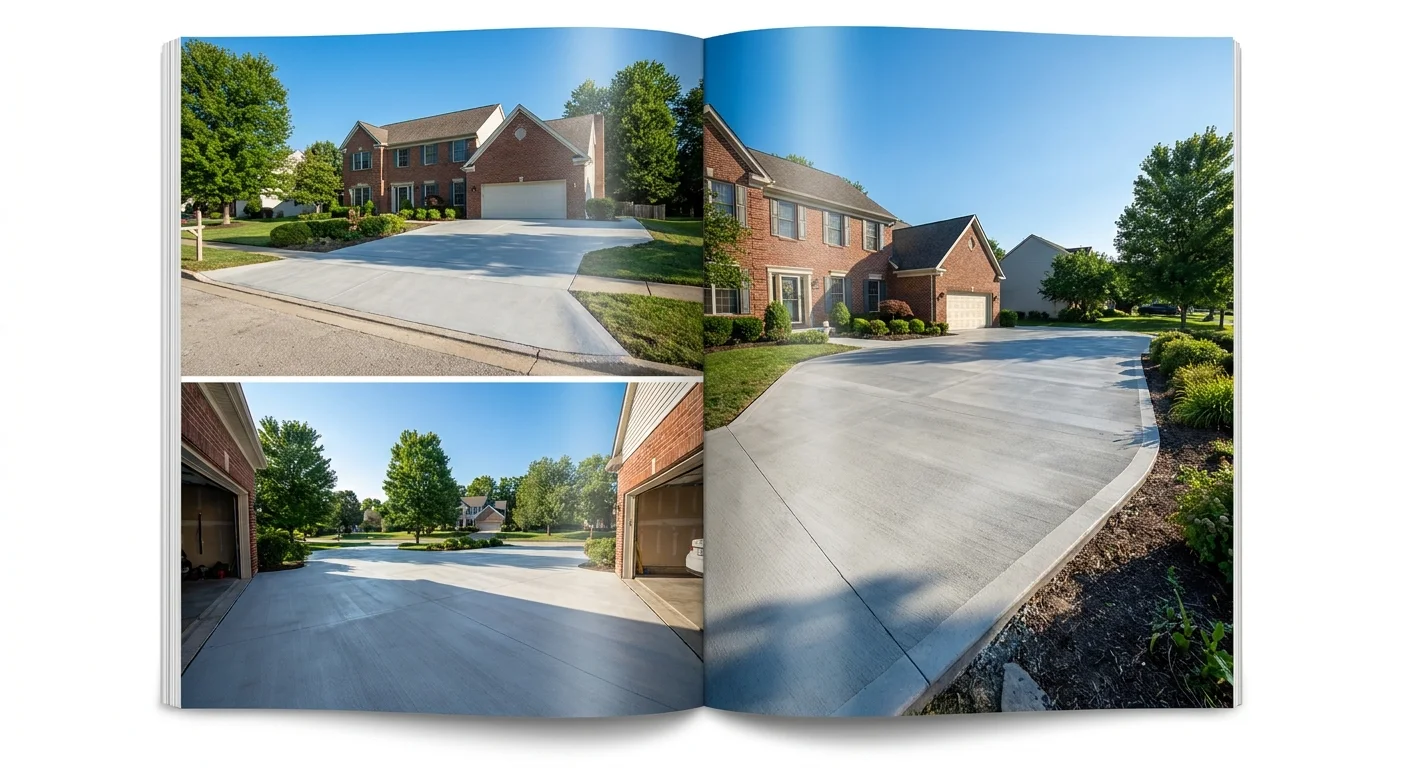
A concrete driveway is a durable, long-lasting, and aesthetically versatile choice for homeowners across New Jersey, New York, and Pennsylvania, offering superior structural integrity and requiring less frequent maintenance than asphalt. With proper installation and care, a concrete driveway can significantly enhance curb appeal and property value, enduring decades of harsh weather from the Jersey Shore to the mountainous regions of PA. IAC Home Improvement specializes in crafting high-quality concrete driveways designed to withstand the unique climate challenges of our region.
Understanding Concrete Driveways for NJ Homes
The Enduring Appeal of Concrete
For homeowners in Manalapan, Colts Neck, or anywhere in Monmouth County, the driveway is often the first impression of your home. Concrete, a robust mixture of Portland cement, water, and aggregates, provides an unmatched combination of strength, longevity, and design flexibility. Unlike other materials, concrete offers a solid, stable surface that resists shifting and rutting, making it ideal for the varied weather conditions experienced throughout New Jersey, from the humid summers of Long Branch to the freezing winters of Freehold.
Concrete vs. Asphalt vs. Pavers: A Quick Comparison
When considering a new driveway, homeowners often weigh the pros and cons of concrete against other popular options. Each material has distinct characteristics:
- Concrete: Known for its exceptional durability and lifespan, typically ranging from 20 to 40 years or more with proper maintenance. It offers a wide array of decorative finishes and colors, providing superior aesthetic versatility. While the initial investment can be higher than asphalt, its long-term cost-effectiveness due to minimal repair needs often makes it a preferred choice.
- Asphalt: A more budget-friendly option initially, asphalt driveways are quicker to install and cure. However, they typically require more frequent maintenance, including sealing every 3-5 years, and have a shorter lifespan, usually 15-20 years. Asphalt can soften in extreme heat and become brittle in cold, leading to cracking and potholes.
- Pavers: Offering a high degree of aesthetic appeal and design flexibility, pavers create a beautiful, interlocking surface. They are excellent for drainage and individual pavers can be replaced if damaged. However, installation is labor-intensive, making them the most expensive option upfront. Weeds can also grow between joints, requiring regular maintenance.
For enduring quality and value in towns like Holmdel and Red Bank, concrete often emerges as the superior choice.
Key Benefits for New Jersey Homeowners
Choosing concrete for your driveway offers several compelling advantages specific to the Mid-Atlantic climate:
- Extreme Durability: Concrete withstands heavy vehicle traffic, harsh UV rays, and the freeze-thaw cycles common in NJ winters far better than asphalt.
- Low Maintenance: Once properly sealed, concrete requires minimal upkeep beyond occasional cleaning and re-sealing every 2-5 years.
- Increased Curb Appeal & Home Value: A well-designed concrete driveway significantly enhances your home's exterior aesthetics, providing a strong return on investment.
- Design Versatility: From broom finishes to elaborate stamped patterns, concrete can be customized to complement any home style.
- Environmentally Friendly: Concrete is a sustainable material, often made from locally sourced materials and can be recycled. Its lighter color also reflects sunlight, reducing the urban heat island effect compared to dark asphalt.
Exploring Concrete Driveway Types and Aesthetic Finishes
Classic Poured Concrete: Versatility and Durability
The standard gray poured concrete driveway is a timeless choice, offering robust performance and a clean, understated look. Its strength and resistance to heavy loads make it a practical option for any property in NJ, NY, or PA. While seemingly simple, the quality of poured concrete lies in the mix design, proper subgrade preparation, and expert finishing. IAC Home Improvement ensures that every poured concrete driveway is engineered for maximum durability and longevity, using high-quality materials suited for regional weather patterns.
Decorative Finishes: Broom, Exposed Aggregate, and Stamped Concrete
Beyond the traditional smooth finish, concrete offers a spectrum of decorative options to personalize your driveway and elevate your home's curb appeal:
- Broom Finish: This is a common and practical finish, created by dragging a special broom across the wet concrete surface. It provides a non-slip texture, crucial for safety during wet or icy conditions, making it an excellent choice for New Jersey's variable climate.
- Exposed Aggregate: Achieved by removing the top layer of cement paste to reveal the underlying aggregates (stones, sand, gravel). This finish offers a natural, textured, and highly durable surface with excellent traction. It's a popular choice for homeowners seeking a unique, earthy aesthetic that blends well with natural landscapes.
- Stamped Concrete: This technique involves pressing decorative patterns into freshly poured concrete to mimic the look of natural stone, brick, slate, or even wood. With a vast array of patterns and colors, stamped concrete can transform a driveway into a stunning focal point, adding significant character and value to homes in areas like Asbury Park or Freehold.
Color and Customization Options
The aesthetic potential of concrete extends beyond texture and pattern. Integral colors can be mixed directly into the concrete batch, providing a consistent, fade-resistant hue throughout the slab. Alternatively, topical stains and dyes can be applied after curing to achieve a wide range of custom colors and effects. These options allow for seamless integration with your home's exterior palette, landscaping, and architectural style, ensuring your new driveway is a perfect complement to your property.
The Professional Concrete Driveway Installation Process
Site Preparation and Subgrade Foundation
A successful concrete driveway begins long before the first truck arrives. Proper site preparation is paramount. This involves carefully excavating the existing surface, ensuring adequate drainage, and establishing a stable, uniformly compacted subgrade. Any soft spots or inconsistencies in the underlying soil must be addressed to prevent future cracking or settling of the concrete slab. Our team meticulously grades the area, often installing a gravel base, to create an optimal foundation that can support the concrete and the loads it will bear, ensuring longevity for homes in NJ, NY, and PA.
Critical Role of Thickness and Reinforcement
The longevity and structural integrity of a concrete driveway depend heavily on its thickness and reinforcement. For standard residential driveways supporting passenger vehicles, a minimum thickness of 4 inches (100mm) is recommended. For driveways that will bear heavier loads, such as RVs or delivery trucks, a thickness of 6 inches (150mm) is advisable. Reinforcement, typically in the form of steel rebar or welded wire mesh, is crucial. This reinforcement significantly increases the concrete's tensile strength, helping to control cracking and hold the slab together, especially important for resisting the stresses of freeze-thaw cycles in the Northeast.
Pouring, Finishing, and Curing Techniques
Once the subgrade is prepared and reinforcement is in place, the concrete is poured. This stage requires precision and expertise to ensure an even distribution and proper compaction. Following the pour, the concrete is carefully leveled and finished to achieve the desired surface texture – whether it's a non-slip broom finish, a decorative stamped pattern, or an exposed aggregate look. Crucially, proper curing is essential for the concrete to achieve its maximum strength and durability. This involves maintaining moisture in the concrete for an extended period, typically 7 days for light vehicle traffic and up to 28 days for full structural strength. Curing compounds, wet coverings, or frequent misting are common methods used to prevent rapid water evaporation, which can lead to weakened concrete and surface cracking.
Concrete Driveway Cost, Lifespan, and ROI in New Jersey
Understanding Driveway Project Costs in NJ
The cost of a concrete driveway in New Jersey can vary widely based on several factors, including the size and complexity of the project, the chosen finish, site preparation requirements, and local labor rates. Generally, homeowners in areas like Manalapan, Red Bank, or Holmdel can expect to pay between $6 to $15 per square foot for a standard poured concrete driveway. Decorative options like exposed aggregate or stamped concrete typically range from $12 to $25 per square foot due to increased labor and material costs. While this initial investment might be higher than asphalt, it's essential to consider the long-term value.
Long-Term Value and Lifespan Expectations
One of the most significant advantages of a concrete driveway is its impressive lifespan. With proper installation and diligent maintenance, a concrete driveway can last anywhere from 20 to 40 years, often exceeding 50 years. This longevity significantly outweighs the lifespan of asphalt (15-20 years) and even some paver installations. The durability of concrete means fewer repairs, less frequent replacements, and a consistently attractive appearance, providing excellent long-term value and a strong return on investment (ROI) for your home in Monmouth County or beyond.
Factors Influencing Your Investment
Several elements will influence the final cost of your concrete driveway project:
- Size and Shape: Larger or unusually shaped driveways require more material and complex formwork, increasing costs.
- Finish Selection: Basic broom finishes are more economical than intricate stamped patterns or exposed aggregate.
- Reinforcement: The type and amount of steel reinforcement (rebar vs. wire mesh) will impact material costs.
- Site Accessibility & Preparation: Difficult access or extensive excavation and grading for proper subgrade can add to labor and equipment costs.
- Drainage Solutions: Incorporating special drainage systems to manage water runoff might be necessary for certain properties.
- Removal of Old Driveway: Demolition and disposal of an existing driveway add to the overall project expense.
To get a precise estimate tailored to your specific needs, we encourage you to use our online cost calculator or contact us for a personalized consultation.
Maintaining Your Concrete Driveway Through NJ's Seasons
Sealing for Protection Against Weather and Wear
Sealing your concrete driveway is a critical step in preserving its appearance and extending its lifespan, especially in the challenging climate of New Jersey. A high-quality concrete sealer creates a protective barrier against moisture penetration, UV degradation, oil stains, and de-icing chemicals. It helps prevent surface spalling, pitting, and discoloration. For optimal protection, especially in areas subjected to heavy snow and salt exposure, it's recommended to apply a penetrating or topical sealer every 2 to 5 years, depending on traffic and environmental factors. This simple maintenance task is a small investment that yields significant long-term benefits.
Preventing and Addressing Cracks
While concrete is incredibly strong, it can develop cracks over time due to ground movement, extreme temperature fluctuations, heavy loads, or improper installation. Proactive measures are key to crack prevention:
- Proper Subgrade Preparation: A stable, well-compacted base minimizes settlement that can lead to cracks.
- Control Joints: Strategically placed control joints (saw cuts or grooves) are designed to create weakened planes in the concrete, encouraging any cracking to occur neatly within these lines, rather than randomly across the slab.
- Adequate Reinforcement: Steel rebar or wire mesh adds tensile strength, helping to hold the concrete together even if hairline cracks form.
If cracks do appear, addressing them promptly can prevent further damage. Small, non-structural cracks can often be sealed with a quality concrete crack filler, preventing water intrusion and freeze-thaw damage.
Winter Care: De-Icing and Snow Removal Tips
New Jersey winters present unique challenges for driveways, with freezing temperatures, snow, and ice. Proper winter care is essential:
- Avoid Rock Salt: Sodium chloride (rock salt) can be corrosive and detrimental to concrete, especially newer slabs. Opt for calcium chloride, magnesium chloride, or potassium chloride-based de-icers, which are less damaging. Sand can also provide traction without chemical harm.
- Prompt Snow Removal: Shovel or plow snow promptly to prevent it from melting and refreezing, which can lead to ice buildup and potential damage.
- Use Plastic Shovels: When shoveling, use plastic or rubber-tipped shovels to avoid scratching or gouging the concrete surface.
- Beware of Snow Plows: If using a professional snow removal service, ensure they use appropriate equipment and techniques to avoid damaging your driveway.
Partnering with IAC Home Improvement for Your Driveway Project
Our Expertise in Concrete and Masonry for NJ, NY, PA
At IAC Home Improvement, we bring decades of experience and a commitment to excellence to every concrete and masonry project. Serving homeowners across New Jersey, New York, and Pennsylvania, including communities from the Jersey Shore to the greater Philadelphia area, we understand the specific challenges and requirements of our regional climate and soil conditions. Our team of skilled craftsmen is proficient in all aspects of concrete driveway design and installation, from meticulous site preparation and subgrade compaction to expert pouring, finishing, and curing. We use only high-quality materials and proven techniques to ensure your concrete driveway is not only beautiful but also built to last.
Beyond Driveways: Your Full-Service Home Improvement Partner
While we excel in concrete driveways and masonry, IAC Home Improvement is proud to be a truly full-service general contractor. This means we can handle nearly any aspect of your home improvement or construction needs, offering you the convenience and peace of mind of working with one trusted company. Whether you're considering a stunning kitchen remodel (typically costing $17,000-$45,000), a luxurious bathroom renovation (ranging from $9,000-$25,000), or need expert interior painting (from $6-$11 per square foot depending on complexity), we have the expertise. Our services also extend to all types of flooring (hardwood refinishing at $2-$4/sqft, installation at $4-$7/sqft; vinyl at $3-$5/sqft; tile at $7-$12/sqft; laminate at $3.50-$4.50/sqft; carpet at $1.50-$3/sqft), decking ($10-$16/sqft), exterior painting, carpentry, landscaping, and more. Trust IAC to be your single point of contact for a cohesive and high-quality home transformation.
Get a Detailed Estimate for Your Project
Ready to enhance your home with a beautiful and durable concrete driveway? Our team is here to guide you through every step, from initial design consultation to final installation. We provide transparent, detailed estimates so you know exactly what to expect. Contact IAC Home Improvement today to discuss your project. We're available at (848) 234-0283, or you can reach us via email at contact@iachomeimprovement.com. Our NJ License #13VH13143000 and PA License #PA188007 ensure licensed and insured service. Join our community of over 100 satisfied customers who have given us a 5.0 Google rating!
For more information or to request a free, no-obligation quote, visit our contact page.
Frequently Asked Questions About Concrete Driveways
How long does a concrete driveway last in New Jersey?
A properly installed and maintained concrete driveway in New Jersey can last an impressive 20 to 40 years, with many exceeding 50 years. Its longevity significantly surpasses that of asphalt, offering superior durability against NJ's varied weather conditions, including harsh winters and hot summers.
What is the typical cost per square foot for a concrete driveway in NJ?
In New Jersey, a standard poured concrete driveway typically costs between $6 to $15 per square foot. For decorative options such as stamped concrete or exposed aggregate, the price range can be higher, generally from $12 to $25 per square foot, due to increased material and labor complexity.
How long does it take for a new concrete driveway to cure and be ready for use?
A new concrete driveway typically needs to cure for at least 7 days before it can safely handle light vehicle traffic. However, it takes approximately 28 days for the concrete to reach its full design strength and be fully cured, making it ready for heavy loads and normal use.
Is sealing a concrete driveway really necessary in New Jersey?
Yes, sealing a concrete driveway is highly recommended and virtually necessary in New Jersey. A quality sealer protects the concrete from moisture penetration, freeze-thaw cycles, road salts, UV damage, and oil stains, significantly extending its lifespan and maintaining its appearance. Re-sealing is generally advised every 2 to 5 years.
Authoritative resource: American Concrete Institute.