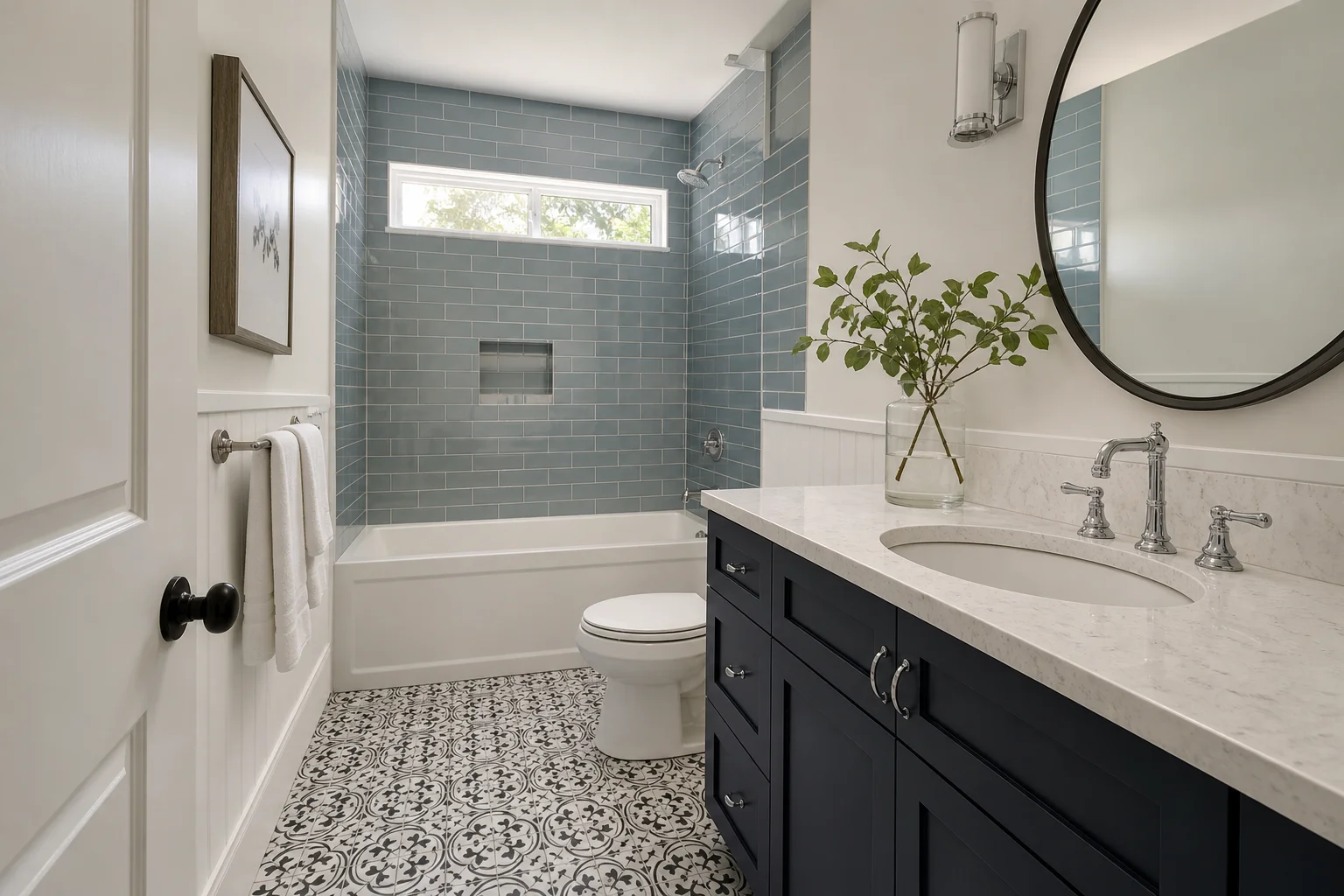
In New Jersey, a bathroom remodel typically ranges from $9,000 to $25,000 in 2026, depending on the scope. The signs you need a bathroom remodel, rather than a repair, include recurring water damage, failing surfaces and a layout that no longer works for your household.
Not every aging bathroom needs to be gutted. Start by identifying the cause of each problem, then decide whether a targeted repair, a cosmetic refresh or a full remodel will address it.
How do you know if your bathroom needs a remodel?
A remodel makes sense when problems affect several parts of the room or when the layout itself needs to change. A single isolated defect, by contrast, may only need a repair.
One problem can often be repaired
A leaking faucet, cracked caulk joint or damaged exhaust fan does not automatically mean the entire bathroom is failing. If the surrounding materials are sound and the problem has a clear cause, fixing that cause may be enough.
Check whether the issue returns after the repair. Repeated patching without finding the source can conceal damage behind tile, under flooring or around the tub.
Several connected problems point toward remodeling
Soft flooring, loose tile and persistent musty odors in the same room suggest a broader moisture problem. Similarly, outdated fixtures combined with poor storage and an awkward layout may justify planning the room as a whole.
For an overview of possible scopes, explore IAC’s bathroom remodeling services. An inspection can help distinguish a surface issue from damage that requires opening walls or floors.
What water damage signs mean a bathroom needs more than a repair?
Recurring leaks, movement underfoot and moisture trapped behind finishes are signs that a simple surface fix may not solve the problem. Find and stop the water source before replacing damaged materials.
Does a soft or spongy bathroom floor mean hidden damage?
A soft floor can indicate that the subfloor has absorbed water and lost strength. Leaks at a toilet seal, shower entrance or supply line are possible causes, although an inspection is needed to identify the source.
Loose flooring may need to be removed so the subfloor and framing can be assessed. If damage extends beneath multiple fixtures, a remodel can provide access to repair the structure and rebuild the floor properly.
Why do bathroom tiles keep coming loose or grout keep cracking?
Loose tile and recurring grout cracks can result from substrate movement, inadequate support or water damage. Regrouting alone will not stabilize a floor or wall that moves underneath.
A contractor should examine the affected substrate and determine whether the waterproofing system has been compromised. A few isolated loose tiles may be repairable, but widespread failure can call for removing and rebuilding the tiled assembly.
What does a recurring musty smell or mold mean?
A returning musty odor or visible mold can mean moisture is lingering or entering a concealed area. Poor ventilation, plumbing leaks and failed shower waterproofing are common possibilities.
Cleaning visible growth without correcting the moisture source may leave the underlying problem. The U.S. Environmental Protection Agency recommends drying wet materials within 24 to 48 hours when possible to help prevent mold growth. If a large area is affected or growth returns, have the source and affected materials evaluated.
Why does water keep leaking around the shower or tub?
Recurring water outside a shower or tub may come from failed caulk, a leaking valve, an enclosure problem or a compromised waterproofing layer. Caulk is a useful seal at appropriate joints, but it is not a substitute for a properly built waterproof shower assembly.
Have the leak traced before replacing finishes. If water has damaged the wallboard, framing or floor, opening the area and rebuilding it may be more effective than repeatedly sealing the same joint.
For help assessing the problem, call (848) 358-7694, text us a photo or request a free estimate.
What other signs suggest it is time to remodel your bathroom?
Water damage is not the only reason to remodel. Worn finishes, an impractical layout and changing accessibility needs can make a sound bathroom worth updating.
Are fixtures and finishes worn beyond a simple update?
Persistent staining, chipped surfaces, damaged cabinets and fixtures that no longer work reliably can signal that individual fixes are adding up. Normal cosmetic wear alone does not require a gut renovation.
If the tub, tile substrate and plumbing are sound, a refresh may address the room’s appearance. When deterioration extends behind finishes or affects several assemblies, replacement may be the more practical scope.
Does the bathroom layout no longer fit your household?
A bathroom may need remodeling when the door conflicts with the vanity, storage is inaccessible or users cannot comfortably share the space. These are layout problems, so replacing a faucet or painting the walls will not resolve them.
Consider how the room is used in the morning and where towels, toiletries and cleaning supplies belong. Moving plumbing fixtures can expand the scope, so compare the benefit of a new layout with improving storage in the existing footprint.
Is the bathroom difficult or unsafe to use?
A high tub wall, slippery surface or cramped shower entry may become difficult as household needs change. A remodel can create an opportunity to improve access while addressing worn finishes.
Options to discuss include grab-bar blocking in the wall, a shower entry suited to the user and flooring selected for wet conditions. The Americans with Disabilities Act offers accessibility guidance, although a private home’s design should be tailored to its occupants and applicable requirements.
Could an outdated bathroom affect resale appeal?
A dated or visibly damaged bathroom can make a home less appealing to buyers, especially if they see signs of neglected maintenance. A remodel is not guaranteed to increase a home’s value by its full cost.
Before selling a home in Long Branch or Red Bank, prioritize leaks, sound surfaces and reliable fixtures over highly personalized finishes. If the room functions well, a refresh may be a better fit than changing the layout solely for resale.
Should you repair, refresh or fully remodel your bathroom?
Choose the smallest scope that fixes the cause and meets your household’s needs. The table is a starting point, not a substitute for inspecting concealed conditions.
Which fix fits each bathroom problem?
An isolated defect often supports a repair, while widespread damage or a poor layout may justify a larger project.
| Sign | Likely cause | Best fix |
|---|---|---|
| Dripping faucet | Worn component | Repair or replace fixture |
| Dated vanity and paint | Cosmetic wear | Refresh |
| Sound but worn tub finish | Surface wear | Consider refinishing |
| Soft floor | Moisture damage | Inspect and rebuild affected area |
| Loose tile across shower | Failing substrate or waterproofing | Remove and rebuild as needed |
| Cramped layout | Poor space planning | Remodel layout |
When should you repair, refinish or replace?
Repair a localized problem when the surrounding assembly is sound. Refinish a suitable tub or surface when wear is mainly cosmetic and the material is structurally intact.
Replace an item when it is damaged beyond a dependable repair, no longer functions or must be removed to correct hidden damage. Refinishing does not fix a leaking drain, unstable tub or water-damaged wall behind it. Individual repairs, refinishing and replacements are quoted per project after a free on-site visit.
What should you check before choosing a scope?
Work through the cause, condition and intended use before selecting finishes. This helps prevent a cosmetic update from covering a problem that still needs attention.
- Identify leaks and recurring moisture, then arrange for the source to be corrected.
- Inspect accessible flooring, walls, ventilation and fixtures for damage or movement.
- List functional priorities, such as storage, easier shower access or a better layout.
- Compare a targeted fix with a refresh or full remodel after the site conditions are understood.
Use these bathroom renovation planning tips to prepare your priorities before selecting materials.
How much can waiting to remodel a damaged bathroom cost?
Waiting can allow a manageable leak to damage a larger area, potentially changing a targeted repair into a broader rebuild. The eventual scope depends on the source, duration and extent of the damage, not just the age of the bathroom.
What are the 2026 bathroom remodel price tiers?
IAC’s approved 2026 bathroom remodel pricing typically falls into these project scopes:
- Refresh: About $9,000 to $14,000 for fixtures, paint and vanity.
- Full Remodel: About $14,000 to $19,000 for a gut-to-studs remodel.
- Luxury Master Bath: About $19,000 to $25,000.
These are planning ranges, not guaranteed prices. An individual repair or refinishing scope is quoted per project after a free on-site visit, and a bathroom remodel quote provides one clear project total after a free on-site measurement.
What can happen if you delay a moisture repair?
Water can travel beyond the visible stain and affect subflooring, wall cavities or adjacent rooms. Replacing finishes before resolving the leak may mean removing those finishes again later.
Act promptly if the floor feels unstable, water is actively leaking or a musty smell persists. Limit use of the affected fixture when practical and arrange an assessment rather than waiting for a planned cosmetic renovation.
How do you plan the project around hidden conditions?
Start with an on-site assessment and understand that concealed damage may not be fully visible until finishes are opened. Ask how discoveries such as damaged framing or a failed shower substrate would be addressed before work proceeds.
IAC is a full-service home improvement company handling flooring, kitchen and bathroom remodeling, painting, carpentry, basements, decks, masonry, concrete and pavers, offering one contractor for projects throughout the home. Homeowners can also learn about bathroom remodeling in Long Branch, NJ.
Frequently Asked Questions
These answers address common questions about deciding when and how to update a problem bathroom.
How often should a bathroom be remodeled?
There is no universal schedule for remodeling a bathroom. Its condition, moisture control, quality of installation and the household’s needs matter more than its age. An older bathroom with sound plumbing and waterproofing may only need selective updates, while a newer room with recurring leaks or a failing shower assembly may need substantial work sooner.
Can you remodel a bathroom without moving plumbing?
Yes. Keeping the toilet, shower and vanity in their existing locations can allow a substantial update without changing the room’s basic plumbing layout. You can still replace finishes and fixtures or improve storage. Existing pipes and connections should be evaluated, however, particularly if there are leaks, corrosion or other signs of deterioration.
Is it worth refinishing a bathtub instead of replacing it?
Refinishing may be worthwhile when the tub is structurally sound and the main concern is a worn or stained surface. It will not correct movement, a leaking drain or water damage behind the surrounding wall. Ask whether the tub material and existing finish are suitable, and follow the refinishing product’s instructions for preparation and curing.
Do I need a permit to remodel a bathroom in New Jersey?
Permit requirements depend on the work and the local jurisdiction. Changes involving plumbing, electrical systems or structural elements may require approval, while some cosmetic work may not. Before starting, check the proposed scope with your municipality’s construction office and your contractor. Do not assume that replacing finishes and moving fixtures have the same requirements.
Authoritative resource: This Old House.